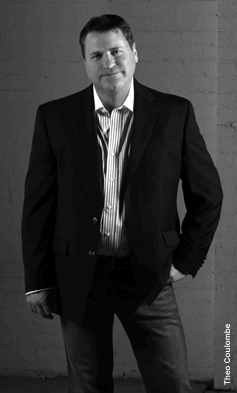
Patrick K. O'Donnell
American author
204
APPEARANCES
22
PODCASTS
Nov 21, 2026

Patrick K. O'DonnellGUEST
It was number four in all of history in the United States, according to Nielsen Book Scan, which is quite an honor.
Patrick K. O'DonnellGUEST
And it's largely through the fulcrum of the war room and the great posse.

Patrick K. O'DonnellGUEST
It's a piece of technology at the beginning of the war that they wield that's exceptional.
Patrick K. O'DonnellGUEST
And some of this book is this trial and error, which is very painful, which then becomes part of doctrine.
Patrick K. O'DonnellGUEST
and how it is incorporated with the combined arms, for instance, and everything else.

John BatchelorHOST
And what is it that you found you learned new about Benedict Arnold? Because you had to be prejudiced like all of us since childhood.
Patrick K. O'DonnellGUEST
I mean, at this at this stage of the battle, there was always this this this claim that there was this massive rupture between Gates and Arnold in terms of the command structure, etc.
6 MINS LATER
John BatchelorHOST
Does it mention – did they take communion as part of the service or did they just go with the service? I do not
Patrick K. O'DonnellGUEST
This is the second battle of Saratoga as it's known, October 7th, 1777.
Patrick K. O'DonnellGUEST
Um, he's there, uh, With another one of my favorite individuals, Jamie Wilkinson, who's a total – he's a rifleman that joins the Pennsylvanians at the beginning.
Patrick K. O'DonnellGUEST
He's a character I follow through the book, and he's got a checkered – He's checkered.
Patrick K. O'DonnellGUEST
Anybody that's one of the greatest battlefields in the, in America is the battle is the Saratoga battlefield.
Patrick K. O'DonnellGUEST
It's like it's Gettysburg like, and it's, it's in a sense, but it's got these ravines.
38:10
An Irishman fighting for the Revolutionary Cross took out one of Great Britain's best field commanders? Is that what you're telling me? You're making my day here? Are you making my day here? A bunch of crazy mix...


Steve BannonHOST
How close are you? We're very close to making the New York Times bestseller list, I hear.
Patrick K. O'DonnellGUEST
Daniel Morgan is one of the most transformative and important people uh, battlefield commanders of the American revolution.
Patrick K. O'DonnellGUEST
Um, he, he really helps develop this new way of war, which will really, which will in his rifleman will, uh, will change the course of the war and influence it and have a profound impact on the war.
Patrick K. O'DonnellGUEST
He falls back behind a tributary called the Assam Peak Creek, which is on the southeastern side of Trenton.
Patrick K. O'DonnellGUEST
And they have a mile-long set of The army is positioned behind it, but he throws the rifleman out front in front of Trenton Town in front of the path of advance that Cornwallis has assembled the greatest troops in his most elite units in the in the in the vanguard of the army.
7 MINS LATER
Patrick K. O'DonnellGUEST
process, these guys don't have to do the normal duties of camp life, like digging latrines and trenches and such.
Patrick K. O'DonnellGUEST
And one of their numbers is thrown in the stockade for drunkenness or disorderliness.
Patrick K. O'DonnellGUEST
And then Washington immediately is a man of discipline and He orders the fellow riflemen to move together in formation along with other units, and they crush through the uprising immediately.
Patrick K. O'DonnellGUEST
of my um 26 years or no it's actually now 27 years as a full-time author and historian and revolutionary snipers is a band of brothers on the rifleman and it's character driven it's on the main characters of the rifle corps the greatest rifleman, the greatest shots in Washington's army.
Patrick K. O'DonnellGUEST
But as you point out, the long rifle is also a character in this book, and it's an important one.
Patrick K. O'DonnellGUEST
It's a piece of groundbreaking technology that really comes on the scene in Lancaster, Pennsylvania, around 1709. when gunsmiths from Germany and Switzerland brought their trade to America at this point.


Patrick K. O'DonnellGUEST
In Somerville, Massachusetts, just right outside of Cambridge, the British raid on September 1st, 1774, the powder magazine there, and they carry off 250 barrels of powder.
Patrick K. O'DonnellGUEST
And it's here that, you know, it sparks effectively the kinetic aspect of the American Revolutionary War.
7 MINS LATER

16:57
Give us an update on the book, and then can people just show up over at the Spy Museum tonight and hear your presentation and meet you, sir?
Patrick K. O'DonnellGUEST
You can click right on the links or go to the Spy Museum or Mount Vernon and see it.
Patrick K. O'DonnellGUEST
Thanks to the war room and you, Steve, um, and just the appearances, we are crushing it at Barnes and Noble.
Patrick K. O'DonnellGUEST
I've been going to, I've been to, I signed books at about 25 stores in and around Maryland, uh, Pennsylvania, DC, and Virginia.
Patrick K. O'DonnellGUEST
And I can tell that by the fact that I've signed many of those original orders, and they're gone.
41:12
Number one, because we want to get this on the New York times bestseller list
Patrick K. O'DonnellGUEST
Thanks to the war room and you, Steve, um, and just the appearances, we are crushing it at Barnes and Noble.
Patrick K. O'DonnellGUEST
I've been going to, I've been to, I signed books at about 25 stores in and around Maryland, uh, Pennsylvania, DC, and Virginia.
Patrick K. O'DonnellGUEST
And I can tell that by the fact that I've signed many of those original orders, and they're gone.
Steve BannonHOST
Walk me through where you guys are number one, because we want to get this on the New York Times bestseller list.
Patrick K. O'DonnellGUEST
I spent two months at Mount Vernon writing the book next to the library and just, you know, digesting it and really going through the original sources to write the book.
Patrick K. O'DonnellGUEST
Think of like the Lord of the Rings kind of fort with like redoubts and at a bay.
Patrick K. O'DonnellGUEST
And it was a... a Pennsylvania named Robert McGaw, Colonel Robert McGaw, who was the commander.
10 MINS LATER
Patrick K. O'DonnellGUEST
Think of like the Lord of the Rings kind of fort with like redoubts and at a bay.
Patrick K. O'DonnellGUEST
And it was a Pennsylvania named Robert McGaugh, Colonel Robert McGaugh, who was the commander.
10 MINS LATER

Tamara ScottHOST
And so are you just a flat out historian? What is your background that you wrote this book?
Patrick O'DonnellGUEST
I'm a historian and an authority on American special operations from 1775 through the Battle of Fallujah.
Patrick O'DonnellGUEST
I've been a consultant for Hollywood TV movies, but also public speaker, done a lot of other stuff.
20 MINS LATER
Patrick K. O'DonnellGUEST
And it's here that the the riflemen and Henry Dearborn's men have a field day because they're in the ravines or behind trees.
22:11
400 lashes and lived 499 ninety almost 500 you that normally you would die your lungs here your
Patrick K. O'DonnellGUEST
And it's here that the the riflemen and Henry Dearborn's men have a field day because they're in the ravines or behind trees.
Steve BannonHOST
400 lashes and lived? 499 90 almost 500 you normally you would die your lungs tear your


Rita CosbyHOST
Yeah, and I love, they come from what, Virginia, Maryland, Pennsylvania, and then came to Cambridge, Massachusetts, right, and joined the Continental Army.
Patrick K. O'DonnellGUEST
They were the first members of the Continental Army on June 14th, 1775.
Patrick K. O'DonnellGUEST
Congress authorized 10 companies of riflemen from Pennsylvania, Maryland, and Virginia.
Patrick K. O'DonnellGUEST
And there was such a groundswell in Pennsylvania of enthusiasm for men that just were ready to fight at the drop of a hat because they wanted to defend their country, even though there wasn't a country.
Patrick K. O'DonnellGUEST
and they raised two more companies, and then they made something called the Beeline March, and they literally marched almost 300 miles from their respective states on foot.
Patrick K. O'DonnellGUEST
Can you imagine that? And then they get there, and they're not used to discipline.
Rita CosbyHOST
What are your thoughts now as you piece together sort of the history of sharpshooters, you know, all the way back to the Revolutionary War, which you so powerfully do in this book?
Rita CosbyHOST
Yeah, and I love, they come from what, Virginia, Maryland, Pennsylvania, and then came to Cambridge, Massachusetts, right, and joined the Continental Army.
Patrick K. O'DonnellGUEST
They were the first members of the Continental Army on June 14th, 1775.
Patrick K. O'DonnellGUEST
Congress authorized 10 companies of riflemen from Pennsylvania, Maryland, and Virginia.
Patrick K. O'DonnellGUEST
And there was such a groundswell in Pennsylvania of enthusiasm for men that just were ready to fight at the drop of a hat because they wanted to defend their country, even though there wasn't a country.
Patrick K. O'DonnellGUEST
and they raised two more companies, and then they made something called the Beeline March, and they literally marched almost 300 miles from their respective states on foot.
Patrick K. O'DonnellGUEST
Can you imagine that? And then they get there, and they're not used to discipline.
Rita CosbyHOST
What are your thoughts now as you piece together sort of the history of sharpshooters, you know, all the way back to the Revolutionary War, which you so powerfully do in this book?
Patrick K. O'DonnellGUEST
I've got the largest archive of oral histories in the world on the elite units, the 82nd, 101st, Merrill's Marauders, the Marine Raiders.
Patrick K. O'DonnellGUEST
the OSS, and it would be, you know, as I was going through this process, I created a website called thedropzone.org, which was the first oral history project for World War II veterans to share their stories.
12 MINS LATER

Patrick O'DonnellGUEST
It's almost like throwing a football where you put the spin on the football and it has more accuracy.
Patrick O'DonnellGUEST
much like the rifle, and in this case, the rifle can really fire 300 to 400 yards.
Patrick O'DonnellGUEST
And what makes the story unique is that around 1609, gunsmiths from Switzerland and Germany came to Lancaster, Pennsylvania, and they brought the craft of the rifle with them, but they began making the rifle, it was adapting to the frontier itself.
Patrick O'DonnellGUEST
And what I mean by that is it was far lighter than its European counterparts, and the barrel was longer.
Patrick O'DonnellGUEST
And the ball that they fired from the Pennsylvania long rifle was much smaller.
20 MINS LATER
Greg BergHOST
I also want to give you a chance to talk about an amazing woman, and not the only woman whose name appears in your book, but certainly the name of Jemima Warner is especially distinctive in your book, Revolutionary Snipers.
Scroll for more appearances