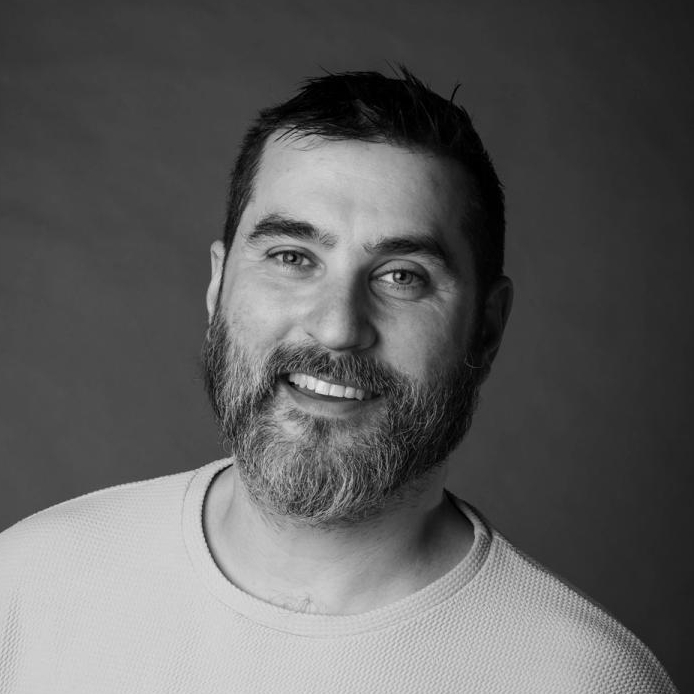
Patrick Coughlin
Co-Founder & CEO of Savi Security, cybersecurity executive and author of Dark Side of the Boom
11
APPEARANCES
11
PODCASTS
Aug 21, 2026


Dave BittnerHOST
So what was it that made you and your colleagues at Savvy decide to spin up this suite of tools?

Patrick CoughlinGUEST
W- After my mom, um, was, was targeted, uh, like I said, I kind of went down a rabbit hole and, and, and did a bunch of research.
Patrick CoughlinGUEST
I, I, I did work for the government years ago and had worked as an analyns- uh, analyst in intelligence, and so it kind of...
Patrick CoughlinGUEST
It, it resurfaced some, some latent intelligence analyst, uh, skills that I had, and I, I was...


Patrick CoughlinGUEST
It's in these increase in scam and spam calls and messages and emails that they're all getting.
Patrick CoughlinGUEST
And so AI doesn't have a halo in middle America, and it doesn't have a halo for everyday people.
Patrick CoughlinGUEST
And I think part of that is because we talk about the benefits and the challenges in the context of the enterprise often too much.
Patrick CoughlinGUEST
And if you follow the debate with OpenAI and Anthropic today, it's all about, you know, mythos and fable and the models that are coming out, and can they find vulnerabilities in enterprise systems, and can they help enterprise defenders protect against those vulnerabilities? And it's very much a discussion about the enterprise, which is an important conversation.

Patrick CoughlinGUEST
And it's one of the reasons that I got so sucked into the passion that's behind the book, Dark Side of the Boom.
Patrick CoughlinGUEST
It's also, I think, what drives the passion behind what we do at Savvy Security every day.
17 MINS LATER

Rosanne CorcoranHOST
Can you, I mean, how do you get from a phone call to a shoebox full of, you know, cash on the curb? How does that, how does that happen?

Patrick CoughlinGUEST
But, you know, I had some long latent sort of like intelligence and analyst skills that I hadn't used in the last decade or two as we were building companies and products and things like that.
Patrick CoughlinGUEST
But, you know, I started sort of Beautiful minding my office with post-its and big maps and trying to map out, you know, where these groups were, who was behind them, what were their tactics and techniques.
Patrick CoughlinGUEST
Looking at, you know, sort of like payment infrastructure and payment rails, trying to understand the ecosystem that these scammers are.
Patrick CoughlinGUEST
operate in and what are the platforms that sort of are hijacked to traffic this deceit all the way to the consumer's front door? You know, a world that you've been living in and so many others for a long time, but I had only been looking at it more from a government or an enterprise perspective.


Melissa JoyHOST
And so with your expertise and your entrepreneurial skill, what, what is next? How can we protect Beth and all of our, you know, loved ones, including ourselves?
Patrick CoughlinGUEST
And so, I mean, that question is what, is what ultimately led me to, to, to write the book dark side of the boom, which captured, uh, a couple of years of research into how these scam groups are operating.
Patrick CoughlinGUEST
What are the tools that they're using? How are they doing each stage of their campaigns now with more AI weaved into the operations that they're running? And what does that mean for victims and everyday people? And what can we expect in terms of how scams and fraud are going to continue to evolve? And what I learned was impossible to ignore.
Patrick CoughlinGUEST
Digital fraud is now estimated to cost Americans in this country almost $200 billion a year.
19 MINS LATER


Akash PasrichaHOST
There have been a lot of observations that it's a really good model, some questions around, hey, is it as good for cybersecurity and safety as Fable, for example? Uh, y- what's your view on that? Are there certain models that are better for, for safety than for others?
Patrick CoughlinGUEST
Um, and you know, we've seen that for the better part of the last twenty years is bad guys innovate, and then defenders try to innovate as well, and it's a cat and mouse game of trying to keep up.
Patrick CoughlinGUEST
Um, I think what's different now is this, this relentless pace of innovation coming out of the, the foundation model and the key AI labs that are creating these new innovations, and it's making hard to really understand where are we in this cat and mouse game and, and who's winning.
Patrick CoughlinGUEST
What, what we do know is that we haven't seen nearly enough investment and innovation deployed at the consumer and deployed at families because the data's really proving it out.
Patrick CoughlinGUEST
I mean, now the average American adult is encountering multiple scams a day.
Patrick CoughlinGUEST
Uh, and Americans in this country have lost close to two hundred billion dollars in the last twelve months to these AI-powered scams.
8 MINS LATER
Akash PasrichaHOST
Do you think that the government should have a role in, uh, AI safety as it relates specifically to the models that are released?


Patrick CoughlinGUEST
So if you go back far enough, my journey in security started, I suppose, when I was a senior in high school, which was the year that 9-11 happened.
Patrick CoughlinGUEST
And, you know, watching the second plane going to the building and then spending the rest of that day watching the news and just completely transfixed by what was happening on TV.

Patrick CoughlinGUEST
Yeah, I mean, one of the implications of what these AI tools today are exceptionally good at, and if you've played with them or your listeners have played with them, you may know.
Patrick CoughlinGUEST
these chat bots or whatever it is, they are exceptional at speaking the language of humans.
Patrick CoughlinGUEST
You know, they talk like us, they can sound like us, they can look like us, they can behave like us.
Patrick CoughlinGUEST
The challenge with that is it really plays at the core of what identity and human identity is today, right? And it's harder for us to know, are we talking to a human or to a chatbot? Or are we talking to a human who's using a chatbot? Or who are we talking to? And so second channel verifications is an exercise.
15 MINS LATER


Rich DeMuroHOST
And so it's like our entire job these days is to figure out if that email is real, if that text is real, and if we're being scammed or not.
Patrick CoughlinGUEST
I mean, look, we've come a long way from those Nigerian prince email scams of like the late 1990s, where there was like a generic greeting and maybe some very obvious grammar errors that would have given it away.
Patrick CoughlinGUEST
Scammers can pull real names, locations, your family members, birth information, death information, recent purchases, and they can create a perfect scam playbook just for you.
Patrick CoughlinGUEST
They can generate fake voices, they can generate fake websites, fake letters from the IRS, from a municipal court, a Medicare bill, and it can look exactly like the real thing with just a few clicks of a button.
Patrick CoughlinGUEST
This content is very powerful in how it deceives us, and it really hits all different demographics, young people and old people alike.
Rich DeMuroHOST
Is there a simple tip or habit you can give us to stay safe from all this stuff?


Andy MurphyHOST
Kind of walk me through what happened to your mom, how you responded and how that situation unfolded.
Patrick CoughlinGUEST
So, I mean, if you sort of zoom out and look at my career, the running thread has really been I focus on how bad guys use technology to do harm.
Patrick CoughlinGUEST
I started my career working in national security, looking at how Terrorist groups at the time were using the internet to communicate, to recruit, to launder money.
Patrick CoughlinGUEST
I built software and tools to help protect large Fortune 500 companies from sophisticated cyber attacks.
Patrick CoughlinGUEST
And then about 18 months ago, almost two years ago now, I got a phone call from my mom, which is a phone call that may be familiar to any of your listeners with aging parents.
11 MINS LATER

4:20

Where do you come from in terms of scams and why you're fascinated by stopping them?
Patrick CoughlinGUEST
I started my career shortly after 9-11 and was focused on how terrorist groups were using the internet to launder money to communicate to spread propaganda to recruit new members and from there i evolved to look at cyber security solutions for enterprises to protect big fortune 500 companies and the through line really is around looking at how bad guys use technology to do harm and uh about two years ago now my mom who is 73 years old and lives in kansas got a call on her phone and apple said it was coming from courtney my sister and so she answers the phone and she swears she hears my sister's voice my sister says mom they've got me i'm at walmart and if you don't pay them they're going to kill me and then she hears a blood-curdling scream and then a man comes on the phone and says we need 1200 over paypal right now or your daughter's dead And that moment sent me down a rabbit hole of looking at what has changed in the underlying sort of scam and cyber criminal economy that what used to be targeted at three-letter government agencies and then it's sophisticated enterprises was now being targeted at little Beth Coughlin in Kansas.
Patrick CoughlinGUEST
And so what had changed and who else was being hit with these types of attacks.
Patrick CoughlinGUEST
And I spent two years looking at sort of the seedy underbelly of the internet and how these scams are operating.
Patrick CoughlinGUEST
And in a past life, that may have culminated in like a briefing in some windowless conference room in D.C.
Patrick CoughlinGUEST
But given that I don't have my security clearance anymore and I'm just a private citizen, I figured, well, maybe I should just put this into a book.
7 MINS LATER
13:51
But do you also talk to people in the government and people who are trying to stop scams? And are there people who are trying to stop scams in the government?