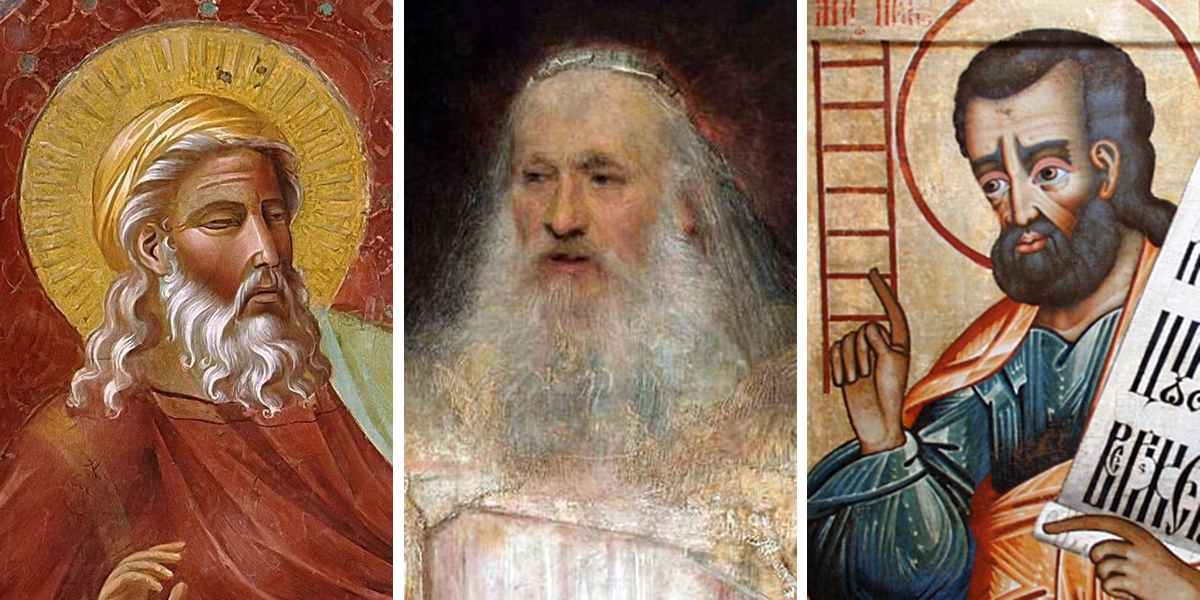
Patriarchs
5
MENTIONS
3
EPISODES
3
PODCASTS
Search complete. 5 mentions across 3 episodes found for "Patriarchs".
Oct 6, 2026

speaker_1NARRATOR
This genealogy serves as a foundation for the subsequent narratives of the Bible, connecting the stories of the great patriarchs such as Abraham, Isaac, and Jacob to post-flood humanity.
speaker_1NARRATOR
It also contributes to understanding the different nations and cultures that emerged in antiquity according to the Biblical perspective.
speaker_1NARRATOR
The Patriarchs.
speaker_1NARRATOR
The saga of the patriarchs, marked by complex family relationships and divinely orchestrated events, played a fundamental role in Biblical history, shaping the trajectory of God's people.
speaker_1NARRATOR
Abraham, initially called Abram, and his wife Sarah, received an extraordinary promise from God.

Ed HumpalNARRATOR
Recent testimony of archaeology may be either the testimony of recent discoveries or recent testimony of former discoveries.
Ed HumpalNARRATOR
a new interpretation if it be established to be a true interpretation is a discovery for to uncover is not always to discover indeed the real value of a discovery is not its emergence but its significance and the discovery of its real significance is the real discovery the most important testimony to the scriptures of this five-year archaeological period admits of some classification i the historical setting of the patriarchal reception in egypt the reception in egypt accorded to abraham and to jacob and his sons and the elevation of joseph there peremptorily demands either the acknowledgment of a mythical element in the stories or the belief in a suitable historical setting therefore obscure insignificant private citizens are not accorded such recognition at a foreign and unfriendly court while some have been conceding a mythical element in the stories archology has uncovered to view such appropriate historical setting that the patriarchs are seen not to have been obscure insignificant private citizens nor zoan a foreign and unfriendly court the presence of the semitic tongue in hyksos territory has long been known from still earlier than patriarchal times until much later the phoenicians first cousins of the hebrews did the foreign business of the egyptians as the english the germans and the french do the foreign business of the chinese of to-day and some familiarity even sympathy with semitic religion has been strongly suspected from the interview of the hyksos kings with the patriarchs but the discovery in nineteen o six by petri of the great fortified camp at tell el set at rest in the main the biblical question of the relation between the patriarchs and the hyksos the abundance of hyksos scarabs and the almost total absence of all others mark the camp as certainly a hyksos camp the original character of the fortifications before the hyksos learnt the builders craft from the egyptians shows them to have depended upon the bow for defence and finally the name hyksos in the egyptian hak shashru bedouin princes brings out sharp and clear the harmonious picture of which we have had glimpses for a time of the hyksos as wandering tribes of the desert of upper and lower ruthen i e syria and palestine northern and western arabia bow people as the egyptians called them their traditional enemies as far back as pyramid times why then should not the patriarchs have had a royal reception in egypt they were themselves also the heads of wandering tribes of upper and lower ruthen in the tongue of the egyptians hak shahshu bedouin princes and among princes a prince is a prince however small his principality so abraham the bedouin prince was accorded princely consideration at the bedouin court in egypt joseph the bedouin slave became again the bedouin prince when the wisdom of god with him and his rank by birth became known and jacob and his other sons were welcome with all their followers and their wealth as a valuable acquisition to the court party always harassed by the restive and rebellious native egyptians This does not prove racial identity between the Hyksos and the Patriarchs, but very close tribal relationship.
Ed HumpalNARRATOR
And thus every suspicion of a mythical element in the narrative of the reception accorded the Patriarchs in Egypt disappears when archaeology has testified to the true historical setting.
Ed HumpalNARRATOR
two the hittite vindication a second recent testimony of archology gives us the great hittite vindication the hittites have been in one respect the trojans of bible history indeed the inhabitants of old troy were scarcely more in need of a schliemann to vindicate their claim to reality than the hittites of a in nineteen o four one of the foremost archaeologists of europe said to me i do not believe there ever were such a people as the hittites and i do not believe kita in the egyptian inscriptions was meant for the name hittites we will allow that archaeologist to be nameless now but the ruins of troy vindicated the right of her people to a place in real history and the ruins of boghatzkoi bid fair to afford a more striking vindication of the bible representation of the hittites only the preliminary announcement of winkler's great treasury of documents from bogart's koi has yet been made the complete unfolding of a long eclipsed great national history is still awaited impatiently but enough has been published to redeem this people completely from their half-mythical plight and give them a firm place in sober history greater than imagination had ever fancied for them under the stimulus of any hint contained in the bible there has been brought to light a hittite empire in asia minor with central power and vassal dependencies round about and with treaty rights on equal terms with the greatest nations of antiquity thus making the hittite power a third great power with babylonia and egypt as was indeed foreshadowed in the great treaty of the hittites with rameses the second inscribed on the projecting wing of the south wall of the temple of ammon at karnak though rameses tried so hard to obscure that fact the ruins at the village of bogatzkoia are shown also to mark the location of the hittite capital and the unknown language on the cuneiform tablets recovered there to be the hittite tongue while the cuneiform method of writing as already upon the amarna tablets so still more clearly here is seen to have been the diplomatic script and in good measure the babylonian to have been the diplomatic language of the orient in that age and the large admixture of babylonian words and forms in these hittite inscriptions opens the way for a real decipherment of the hittite language and imagination can scarcely promise too much to our hopes for the light which such a decipherment will throw upon the historical and cultural background of the bible only one important point remains to be cleared up the relation between the hittite language of these cuneiform tablets and the language of the hittite hieroglyphic inscription that these were identical is probable that the hieroglyphic inscriptions represent an older form of the language a kind of hieratic is possible that it was essentially different from the language of these tablets is improbable there has been the hittite vindication the complete illumination of hittite history is not likely to be long delayed three the palestinian civilization other recent testimony of archaeology brings before us the palestinian civilization of the conquest period palestinian explorations within the last few years have yielded a startling array of finds illustrating things mentioned in the bible finds of the same things finds of like things and finds in harmony with things individual mention of them all is here neither possible nor desirable of incomparably greater importance than these individually interesting relics of canaanite antiquity is the answer afforded by recent research to two questions first first in order does the canaanite culture as revealed by the excavations accord with the story of israel at the conquest as related in the bible how much of a break in culture is required by the bible account and how much is revealed by the excavations for answer we must find a standpoint somewhere between that of the dilettante traveller in the land of the microscopic scientist thousands of miles away the careful excavator in the field occupies that sane and safe middle point of view petrie bliss macalister schumacker and sellin these are the men with whom to stand and for light on the early civilization of palestine the great work of macalister at gizeh stands easily first historical value of pottery.
Ed HumpalNARRATOR
In determining this question of culture, too much importance has been allowed to that estimate of time and chronological order which is gained exclusively from the study of pottery.

speaker_0NARRATOR
Recent testimony of archaeology may be either the testimony of recent discoveries or recent testimony of former discoveries.
speaker_0NARRATOR
a new interpretation if it be established to be a true interpretation is a discovery for to uncover is not always to discover indeed the real value of a discovery is not its emergence but its significance and the discovery of its real significance is the real discovery the most important testimony to the scriptures of this five-year archaeological period admits of some classification i the historical setting of the patriarchal reception in egypt the reception in egypt accorded to abraham and to jacob and his sons and the elevation of joseph there peremptorily demands either the acknowledgment of a mythical element in the stories or the belief in a suitable historical setting therefore obscure insignificant private citizens are not accorded such recognition at a foreign and unfriendly court while some have been conceding a mythical element in the stories archology has uncovered to view such appropriate historical setting that the patriarchs are seen not to have been obscure insignificant private citizens nor zoan a foreign and unfriendly court the presence of the semitic tongue in hyksos territory has long been known from still earlier than patriarchal times until much later the phoenicians first cousins of the hebrews did the foreign business of the egyptians as the english the germans and the french do the foreign business of the chinese of to-day and some familiarity even sympathy with semitic religion has been strongly suspected from the interview of the hyksos kings with the patriarchs but the discovery in nineteen o six by petri of the great fortified camp at tell el set at rest in the main the biblical question of the relation between the patriarchs and the hyksos the abundance of hyksos scarabs and the almost total absence of all others mark the camp as certainly a hyksos camp the original character of the fortifications before the hyksos learnt the builders craft from the egyptians shows them to have depended upon the bow for defence and finally the name hyksos in the egyptian hak shashru bedouin princes brings out sharp and clear the harmonious picture of which we have had glimpses for a time of the hyksos as wandering tribes of the desert of upper and lower ruthen i e syria and palestine northern and western arabia bow people as the egyptians called them their traditional enemies as far back as pyramid times why then should not the patriarchs have had a royal reception in egypt they were themselves also the heads of wandering tribes of upper and lower ruthen in the tongue of the egyptians hakshashu bedouin princes and among princes a prince is a prince however small his principality so abraham the bedouin prince was accorded princely consideration at the bedouin court in egypt joseph the bedouin slave became again the bedouin prince when the wisdom of god with him and his rank by birth became known and jacob and his other sons were welcome with all their followers and their wealth as a valuable acquisition to the court party always harassed by the restive and rebellious native egyptians This does not prove racial identity between the Hyksos and the Patriarchs, but very close tribal relationship.
speaker_0NARRATOR
And thus every suspicion of a mythical element in the narrative of the reception accorded the Patriarchs in Egypt disappears when archaeology has testified to the true historical setting.
speaker_0NARRATOR
two the hittite vindication a second recent testimony of archaeology gives us the great hittite vindication the hittites have been in one respect the trojans of bible history indeed the inhabitants of old troy were scarcely more in need of a schliemann to vindicate their claim to reality than the hittites of a in nineteen o four one of the foremost archaeologists of europe said to me i do not believe there ever were such a people as the hittites and i do not believe kita in the egyptian inscriptions was meant for the name hittites we will allow that archaeologist to be nameless now but the ruins of troy vindicated the right of her people to a place in real history and the ruins of boghatzkoi bid fair to afford a more striking vindication of the bible representation of the hittites only the preliminary announcement of winkler's great treasury of documents from bogart's koi has yet been made the complete unfolding of a long eclipsed great national history is still awaited impatiently but enough has been published to redeem this people completely from their half-mythical plight and give them a firm place in sober history greater than imagination had ever fancied for them under the stimulus of any hint contained in the bible there has been brought to light a hittite empire in asia minor with central power and vassal dependencies round about and with treaty rights on equal terms with the greatest nations of antiquity thus making the hittite power a third great power with babylonia and egypt as was indeed foreshadowed in the great treaty of the hittites with rameses the second inscribed on the projecting wing of the south wall of the temple of ammon at karnak though rameses tried so hard to obscure that fact the ruins at the village of borgatzkoia are shown also to mark the location of the hittite capital and the unknown language on the cuneiform tablets recovered there to be the hittite tongue while the cuneiform method of writing as already upon the amarna tablets so still more clearly here is seen to have been the diplomatic script and in good measure the babylonian to have been the diplomatic language of the orient in that age and the large admixture of babylonian words and forms in these hittite inscriptions opens the way for a real decipherment of the hittite language and imagination can scarcely promise too much to our hopes for the light which such a decipherment will throw upon the historical and cultural background of the bible only one important point remains to be cleared up the relation between the hittite language of these cuneiform tablets and the language of the hittite hieroglyphic inscription that these were identical is probable that the hieroglyphic inscriptions represent an older form of the language a kind of hieratic is possible that it was essentially different from the language of these tablets is improbable there has been the hittite vindication the complete illumination of hittite history is not likely to be long delayed three the palestinian civilization other recent testimony of archaeology brings before us the palestinian civilization of the conquest period palestinian explorations within the last few years have yielded a startling array of finds illustrating things mentioned in the bible finds of the same things finds of like things and finds in harmony with things individual mention of them all is here neither possible nor desirable of incomparably greater importance than these individually interesting relics of canaanite antiquity is the answer afforded by recent research to two questions first first in order does the canaanite culture as revealed by the excavations accord with the story of israel at the conquest as related in the bible how much of a break in culture is required by the bible account and how much is revealed by the excavations for answer we must find a standpoint somewhere between that of the dilettante traveller in the land of the microscopic scientist thousands of miles away the careful excavator in the field occupies that sane and safe middle point of view petrie bliss macalister schumacker and sellin these are the men with whom to stand and for light on the early civilization of palestine the great work of macalister at gizeh stands easily first historical value of pottery.
speaker_0NARRATOR
In determining this question of culture, too much importance has been allowed to that estimate of time and chronological order which is gained exclusively from the study of pottery.