Patent Act
14
MENTIONS
7
EPISODES
6
PODCASTS
Search complete. 14 mentions across 7 episodes found for "Patent Act".
Nov 24, 2026

Michael RischGUEST
So what we write about immediately after the Constitution, people started petitioning Congress for patents because the way it had always been done is the legislature gave the patent directly.
Michael RischGUEST
So the idea of a patent act was something that Congress had to come up with.
Michael RischGUEST
We don't delve too much into that history.
Michael RischGUEST
There's other really great books that we draw on when we talk about it.
Michael RischGUEST
We do cover some of the basics of, you know, at some point, somebody's got to decide this.
Michael RischGUEST
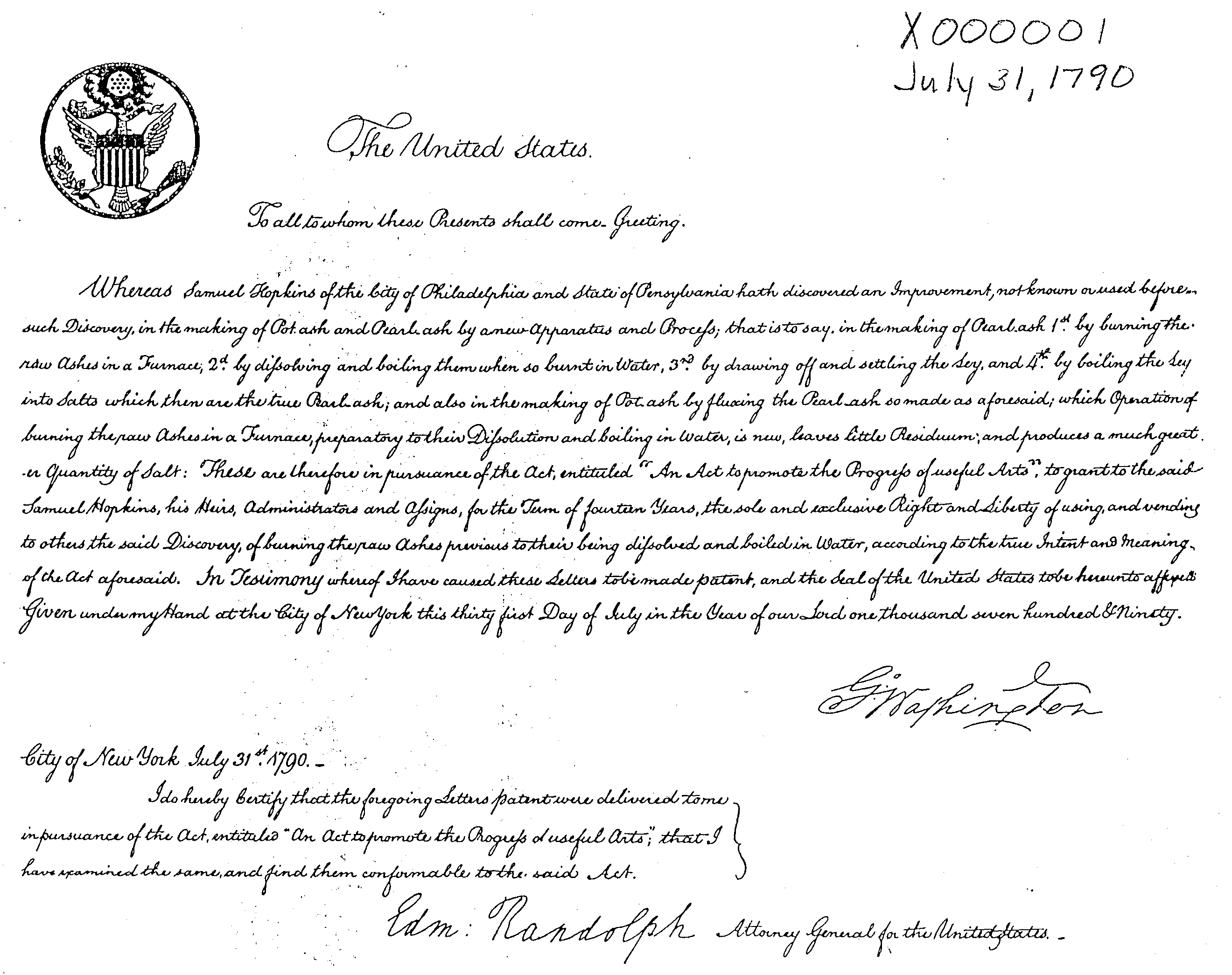
You know, in the very first Patent Act, it was like the Secretary of State and the Secretary of War.
Michael RischGUEST
when that's what the department was named and the attorney general, and they did the first few patents, but we have excerpts from letters where they're like, this is a lot of work and we're not really very good at it.
Eli MazourHOST
That was interesting.

Stephan KinsellaGUEST
I can charge a high price for this sheepskin or this wine in this region because the king gave me a monopoly.
Stephan KinsellaGUEST
And then that was codified in the Statute of Monopolies in 1623 and then in the US Constitution in 1789, the Patent Act of 1790.
Stephan KinsellaGUEST
So patents came from statutes and the practice of protecting people from competition.
Stephan KinsellaGUEST
Copyrights originated when the printing press emerged in the 1500s, and it upset the ability of the church and the state to prevent the publication of works they didn't want published, like the wrong Bible or whatever.
42 MINS LATER
Aaron MurphyGUEST
No, no, no, hold on.
Stephan KinsellaGUEST
What I'm asking you is, are you endorsing the...
Stephan KinsellaGUEST
Do you endorse the existence of current American patent law, the Patent Act, the Copyright Act, the Lanham Act for trademarks, and state and federal trademark, trade secret law? Do you endorse those laws? Even though, by the way...
Stephan KinsellaGUEST
Hold it.

Adam UrbanczykGUEST
The primary mistake we run into is where a client has just simply waited too long.
Adam UrbanczykGUEST
There are requirements for patentability under the Patent Act, Section 102 and 103 and Section 112.
Adam UrbanczykGUEST
Section 102 is going to be a novelty requirement basically in order to to acquire a patent for some matter in an application, the claim within the application, one of the claims in the application cannot be preempted.
Adam UrbanczykGUEST
That is what you're describing in the claim can't have been out there more or less prior to the filing date, the earliest filing date.
9 MINS LATER
Sean O'ConnorHOST
You mentioned earlier patent language, right? And I'm wondering about just the detail in a patent application.
Sean O'ConnorHOST
How important or why is it so important to, you know, fully describe the invention from the beginning? Like, what does that mean exactly from your perspective?
Adam UrbanczykGUEST
manual patent examining procedures, which is buried in the Code of Federal Regulations, which is subordinate to the US Patent Act, which is legislation.
Adam UrbanczykGUEST
That's gonna prescribe what you have to do to go through the process of obtaining a patent for some technology.

Arthur HermanGUEST
And it's that which I celebrated in the book, Founders Fire, and it's one that I hope all the readers will have a new view, a new way of thinking about American history in terms of these founding moments not just in 1776, but throughout our history that have changed and moved our future forward.
John BatchelorHOST
Do we point to the Patent Act? Is that it? Right there?
Arthur HermanGUEST
The Patent Act is, again, one of the key gifts that the founders gave us.
Arthur HermanGUEST
One of the key gifts was pursuit of happiness.
Arthur HermanGUEST
It's built into the Declaration of Independence.
Arthur HermanGUEST
The other was the Patent Act of 1798. of protecting the right, and it's the only place in the U.S. Constitution, Article 1, Section 8, Paragraph 8, it's the only place in the Constitution, outside the Bill of Rights, that the word right appears, is to protect that right for inventors and discoverers to own their own discoveries and inventions, their own products of their own minds and spirits in this way.
Arthur HermanGUEST
And no other nation on Earth, John, No other nation on Earth has this built into its political structure and the way in which it has for for us.
Arthur HermanGUEST
And it was the founders, the founding fathers who said it's going to be there in the very first article of the Constitution.
John BatchelorHOST
We just have a minute.
John BatchelorHOST
I want you to mention the Patent Act.
John BatchelorHOST
Congress does the right thing.
John BatchelorHOST
Why is that important? We have about a minute.
Arthur HermanGUEST
The Patent Act is important for, it's one of the most important gifts we get from the founders because what it does is it establishes people's legal right to own their own intellectual property or inventions and discoveries.
Arthur HermanGUEST
And as Abraham Lincoln put it, who was a patent holder himself, what the patent law does is it releases what he called the fire of genius because it allows individuals to take their discovery, take their inventions, take their intellectual property, and to use it as they see fit.
Arthur HermanGUEST
Not the way the government sees fit, not the way megacorporations would see fit, but the way they wanted to work in their lives, in their pursuit of happiness.
10 MINS LATER
John BatchelorHOST
Is that an important ingredient or just an accident of history?

K.M. GopakumarGUEST
Because the data very clearly shows that the sales from India is not even, or for that matter, in all the developing countries put together, it does not affect their profitability.
K.M. GopakumarGUEST
So therefore, we should not hesitate to use tools like compulsory license, government use license, which is provided in the Patents Act.
K.M. GopakumarGUEST
And lastly, I would say that we need to strengthen NPPA to gather information independently, not depending upon a private agency or a private database.
K.M. GopakumarGUEST
They should have their own data.

speaker_1HOST
Precisely.
speaker_1HOST
Obviousness under Section 103 of the Patent Act.
speaker_1HOST
The expert basically argued that to a hypothetical person of ordinary skill in the art, like an average software engineer working in the 1990s, looking at Duvall and looking at Chu, just matching them together to create BT's probe system was a completely obvious next step.
speaker_1HOST
It didn't require any real inventive leap.