Pastoralism
31
MENTIONS
10
EPISODES
9
PODCASTS
Search complete. 31 mentions across 10 episodes found for "Pastoralism".
Sep 16, 2026

Jason WilliamsHOST
Our food system, of course, will be very different if we didn't have this option.
Jason WilliamsHOST
It's a fascinating world, and again, it's being celebrated throughout the year globally in this International Year of Rangelands and Pastoralists for 2026.
Jason WilliamsHOST
Here locally, courtesy of some folks at Utah State University and others, it's going to be celebrated through a film festival taking place at the Utah Theater in downtown Logan on September 25th.
Jason WilliamsHOST
Joining us here in the studio, we have three of the folks involved in this in various ways.
10 MINS LATER
Jason WilliamsHOST
Again, September 25th in downtown Logan at the Utah Theater.
Jason WilliamsHOST
This film festival will take place.
Jason WilliamsHOST
I've also mentioned this to listeners in hour one, but check out the website for the International Year of Rangelands and Pastoralists.
Jason WilliamsHOST
This is IYRP, International Year, Rangelands, Pastoralists, get it, IYRP.info.
Jason WilliamsHOST
at the Utah Theater in downtown Logan.
Jason WilliamsHOST
And this is a film festival centered around a United Nations designation for 2026 as the International Year of Rangelands and Pastoralists.
Jason WilliamsHOST
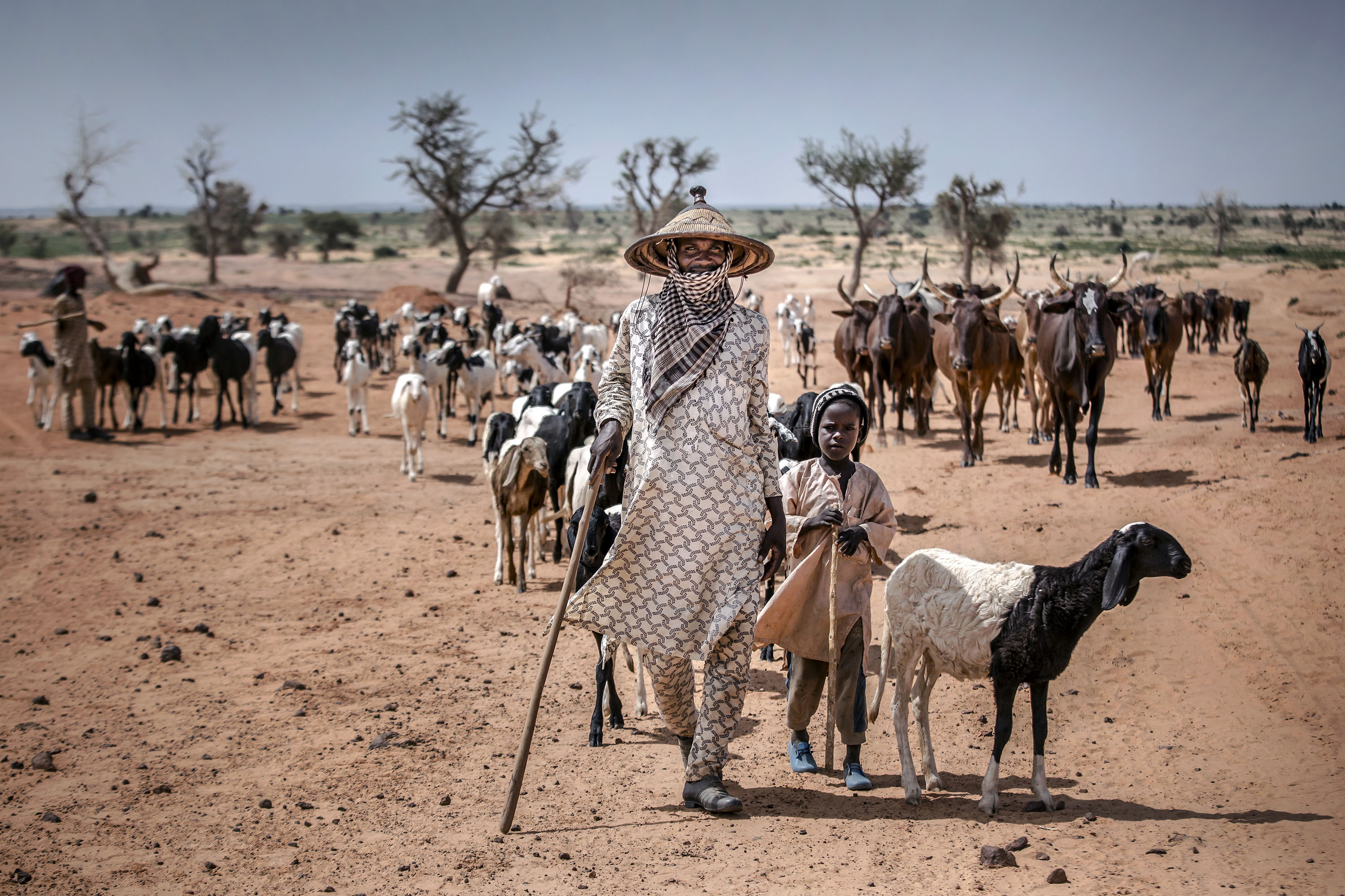
Sounds fancy, right? Well, they have to make these things sound fancy, but what we're actually talking about here is basically recognizing the importance of ranching, cattle grazing practices, not just here in the United States, not just in the Intermountain West, where it's a very prevalent practice and way of life for people, but throughout the world.
Jason WilliamsHOST
Ranching and grazing is something that is done in some aspect, in some way, in every country, on every continent, and without it, our entire food supply changes pretty abruptly, actually, and not in a good way.
Jason WilliamsHOST
And they'll be here in our studio later on today.
Jason WilliamsHOST
Lane Coppock, Professor Emeritus at Utah State University in the Department of Wildland Resources, will be joining us with friends here in the studio.
Jason WilliamsHOST
I've linked to this on our Facebook page, but you can also check out this International Year of Rangelands as a global event via the link I've posted on our Facebook page, which is IYRP.info. International Year of Rangelands and Pastoralists, IYRP, IYRP.info. You can see some of the video highlights of events that have already taken place this year around the globe.
Jason WilliamsHOST
And also, this was really cool.

speaker_6NARRATOR
Make it drier and those arrangements get tense.
speaker_6NARRATOR
Pastoralists may need to push their flocks closer to cultivated land to reach shrinking water sources.
speaker_6NARRATOR
Farmers may expand irrigation to capture more of the reliable flows, cutting off traditional pastures.
speaker_6NARRATOR
Crop failures for a couple of seasons leave both groups desperate.
speaker_6NARRATOR
Drier conditions don't cause war, but they change the stakes of every decision.
speaker_6NARRATOR
A king short on grain may choose conquest over diplomacy.
speaker_6NARRATOR
Pastoralists squeezed by drought may be more willing to ally with enemies of the city that's trying to fence them out.
speaker_6NARRATOR
Trade routes already stressed by reduced surplus become easy to sever and hard to restore.

CornHOST
Climate change makes it worse.
CornHOST
Pastoralists move because the rains move.
CornHOST
If the rains become less predictable, the movement becomes more urgent.
CornHOST
And the borders are still there.

Ndu OkohHOST
Yes.
Ndu OkohHOST
Pastoralism has always depended on movement, as you both highlighted.
Ndu OkohHOST
You know, animals move towards the grazing lands and where the water is.
Ndu OkohHOST
Traders move to where the animals are.

StephHOST
Since then, Debbie and her husband have made the difficult decision to sell Chalice Station, bringing more than 130 years of family ownership to an end.
StephHOST
But leaving the station hasn't meant leaving pastoralism behind.
StephHOST
In this episode, we talk about Debbie's involvement in the International Year of Rangelands and Pastoralists, what's happened with wild dogs since we last spoke, and the book she's written about her experiences on the land.
Debbie DowdenGUEST
So IYRP is the International Year of Rangelands and Pastoralists, and it comes through the United Nations.
Debbie DowdenGUEST
And it's not like you can just ring up the United Nations and go, hey guys, make an International Year of Rangelands and Pastoralists.
Debbie DowdenGUEST
It took, I think, about 15 years of lobbying, beginning with the government of Mongolia, who proposed the idea to the UN, and then Over time, they had to generate support from other countries.
Debbie DowdenGUEST
I remember the Southern Rangelands Pastoral Alliance writing a letter of support to the IYRP, and they took all these letters of support and all of the information to the United Nations and proposed that they do the International Year of Rangelands and Pastoralists, and it did.
Debbie DowdenGUEST
It took a very long time and a great deal of effort worldwide.

Matthew BellHOST
Hundreds of participants are competing in horse races and horseback wrestling, falconry, and archery, among other events.
Matthew BellHOST
Meanwhile, over the preceding two weeks, at a conference in Mongolia, where about a third of the population is nomadic, pastoralists from around the world advocated for rights to public grazing lands and freer movement.
Matthew BellHOST
The United Nations has designated 2026 as the International Year of Rangelands and Pastoralists, a sign of the movement to recognize pastoralists' roles and rights as contributing citizens and sources of practical expertise and cultural pride.
Matthew BellHOST
It denotes an evolving humility and respect among governments and scientists who are seeking ways to incorporate the traditional approaches into a modern system long defined by distinct boundaries, increasing urbanization, and regulated resource access.
Matthew BellHOST
The Mongolia meeting, Lamont pointed out last month, marked a shift from viewing nomadic groups and their practices as a driver of land degradation to recognizing their many benefits, maintaining landscapes, preserving biodiversity, preventing fires, adding value to regions, and enabling adaptation to climate change.

Enkhuun ByambadorjGUEST
And then there's influence from hosting a convention back into the national context.
Enkhuun ByambadorjGUEST
On the first one, I think Mongolia really tried and I think was quite successful in putting pastoralists and rangelands on the convention's purview and on an international stage.
Enkhuun ByambadorjGUEST
It was the International Year of Rangelands and Pastoralists as well in 2026, which was a strategic step to have this in COP17 at the same time in the same year.
Enkhuun ByambadorjGUEST
And that plus the decision that came out on pastoralists and rangelands, I think this was an ecosystem, a livelihood, a way of living, something that is deeply tied to Mongolian heritage and culture.
Enkhuun ByambadorjGUEST
something that comes from traditional and local knowledge systems that I think Mongolia really put into the agenda of the UNCCD and is hopefully something that is carried forward and influences the convention in future discussions.

Amber HuffGUEST
But currently my research is across Madagascar and South Africa, where we're studying the and how rangelands have been brought into this kind of restoration scene.
Amber HuffGUEST
And I think this is an important topic, especially considering right now it's the International Year of Rangelands and Pastoralists, where you have a lot of competing stories about, well, one, the extreme value of rangelands globally and their extent, but then, on the other hand, how they're so neglected and are in need of intervention.
Amber HuffGUEST
So you have a lot of competing stories about how, what we mean when we talk about rangelands, grasslands, open canopy systems.
Amber HuffGUEST
And you're seeing these kind of contestations around representation and around intervention being played out within different national contexts in different ways.
10 MINS LATER
Amber HuffGUEST
Happy to.
Amber HuffGUEST
This is part of our current research that I find really enjoyable and engaging.
Amber HuffGUEST
So this is part of our engagement with the International Year of Rangelands and Pastoralists.
Amber HuffGUEST
I mean, these aren't official events of the IYRP, but throughout this year, each month, we're taking on a different what we call rangeland myth.

speaker_0NARRATOR
Our speakers were Elliot Convery Fisher, research fellow in the Socioecology of Fire Management at the Royal Botanic Garden, Edinburgh, who's a conservation social scientist whose work is currently focused on shaping fire management across protected areas in Madagascar, and Kevin Kerkmann, professor in the School of Agriculture and Science at the University of KwaZulu-Natal, who studies many aspects of grassland ecology and management, including research on grazing, fire, and restoration.
speaker_0NARRATOR
The event was part of our engagement with the International Year of Rangelands and Pastoralists, 2026.
speaker_0NARRATOR
For more in this series, visit our website, repairproject.org, and go to the section on rangeland myths.
Amber HuffHOST
[gentle music] Um, today we will be discussing what I think is the seventh myth of the year, uh, fire is the enemy, or more specifically, fire is the enemy of rangelands.