parkinsonian syndrome
SyndromeWikipedia
129
MENTIONS
73
EPISODES
67
PODCASTS
Search complete. 129 mentions across 73 episodes found for "parkinsonian syndrome".
Oct 30, 2026

Micky SpanoHOST
VA recognizes numerous Agent Orange presumptive conditions, and I mentioned them to you earlier.
Micky SpanoHOST
The most too common are the type 2 diabetics and the ischemic heart disease, hypertension, high blood pressure, Parkinson's disease and Parkinsonism, and certain cancers.
Micky SpanoHOST
hypothyroidism, hypertension, and other conditions established by federal law or regulation, because the law will change again.
Micky SpanoHOST
The PACT Act added hypertension and monoclonal gynecology of undetermined significance, which is MGUS.

Rahul BanerjeeGUEST
Some of the CAR T therapies in myeloma can also cause their own problems with enterocolitis and diarrhea, which we actually treat much like checkpoint inhibitor enterocolitis.
Rahul BanerjeeGUEST
Parkinsonism has happened.
Rahul BanerjeeGUEST
Nerve palsies have happened.
Rahul BanerjeeGUEST
Just about anything weird that has happened that can happen with CAR T therapy, we've seen it happen.
20 MINS LATER
Rahul BanerjeeGUEST
But I also think we're increasingly seeing in the CAR T arena, you know, a lot of our colleagues in other disciplines are really stepping forward and managing these patients.
Rahul BanerjeeGUEST
And that includes cardiology, which I alluded to earlier, but even like in GI.
Rahul BanerjeeGUEST
I know which doctors I can point to for my CAR T patient who's having GI issues, rheumatologic issues, even neurologic issues, these super rare toxicities of BCMA CAR T therapy, including Parkinsonism, which can happen, quite rare and getting rarer, but it can still happen.
Rahul BanerjeeGUEST
We have a neurologist who's very interested in this.

Tanya FranksHOST
I've never heard of this before.
Tanya FranksHOST
And Derek, so he had Parkinsonisms.
Tanya FranksHOST
He was never diagnosed with it, but they used to say in the care home that he had Parkinsonisms.
Tanya FranksHOST
Typical traits.
Tanya FranksHOST
Yeah, his Alzheimer's had developed to points of... potential parkinson's coming into it and he would see in the hospital he would see he called we called it he called it the pink sausage cat

Doug RedoshGUEST
And I knew what could be happening, what could be coming in the future.
Doug RedoshGUEST
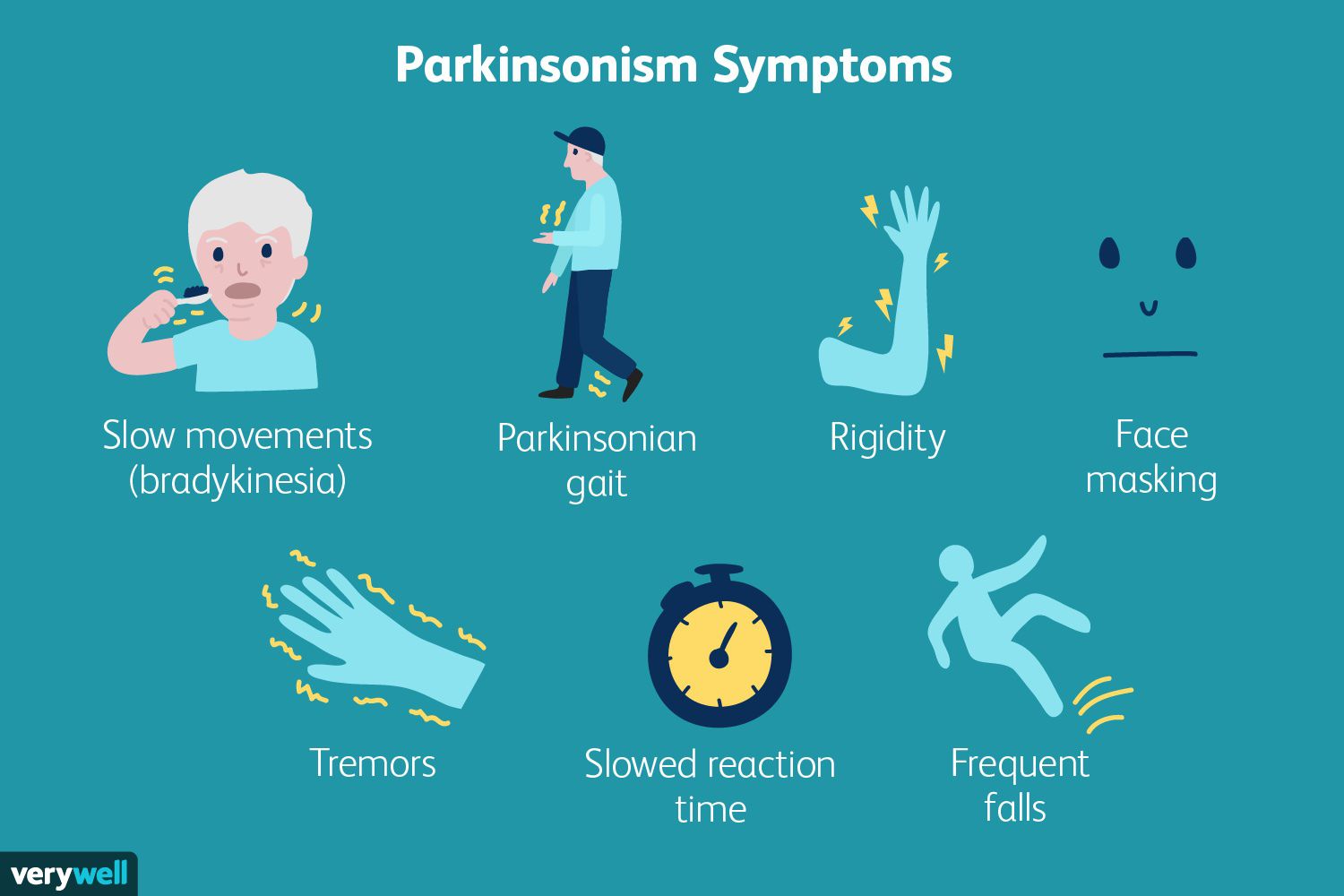
Some people call it Parkinson's almost like an accelerated aging process because a lot of elderly people develop Parkinsonian-like syndromes with tremor and weakness and balance problems.
Doug RedoshGUEST
Parkinson's has sometimes been thought of as being an accelerated form of aging, but it's really not.
Doug RedoshGUEST
It's more specific to other parts of the brain.

Michael KorenHOST
It's approved for severe orthostatic hypotension.
Michael KorenHOST
I have a few patients on that, but it's more this kind of shy Drager-type syndrome where you have these fairly dramatic drops in blood pressure, often in older people that have a Parkinsonian-type disease, even if they're not officially diagnosed with Parkinson's syndrome.
Mitchell RothsteinGUEST
Yeah, and all of those are helpful to some degree from the literature that I reviewed.
Mitchell RothsteinGUEST
The effectiveness in those drugs still results, however, in about 60% to 70% of patients that develop POTS still have to claim some form of disability.

Michael BreusGUEST
And the biggest problem with REM behavior disorder is it's a precursor for Parkinson's syndrome in 35% of the cases.
Michael BreusGUEST
And so it's very difficult when I have a patient who comes to me and they're acting out their dreams and it's 10 years before you see any Parkinsonian symptomatology.
Michael BreusGUEST
And I get to be the person that says, hey, guess what? you could have a pretty significant situation.
Michael BreusGUEST
Now here's where the good news comes in because I've actually done this on a couple of cases is I've gotten somebody so early in their REM behavior disorder that when I get them to neurology, they do so much better and they get all the treatment protocols earlier And everything works out much better.

Ray DorseyGUEST
or 80 if you want more contemporary things if you look at the average age of the first 10 u.s presidents when they died you know george washington john adams it was 78 john adams age 90s writing letters to thomas jefferson age 83 in 1826 and neither of them has parkinson's neither has alzheimer's disease none of the early presidents had either disease If you look at the average age of death for the last 10 U.S. presidents who died, it's also 78.
Ray DorseyGUEST
And, you know, numerous of these individuals have had neurological diseases like Ronald Reagan with Alzheimer's and President George H.W. Bush with a Parkinsonian disorder.
Ray DorseyGUEST
If you want to look in the lab, you put a laboratory animal in the lab and you let it age.
Ray DorseyGUEST
It will never spontaneously develop Parkinson's disease.
11 MINS LATER
Ray DorseyGUEST
Parkinson's disease is largely a man-made disease.
Ray DorseyGUEST
Yes, some of your listeners will notice that some people got Parkinson's disease or something like Parkinson's from influenza pandemic or sleeping sickness in 1918.
Ray DorseyGUEST
And if your people have seen the movie Awakenings, these are individuals who got a Parkinsonian disorder 1919, 1920. that got infection likely from influenza that got a pro-concerning disorder.
Ray DorseyGUEST
And Robin Williams in the movie plays Oliver Sacks, and he gives him a little bit of levodopa, which led to a temporary awakening for these individuals.

Tarun BudworthGUEST
I think he was 16.
Tarun BudworthGUEST
Um, and it had left him with Parkinsonisms.
Tarun BudworthGUEST
I think it was a right-sided weakness, right or left-sided weakness, one-sided weakness.
Tarun BudworthGUEST
Um, a lot, a lot of difficulty in terms of like cognitive abilities completely there.

Kaz GoodweatherGUEST
So we were so lucky to be taught how to work with them clinically.
Kaz GoodweatherGUEST
So that's where it began, where we were prescribing Belladonna, for example, for Parkinsonian tremors.
Kaz GoodweatherGUEST
We were working in the Whittington Hospital.
Kaz GoodweatherGUEST
We were working with intractable hot sweats and Belladonna as well in a menopause picture.

speaker_0NARRATOR
that person would never come back.
speaker_0NARRATOR
Post-encephalitic Parkinsonism is the most common symptom of the chronic phase.
speaker_0NARRATOR
It leads to extreme stiffness in the upper body.
speaker_0NARRATOR
Patients are often rendered completely unable to move their arms.
6 MINS LATER
speaker_0NARRATOR
Reports date back to 1934 when he was 45 years old.
speaker_0NARRATOR
However, some sources indicate that he may have had transient symptoms starting in 1923 at the age of 34.
speaker_0NARRATOR
This would be classed as young-onset Parkinsonism, and it would align with the 1920s epidemic of encephalitis lethargica.
speaker_0NARRATOR
His most well-known symptom was a tremor in his left hand.
63 more episodes mention parkinsonian syndrome.
Create an account to see the whole feed, search across every transcript, and follow the entities you care about.