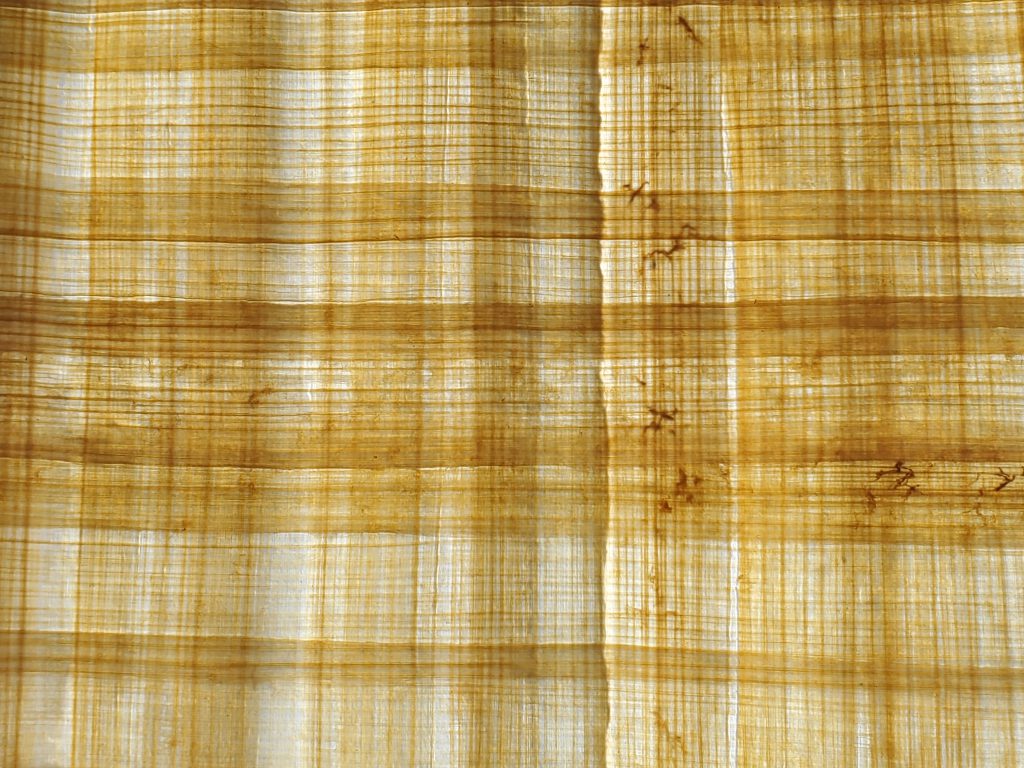
Papyrus
Textile fiberWikipedia
125
MENTIONS
46
EPISODES
42
PODCASTS
Search complete. 125 mentions across 46 episodes found for "Papyrus".
Nov 23, 2026

Gloria EstefanGUEST
La foto en un-
Enrique SantosHOST
Papyrus.
Enrique SantosHOST
No, la otra.
Emilio EstefanGUEST
Picapiedras.
Enrique SantosHOST
Papyrus.
Enrique SantosHOST
No, la otra.
Enrique SantosHOST
Era una película bien famosa en ese momento.

Cédric GobeilGUEST
And really, it's something that was quite developed.
Cédric GobeilGUEST
And we have the same thing, more or less, on Archer and Papyrus, the famous satirical, erotical Papyrus.
Ollie GuillouHOST
Yes, the famous Turin erotic satirical papyrus.
Ollie GuillouHOST
Let's get into that because it is fascinating and totally unique.
Cédric GobeilGUEST
Well, maybe, but in this case, depicting such a feast could have been depicted more according to the Egyptian iconography.
Cédric GobeilGUEST
But in this case, they went full on to show attributes completely unhuman.
Cédric GobeilGUEST
And then, The whole purpose of having made this papyrus, if we go on the scientific point of view, why having made such papyrus? Papyrus was a very expensive material, usually reserved and kept only for scribes, for administrative purpose and very serious business and matters.
Cédric GobeilGUEST
Then why having used this material for this object? Well, first of all, if we look at the height of this papyrus, usually a papyrus will be more or less 45 centimeters in height because they were used on the ties of the scribes.

Patrick SevilleNARRATOR
The most important of these, however, is the famous papyrus preserved at Turin, of which Lepsius published a good copy as far back as 1842, entitled Der Totenbuch der Ägypter.
Patrick SevilleNARRATOR
The Book of the Dead, which was in use throughout the Greco-Roman and Roman periods, is well illustrated by the Herodic texts published and transcribed by Birch in the Proceedings of the Society of Biblical Archaeology, Volume 7, page 49, and by Libyen in his Le Livre Égyptrie, Coup Mont Naufleuris, Leipzig, 1895.
Patrick SevilleNARRATOR
The first to publish a complete translation of any recession of the Book of the Dead was Birch, who in 1867 gave an English version of the Turin Papyrus in the fifth volume of Bunsen, Egypt's Place in Universal History, pages 123 through 333.
Patrick SevilleNARRATOR
Notwithstanding the fact that the recession here translated is the Sayet, or latest of all, and that the text of the Turin manuscript is faulty in many places, Birch's rendering gave a new impulse to the study of the Egyptian religion, and it has formed the groundwork of the translations made by Egyptologists subsequently.
Patrick SevilleNARRATOR
The thing to wonder at is not the mistakes which he made, but that he was able, at that early date, to translate so much correctly.
Patrick SevilleNARRATOR
In 1882, Pierre published a French translation of the Turin Papyrus, entitled Le Livre des Morts des Anciens Égyptiens, and in 1894, Davis published an English version of Pierre's French translation at New York.
Patrick SevilleNARRATOR
Up to the present, however, no complete translation of the Theban recession has appeared.
Patrick SevilleNARRATOR
Translations of single papyri, for example, the Papyrus of Nebseni, the Papyrus of Ani, the Papyrus of Sutnemes, the Papyrus of Nebked, etc., have been made by Deveria and Pierre, Guillais, Massey, myself, and others, and a translation of the text published by Naville in his Totenbach, and by others, was begun by Renouf in the Proceedings of the Society of Biblical Archaeology, Volume 14.

MarkHOST
Just a little.
MarkHOST
There's papyrus.
MarkHOST
Papyrus.
JuniorHOST
No, I can't wait.
JuniorHOST
I think next season is going to be exciting.

James PalmerGUEST
If you went back, say, even just 50 years before Charlemagne, a lot of documents are still being used on papyrus, legal documents.
James PalmerGUEST
People are writing books on papyrus.
James PalmerGUEST
Papyrus, it's really fragile.
James PalmerGUEST
It doesn't survive very well.
James PalmerGUEST
So we lost pretty much all of that.

Daniel BishopHOST
The linguist in me is starting to think, I mean, we have...
Daniel BishopHOST
We have digitizations of like cuneiform tablets or of ancient papyri.
Daniel BishopHOST
Papyri? Yes.
Daniel BishopHOST
Old writings that like haven't been.
Daniel BishopHOST
It's not that it's impossible to find out what's on them.

Patrick SavilleNARRATOR
7, p. 49, and by Libyan in his La Liffre Egyptre, Coup Mont-Nauf-Lyris, Lipszig, 1895.
Patrick SavilleNARRATOR
The first to publish a complete translation of any recession of the Book of the Dead was Birch, who in 1867 gave an English version of the Turin Papyrus in the fifth volume of Bunsen, Egypt's Place in Universal History, pages 123 through 333.
Patrick SavilleNARRATOR
Notwithstanding the fact that the recession here translated is the sayet, or latest of all, and that the text of the Turin manuscript is faulty in many places.
Patrick SavilleNARRATOR
Birch's rendering gave a new impulse to the study of the Egyptian religion, and it has formed the groundwork of the translations made by Egyptologists subsequently.
Patrick SavilleNARRATOR
The thing to wonder at is not the mistakes which he made, but that he was able, at that early date, to translate so much correctly.
Patrick SavilleNARRATOR
In 1882, Pierre published a French translation of the Turin Papyrus, entitled La Livre des Morts des Ossiens Égyptiens, and in 1894, Davis published an English version of Pierre's French translation at New York.
Patrick SavilleNARRATOR
Up to the present, however, no complete translation of the Theban Recession has appeared.
Patrick SavilleNARRATOR
Translations of single papyri, for example, the papyrus of Nebseni, the papyrus of Ani, the papyrus of Setnamese, the papyrus of Nebked, etc., have been made by Deveria and Pire, Gies, Massey, myself, and others.

speaker_2HOST
He didn't even have the money to write.
speaker_2HOST
Papyrus was expensive, so, as Diogenes Laertius tells us, he jotted down what he heard from Zeno on bits of broken pottery and on the shoulder blades of oxen.
speaker_2HOST
It's easy to picture him, a man who has spent the night hauling on the rope of a well, sitting in the sun, scratching his master's words onto a bone so he wouldn't forget them.
speaker_2HOST
But the hardest thing wasn't the poverty.

Drowsy HistorianHOST
You notice one sitting nearby with writing materials arranged carefully in front of him.
Drowsy HistorianHOST
Papyrus sheets lie beside him, and his hand moves steadily as quantities are recorded.
Drowsy HistorianHOST
You cannot read all the details from where you stand, but you recognise the familiar appearance of administrative work.
Drowsy HistorianHOST
numbers, names, places, measures, obligations.

Josh HowardHOST
We're already doing
James BairdHOST
papyrus here.
James BairdHOST
Papyrus.
James BairdHOST
Pretty
Josh HowardHOST
close.
36 more episodes mention Papyrus.
Create an account to see the whole feed, search across every transcript, and follow the entities you care about.