Pando
Quaking aspenWikipedia
22
MENTIONS
5
EPISODES
5
PODCASTS
Search complete. 22 mentions across 5 episodes found for "Pando".
Oct 7, 2026

DonnaHOST
Yes, the six thousand six hundred ton giant.
DonnaHOST
If you are wondering what kind of organism covers a hundred and seven acres and has lived for eighty thousand years, allow me to introduce you to Pando.
speaker_2HOST
Pando, often referred to as the trembling giant.
DonnaHOST
That's the one.
DonnaHOST
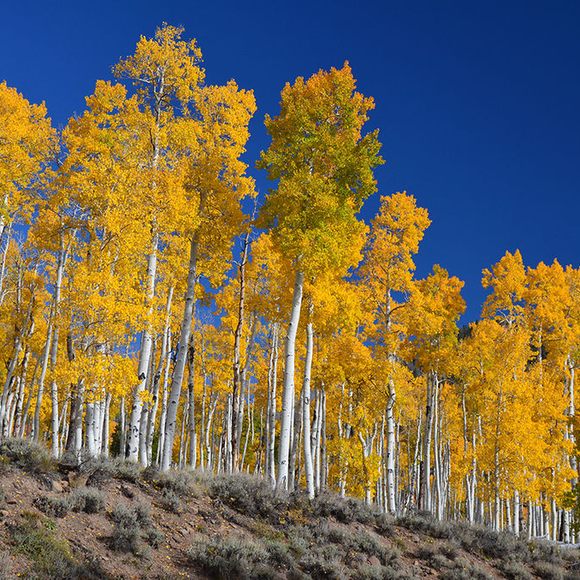
It's located in the Fishlake National Forest in Utah, and if you walk into this forest, you will see what looks like roughly forty-five thousand individual quaking aspen trees.
DonnaHOST
Those forty-five thousand trees are all genetically identical clones.
speaker_2HOST
And more importantly, beneath the soil, they're all physically connected by a single massive shared root system.
DonnaHOST
Pando is not a forest.

Casey ClappHOST
...
Casey ClappHOST
the biggest giant sequoia or Pando, which would be kind of the same, but that's just individual stems from one root system.
Alex CrowsonHOST
Oh.
Casey ClappHOST
This is o- one, one full canopy with a gigantic root system, but it's all above ground.
Alex CrowsonHOST
Mm-hmm.
Casey ClappHOST
Yeah, which, yeah, yeah.
Casey ClappHOST
Well, we'll have to talk about that in relation to Pando, but that's not the objective of our podcast today.
Casey ClappHOST
[upbeat music]

speaker_3HOST
A single aspen clone can cover many acres and consist of tens of thousands of individual stems, all connected by a shared root system.
speaker_3HOST
The largest known aspen clone is called Pando, located in Utah's Fish Lake National Forest.
speaker_3HOST
It covers about 106 acres and is estimated to weigh about 13 million pounds, making it one of the heaviest known organisms on Earth.
speaker_3HOST
Pando is estimated to be thousands of years old, though the individual stems that make up the visible forest above ground live only about 100 to 150 years each.
speaker_3HOST
When Pando changes colour in autumn, the entire grove turns golden at nearly the same time because all the stems share the same genetic programming for when to begin senescence.
speaker_3HOST
Scientists studying Pando have raised concerns about its health.
speaker_3HOST
Overgrazing by deer and elk has reduced the number of young stems replacing old ones, and the clone may be slowly shrinking.
speaker_3HOST
In Northern Europe, birch trees are among the most important sources of autumn colour.

Scott WrightHOST
So it's like one organism spreads over these giant areas.
Scott WrightHOST
Utah has the largest one down in central Utah near Fish Lake called, they call it Pando.
Scott WrightHOST
And it's just thousands and thousands of acres of fish.
Scott WrightHOST
Aspen trees everywhere in it, and they all share the same root system.

speaker_1UNKNOWN
And the newsletter introduces this concept using a metaphor from the natural world that honestly it completely rewired how I view financial resilience.
speaker_1UNKNOWN
So we're going to Central Utah, uh, to look at this very specific biological phenomenon called Pando.
speaker_2UNKNOWN
Pando is just fascinating.
speaker_2UNKNOWN
It completely breaks our fundamental understanding of what an individual actually is.
speaker_2UNKNOWN
If you, um, if you walk through the Fishlake National Forest in Utah, you see what just looks like a sprawling, totally normal forest of quaking aspens.
speaker_1UNKNOWN
But the visual is a total deception, right?
speaker_2UNKNOWN
Yeah.
speaker_1UNKNOWN
Because Pando isn't actually a forest at all.