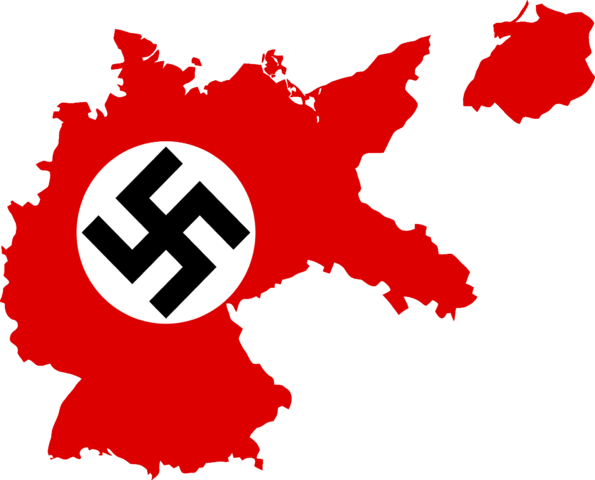
Pan-Germanism
Political ideologyWikipedia
20
MENTIONS
14
EPISODES
13
PODCASTS
Search complete. 20 mentions across 14 episodes found for "Pan-Germanism".
Oct 26, 2026

Timothy FergusonNARRATOR
more or less recognised by the german nation as substantial units of war such as the ruthenberg siemens schuchert and so forth all of which
Timothy FergusonNARRATOR
have proved their serviceability more or less conclusively But, in the somewhat constricted Teuton mind, the Zeppelin, and the Zeppelin only, represents the ultima thule of aerial navigation, and the means for asserting the universal character of pan-Germanism as well as Kultur.
Timothy FergusonNARRATOR
End of Chapter 3 Part 2 Recording by William Tomko CHAPTER FOUR PART ONE airships of war so much has been said and written concerning the zeppelin airship particularly in its military aspect that all other developments in this field have sunk into insignificance so far as the general public is concerned the zeppelin dirigible has come to be generally regarded as the one and only form of practical lighter-than-air type of aircraft moreover the name has been driven home with such effect that it is regarded as the generic term for all german airships these are grievous fallacies the zeppelin is merely one of a variety of types even in germany although at the moment it probably ranks as the solitary survivor of the rigid system of construction at one time owing to the earnestness with which the advantages of this form of design were discussed and in view of the fact that the zeppelin certainly appeared to triumph when all other designs failed great britain was tempted to embrace the rigid form of construction
Timothy FergusonNARRATOR
the building of an immense vessel of this class was actively supported and it was aptly christened the may fly

Barry EadesNARRATOR
The Junkers were especially anxious for this to come about, as it would greatly increase their power in Germany.
Barry EadesNARRATOR
Pan-Germanist is the name given to a group of German leaders who aimed especially to bring all German-speaking peoples into the German Empire.
Barry EadesNARRATOR
In general, however, the same leaders aimed to bring under German control all the districts that had been mentioned above, together with the Balkan states and other lands.
Barry EadesNARRATOR
Germany wanted more colonies.

speaker_3NARRATOR
Already the need of some synthesis at least ampler than existing national organizations is so apparent in the world that at least five spacious movements of coalescence exist to-day.
speaker_3NARRATOR
There is the movement called Anglo-Saxonism, the allied but finally very different movement of British imperialism, the Pan-Germanic movement, Pan-Slavism, and the conception of a great union of the Latin peoples.
speaker_3NARRATOR
Under the outrageous treatment of the white peoples an idea of unifying the yellow peoples is pretty certain to become audibly and visibly operative before many years.
speaker_3NARRATOR
These are all deliberate and justifiable suggestions, and they all aim to sacrifice minor differences in order to link like to like in greater matters, and so secure, if not physical predominance in the world, at least an effective defensive strength for their racial, moral, customary, or linguistic differences against the aggressions of other possible coalescences.

Tom BirkettGUEST
And so that kind of use of runes in the early romantic nationalist ideas about nationhood and so on in Scandinavia that came to a head really in Nazi Germany as well with the adoption of runes in the iconography of the SS and more widely in the Third Reich.
Tom BirkettGUEST
And that was to do with this idea that a pan-Germanic culture which used runes had been kind of wiped out really or obscured by the dominance of the Christian church, which again, we know that that doesn't stand up to historical scrutiny at all.
Tom BirkettGUEST
But from that fetishization of runes and Old Norse texts as well, it kind of casts a long shadow over the discipline.
Tom BirkettGUEST
And I mentioned at the beginning that runology has been quite kind of protective and maybe I don't want to say hyper-academic, but maybe has been particularly rigorous as a discipline and maybe a little bit exclusionary as a discipline in some ways as well, is because there was a real need to establish runology on a much more scholarly basis because of all these myths fantasies but also this really dangerous political appropriation you know because once you start allowing for fantastical or fanciful interpretations of runes you can see where it leads you know to people using them for all kinds of unpleasant purposes and that still goes on today you know the vast majority of people who have you know Tattoos and runes are doing it because they have an interest in the period and the culture, they're expressing heritage, whatever.

Tom BirkettGUEST
And so that kind of use of runes in the early romantic nationalist ideas about nationhood and so on in Scandinavia, that came to a head really in Nazi Germany as well with the adoption of runes in the iconography of the SS and more widely in the Third Reich.
Tom BirkettGUEST
And that was to do with this idea that a pan-Germanic culture which used runes had been kind of wiped out really or obscured by the dominance of the Christian church, which again, we know that that doesn't stand up to historical scrutiny at all.
Tom BirkettGUEST
But from that fetishization of runes and Old Norse texts as well, it kind of casts a long shadow over the discipline.
Tom BirkettGUEST
And I mentioned at the beginning that runology has been quite kind of protective and maybe I don't want to say hyper-academic, but maybe has been particularly rigorous as a discipline and maybe a little bit exclusionary as a discipline in some ways as well, is because there was a real need to establish runology on a much more scholarly basis because of all these myths fantasies but also this really dangerous political appropriation you know because once you start allowing for fantastical or fanciful interpretations of runes you can see where it leads you know to people using them for all kinds of unpleasant purposes and that still goes on today you know the vast majority of people who have you know Tattoos and runes are doing it because they have an interest in the period and the culture, they're expressing heritage, whatever.

Tom BirkettGUEST
And so that kind of use of runes in the early romantic nationalist ideas about nationhood and so on In Scandinavia, that came to a head really in Nazi Germany as well, you know, with the adoption of runes in the iconography of the SS and more widely in the Third Reich.
Tom BirkettGUEST
And that was to do with, you know, this idea that a pan-Germanic culture which used runes had been kind of wiped out really or obscured by the dominance of the Christian church, which again, we know that that doesn't stand up to historical scrutiny at all.
Tom BirkettGUEST
But from that fetishization of runes and Old Norse texts as well, it kind of cast a long shadow over the discipline.
Tom BirkettGUEST
And I mentioned at the beginning that runology has been quite kind of protective and maybe I don't want to say hyper-academic, but maybe has been particularly rigorous as a discipline and maybe a little bit exclusionary as a discipline in some ways as well, is because there was a real need to establish runology on a much more scholarly basis because of all these myths fantasies, but also this really dangerous political appropriation.

Pamela NagamiNARRATOR
He was indeed fully resolved that the Confederation should be purely nominal.
Pamela NagamiNARRATOR
Austria, being a partially non-German state, had nothing at all to hope for from pan-Germanism, the essence of the movement towards unity.
Pamela NagamiNARRATOR
Rather, the sentiment was dangerous to her.
Pamela NagamiNARRATOR
Nor could she with safety attempt to exercise direct political influence in Germany.

speaker_4NARRATOR
the french teutons who built rheims must surrender it to the south german teutons who have partly built cologne and these in turn surrender cologne to the north german teutons who never built anything except the wooden aunt sally of old hindenburg every teuton must fall on his face before an inferior teuton until they all find in the foul marshes towards the baltic the very lowest of all possible teutons and worship him and find he is a slob.
speaker_4NARRATOR
So much for pan-Germanism.
speaker_4NARRATOR
But though Teutonism is indefinable, or at least it is by the Teutons undefined, it is not unreal.
speaker_4NARRATOR
A vague but genuine soul does possess all people who boast of Teutonism and has possessed ourselves in so far as we have been touched by that folly.

Daven HiskeyHOST
This compromise created further division within Austrian society.
Daven HiskeyHOST
While most remained loyal to the Habsburgs no matter what, others declared themselves as pan-German and wished to be ruled by the Hohenzollern Kaisers in Berlin.
Daven HiskeyHOST
Both empires remained allies, however, up to and including the Great War.
Daven HiskeyHOST
In October of 1918, as the Central Empires were on their knees, German Quartermaster General Erich Ludendorff suggested a plan for reunification to the cabinet in Berlin.
23 MINS LATER
Daven HiskeyHOST
Moreover, it had offered the younger generations the perception that their hitherto small and unstable country was now part of a much larger community of almost 70 million Germans.
Daven HiskeyHOST
The enthusiasm of the Austrian pro-Nazi youth was compounded by other factors.
Daven HiskeyHOST
Many Austrians still harbored pan-German sentiments, which, as noted, had been growing roots for almost one century.
Daven HiskeyHOST
Other citizens, even if not overly Nazi, were anti-Semitic and anti-communist nonetheless, and thus agreed to substantial parts of that ideology.

Pamela NagamiNARRATOR
He was indeed fully resolved that the Confederation should be purely nominal.
Pamela NagamiNARRATOR
Austria, being a partially non-German state, had nothing at all to hope for from pan-Germanism, the essence of the movement towards unity.
Pamela NagamiNARRATOR
Rather, the sentiment was dangerous to her.
Pamela NagamiNARRATOR
Nor could she with safety attempt to exercise direct political influence in Germany.
4 HRS 1 MIN LATER
Pamela NagamiNARRATOR
As it was, the weakness of the government threw a shadow of legality over the revolutionary proceedings of the Magyars.
Pamela NagamiNARRATOR
But in the circumstances nothing else could be expected.
Pamela NagamiNARRATOR
The Vienna mob really controlled the situation, and being itself infected with pan-Germanism, was eager to foster any movement likely to lead to the sacrifice of the non-Teutonic dominions of the Habsburgs.
Pamela NagamiNARRATOR
Thus the nationalist agitations grew daily more violent, and within six months of Metternich's fall, the Austrian empire which was to have been saved by his resignation appeared to stand upon the brink of ruin.
4 more episodes mention Pan-Germanism.
Create an account to see the whole feed, search across every transcript, and follow the entities you care about.