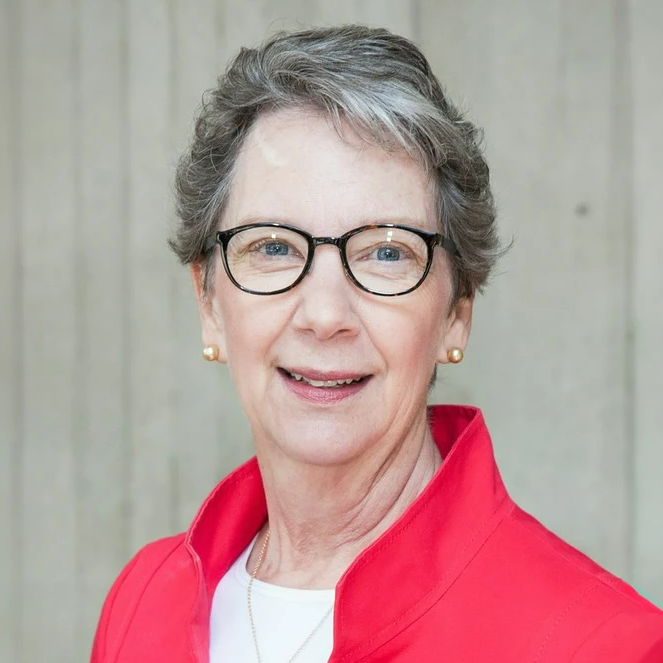
Pam Snow
Distinguished Professor of Cognitive Psychology and Co-Director of the SOLAR Lab at La Trobe University, Australia.
4
APPEARANCES
1
PODCASTS
Sep 10, 2026

James MurphyHOST
What evidence is there to show that code-first teaching is more effective than meaning-first approaches?

Pam SnowGUEST
If we go back to, well, I mean, we can go back to, I was going to say go back to the National Reading Panel report in the year 2000, but we can go back to the work of Jean Choll.
Pam SnowGUEST
in the 1960s when I was at primary school and, you know, her writings are very clear about what makes for robust reading instruction, what all teachers should be doing in all classrooms.
Pam SnowGUEST
So we've known for a long time, I think, that because children are having to master something that we now have describe as being biologically secondary, thanks to the work of David Geary, the University of Missouri.
Pam SnowGUEST
I think that's a very helpful framework for thinking about the distinction between oral language, which is biologically primary.
Pam SnowGUEST
So children come to school with five years of talking and listening under their belts.
12 MINS LATER
James MurphyHOST
Given that the weight of evidence in favour of systematic synthetic phonics is so strong, why do you think that whole language balanced literacy approach has persisted?


Emily CarringtonHOST
And this is Professor Pam Snow, who's the co-founder of the Science of Language and Reading Lab at La Trobe University in Melbourne.
Pam SnowGUEST
And this is changing gradually, but we have been more of the choose your own adventure ilk when it comes to reading instruction.
Pam SnowGUEST
And ironically, what that's done is allowed us to see what happens when schools do decide to transform their reading instruction and go down a robust evidence-based path and that in spite of their postcodes and their level of socioeconomic disadvantage and the complexity of the community that they're located in and the number of languages spoken, we see amazing results.
Pam SnowGUEST
It aligns obviously with decades of research that tells us that this is a biologically secondary act.
Pam SnowGUEST
In English, we have some particular challenges because of the depth of our orthography that need to be taken into account.
Emily CarringtonHOST
what happens when you're 13 years old and you still can't decode properly? My
Pam SnowGUEST
I am pretty sure there's a small group of children, and by small, I'm going to say probably less than 2%.
Pam SnowGUEST
who have some kind of underlying neurobiological difficulty that makes it difficult for them, even in the context of high-quality, robust instruction, to master the ways in which speech and print map to each other in their particular language and their orthography.
Pam SnowGUEST
But when we've got situations as we do in many contexts in Australia where we've got 30% of children struggling to learn to read, to me that's an instruction problem, not a reading problem.
Emily CarringtonHOST
Could it be something to do with what happens inside the classroom? For me, it
Pam SnowGUEST
always starts with teacher knowledge because teaching is the workforce that is responsible for children learning how to read.
Pam SnowGUEST
There are some people who claim that parents read to their children more, we wouldn't have literacy problems and so forth.
Pam SnowGUEST
And we have a famous author here in Australia who likes to make that argument every so often.
speaker_5UNKNOWN
And there was a lot there that we know about how kids read, how kids learn, that we just not thought.
Pam SnowGUEST
None of us like being asked to do things day in, day out that we're not good at and that make us feel like failures.
16 MINS LATER
Pam SnowGUEST
If we were manufacturing chocolate or cars, we wouldn't be assuming that 10, 20% of our products are going to be faulty.