Pale of Settlement
RegionWikipedia
782
MENTIONS
62
EPISODES
18
PODCASTS
Search complete. 782 mentions across 62 episodes found for "Pale of Settlement".
Oct 11, 2026

Pete QuiñonesHOST
We find it exposed and then refuted by A. Zhrabenikov.
Pete QuiñonesHOST
There is a view that if, through the reforms of the years 1860 to 1863, the Pale of Settlement had been abolished, our whole history would have unfolded otherwise.
Pete QuiñonesHOST
If Alexander II had abolished the Pale of Settlement, there would have been neither the Bund nor Trotskyism.
Pete QuiñonesHOST
Then he mentioned the internationalist and socialist idea that flowed from the West and wrote, If the suppression of the Pale of Settlement had been of capital importance to them, all their struggle would have reached towards it.
Pete QuiñonesHOST
Now they were occupied with everything else.
Pete QuiñonesHOST
They dreamed of overthrowing Tsarism.
1 HR 47 MINS LATER
Pete QuiñonesHOST
It is not only the lower strata of the Jewish population of Russia that has devoted themselves to the revolutionary passion, but this movement could not fail to catch a large part of the intellectuals and semi-intellectuals of the Jewish people.
Pete QuiñonesHOST
Semi-intellectuals who, in the 20s, constituted the active executives of the Soviet regime.
Pete QuiñonesHOST
But it must be borne in mind that in Odessa the Jews represented one-third of the population and, we have seen, a very significant portion of the student population.
Pete QuiñonesHOST
It must also be borne in mind that the Jews had taken an active part in the Russian revolutionary movement, especially in the Pale of Settlement.
Pete QuiñonesHOST
In addition, Senator Kuzminsky's report provides evidence of its objectivity in many places.
Pete QuiñonesHOST
On the 16th of October, when they arrived at the police station, the people arrested were victims of assault by the police and soldiers.
1 HR 6 MINS LATER
Matthew Raphael JohnsonGUEST
The Kiev pogrom was, you know, it, it's pretty much the same thing.
Matthew Raphael JohnsonGUEST
Um, but, um, this is a heavily Jewish part of the world at the time.
Matthew Raphael JohnsonGUEST
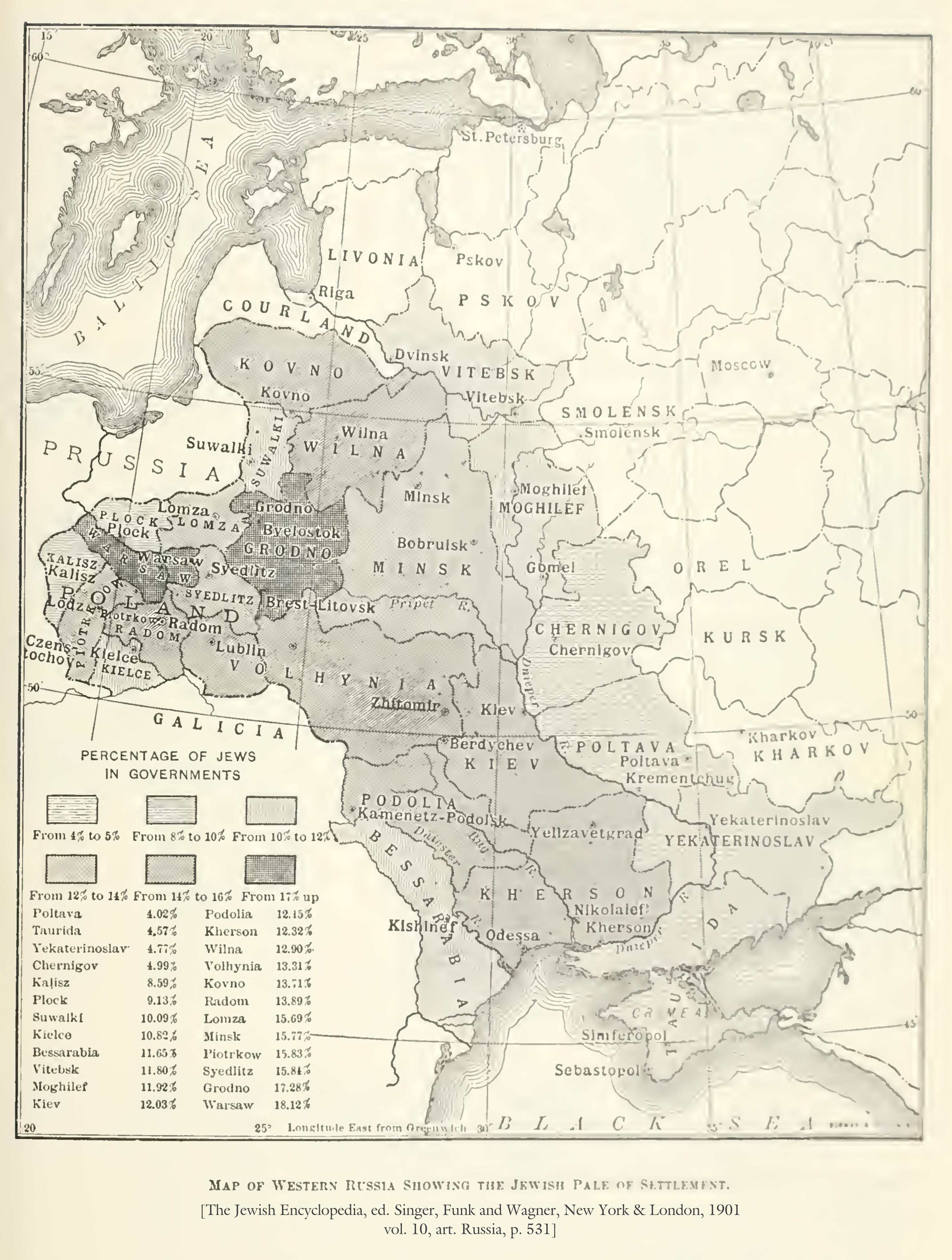
I think at this point, something like 70% of the world's Jewish population were living in, you know, this, what used to be called the Pale of Settlement, including parts of, uh, including parts of, um, Belarus.
Matthew Raphael JohnsonGUEST
So, you know, they, they started a fight that they weren't willing to finish.
Pete QuiñonesHOST
It is clear, and at the beginning of the century, the eminent politician V.I. Gurko observed, 'The place of the Russian, Russian merchant is more and more frequently taken by a Jew.' The Jews also gained influence and authority in the booming sector of the cooperative system.
Pete QuiñonesHOST
More than half of the mutual credit and savings and loan companies were in the Pale of Settlement.
Pete QuiñonesHOST
Eighty-six percent of their members in nineteen eleven were Jewish."
Matthew Raphael JohnsonGUEST
I, I don't have a lot to add here ex-- because we've dealt with this already, the difference between the Jewish merchants and pretty much any other merchant in the world.
10 MINS LATER
Matthew Raphael JohnsonGUEST
It's one of the reasons that the commune existed was to make sure that that land was com- completely inalienable.
Matthew Raphael JohnsonGUEST
Had that not existed and had the monarchy not been there, um, the peasants would have been completely dispossessed and then mobilized by the Jews to take over whatever Russian government existed.
Pete QuiñonesHOST
Thus, at the dawn of the 20th century, the Pale of Settlement had already completely emptied itself of its substance.
Pete QuiñonesHOST
It had not prevented the Jews from occupying solid positions in the vital sectors of the country's life, from economy and finance to the intellectual sphere.
Pete QuiñonesHOST
Local government elections took place in the summer.
Pete QuiñonesHOST
Overall, socialist parties were victorious and, quote, "Jews actively participated in the local and municipal work in a number of cities and towns outside of the former Pale of Settlement." End quote.
Pete QuiñonesHOST
For instance, Socialist Revolutionary O.
Pete QuiñonesHOST
Minor became head of the Moscow City Duma, member of the Central Committee of the Bund, A. Vanstein-Rachmil of the Minsk Duma, Menshevik I. Polonsky of the Ekaterinoslav Duma, Bundist D. Chertkov of the Saratov Duma, G. Schrader had become the mayor of Petrograd, and A. Ginsburg-Namov was elected a deputy mayor of Kiev.
28 MINS LATER
Pete QuiñonesHOST
Intoxicated by the freedom of the first months of the February Revolution, many Jewish activists and orators failed to notice that their constant fussing around presidiums and rallies produced certain bewilderment and wry glances.
Pete QuiñonesHOST
By the time of the February Revolution, there was no popular antisemitism in the internal regions of Russia.
Pete QuiñonesHOST
It was confined exclusively to the areas of the Pale of Settlement.
Pete QuiñonesHOST
For instance, Abraham Kogan had even stated in 1917, quote, "We loved Russia despite all the opposition from the previous regime because we knew that it was not the Russian people behind it, but tsarism." But after just a few months following the February Revolution, resentment against Jews had suddenly flared up among the masses of people and spread over Russia, growing stronger with each passing month.
Matthew Raphael JohnsonGUEST
Uh, they had always been there, and the directorate had nothing to do with it.
Matthew Raphael JohnsonGUEST
You had a tremendous, uh, contempt for Jews in the old Pale of Settlement for very good reason.
Matthew Raphael JohnsonGUEST
But these were just anti-communist movements.
Pete QuiñonesHOST
Arnold Margolin, then Deputy Minister of Foreign Affairs of Ukraine, said that the situation in Ukraine was reminiscent of the worst times of Khmelnytsky and Gonta.
59 MINS LATER
Matthew Raphael JohnsonGUEST
They had substantial, um...
Matthew Raphael JohnsonGUEST
And this is in Ukraine.
Matthew Raphael JohnsonGUEST
This is in, this is, uh, old Pale of Settlement.
Matthew Raphael JohnsonGUEST
They, they had military formations.

Pete QuiñonesHOST
We find it exposed and then refuted by A. Zhrabenikov.
Pete QuiñonesHOST
There is a view that if, through the reforms of the years 1860 to 1863, the Pale of Settlement had been abolished, our whole history would have unfolded otherwise.
Pete QuiñonesHOST
If Alexander II had abolished the Pale of Settlement, there would have been neither the Bund nor Trotskyism.
Pete QuiñonesHOST
Then he mentioned the internationalist and socialist idea that flowed from the West and wrote, If the suppression of the Pale of Settlement had been of capital importance to them, all their struggle would have reached towards it.
Pete QuiñonesHOST
Now they were occupied with everything else.
Pete QuiñonesHOST
They dreamed of overthrowing czarism.
1 HR 42 MINS LATER
Pete QuiñonesHOST
It is not only the lower strata of the Jewish population of Russia that has devoted themselves to the revolutionary passion, but this movement could not fail to catch a large part of the intellectuals and semi-intellectuals of the Jewish people.
Pete QuiñonesHOST
Semi-intellectuals who, in the 20s, constituted the active executives of the Soviet regime.
Pete QuiñonesHOST
But it must be borne in mind that in Odessa the Jews represented one-third of the population and, we have seen, a very significant portion of the student population.
Pete QuiñonesHOST
It must also be borne in mind that the Jews had taken an active part in the Russian revolutionary movement, especially in the Pale of Settlement.
Pete QuiñonesHOST
In addition, Senator Kuzminsky's report provides evidence of its objectivity in many places.
Pete QuiñonesHOST
On the 16th of October, when they arrived at the police station, the people arrested were victims of assault by the police and soldiers.
1 HR 4 MINS LATER
Matthew Raphael JohnsonGUEST
The Kiev pogrom was, you know, it, it's, it's pretty much the same thing.
Matthew Raphael JohnsonGUEST
Um, but, um, you know, this is a heavily Jewish part of the world at the time.
Matthew Raphael JohnsonGUEST
I think at this point, something like 70% of the world's Jewish population were living in, you know, this, what, what used to be called the Pale of Settlement, including parts of, uh, including parts of, um, Belarus.
Matthew Raphael JohnsonGUEST
So, you know, they, they started a fight that they weren't willing to finish, um, and when they lost, they called it a pogrom.
Pete QuiñonesHOST
It is clear, and at the beginning of the century, the eminent politician V.I. Gorko observed, 'The place of the Russian, Russian merchant is more and more frequently taken by a Jew.'" The Jews also gained influence and authority in the booming sector of the cooperative system.
Pete QuiñonesHOST
More than half of the mutual credit and savings and loan companies were in the Pale of Settlement.
Pete QuiñonesHOST
Eighty-six percent of their members in 1911 were Jewish.
Matthew Raphael JohnsonGUEST
I, I don't have a lot to add here ex- because we've dealt with this already, the difference between the Jewish merchants and pretty much any other merchant in the world.
10 MINS LATER
Matthew Raphael JohnsonGUEST
It's one of the reasons that the commune existed was to make sure that that land was com-completely inalienable.
Matthew Raphael JohnsonGUEST
Had that not existed and had the monarchy not been there, um, the peasants would have been completely dispossessed and then mobilized by the Jews to take over whatever Russian government existed.
Pete QuiñonesHOST
Thus, at the dawn of the 20th century, the Pale of Settlement had already completely emptied itself of its substance.
Pete QuiñonesHOST
It had not prevented the Jews from occupying solid positions in the vital sectors of the country's life, from economy and finance to the intellectual sphere.
Pete QuiñonesHOST
Local government elections took place in the summer.
Pete QuiñonesHOST
Overall, socialist parties were victorious and, quote, Jews actively participated in the local and municipal work in a number of cities and towns outside of the former Pale of Settlement, end quote.
Pete QuiñonesHOST
For instance, socialist revolutionary O.
Pete QuiñonesHOST
Miner became head of the Moscow City Duma, member of the Central Committee of the Bund, A. Vanstein-Rachmiel of the Minsk Duma, Menshevik I. Polonsky of the Ekaterinoslav Duma, Bundist D. Chertkov of the Saratov Duma, G. Schrader had become the mayor of Petrograd, and A. Ginsburg-Namov was elected a deputy mayor of Kiev.
26 MINS LATER
Pete QuiñonesHOST
Intoxicated by the freedom of the first months of the February Revolution, many Jewish activists and orators failed to notice that their constant fussing around presidiums and rallies produced certain bewilderment and wry glances.
Pete QuiñonesHOST
By the time of the February Revolution, there was no popular anti-Semitism in the internal regions of Russia.
Pete QuiñonesHOST
It was confined exclusively to the areas of the Pale of Settlement.
Pete QuiñonesHOST
For instance, Abraham Kogan had even stated in 1917, quote, We loved Russia despite all the opposition from the previous regime because we knew that it was not the Russian people behind it, but czarism.
Matthew Raphael JohnsonGUEST
Uh, they had always been there, and the Directorate had nothing to do with it.
Matthew Raphael JohnsonGUEST
You had a tremendous, uh, contempt for Jews in the old Pale of Settlement for very good reason.
Matthew Raphael JohnsonGUEST
But these were just anti-communist movements.
Pete QuiñonesHOST
Arnold Margolin, then Deputy Minister of Foreign Affairs of Ukraine, said that the situation in Ukraine was reminiscent of the worst times of Khmelnytsky and Gonta.
59 MINS LATER
Matthew Raphael JohnsonGUEST
They had substantial, um...
Matthew Raphael JohnsonGUEST
And this is in Ukraine.
Matthew Raphael JohnsonGUEST
This is in, this is, uh, old Pale of Settlement.
Matthew Raphael JohnsonGUEST
They, they had military formations.
52 more episodes mention Pale of Settlement.
Create an account to see the whole feed, search across every transcript, and follow the entities you care about.