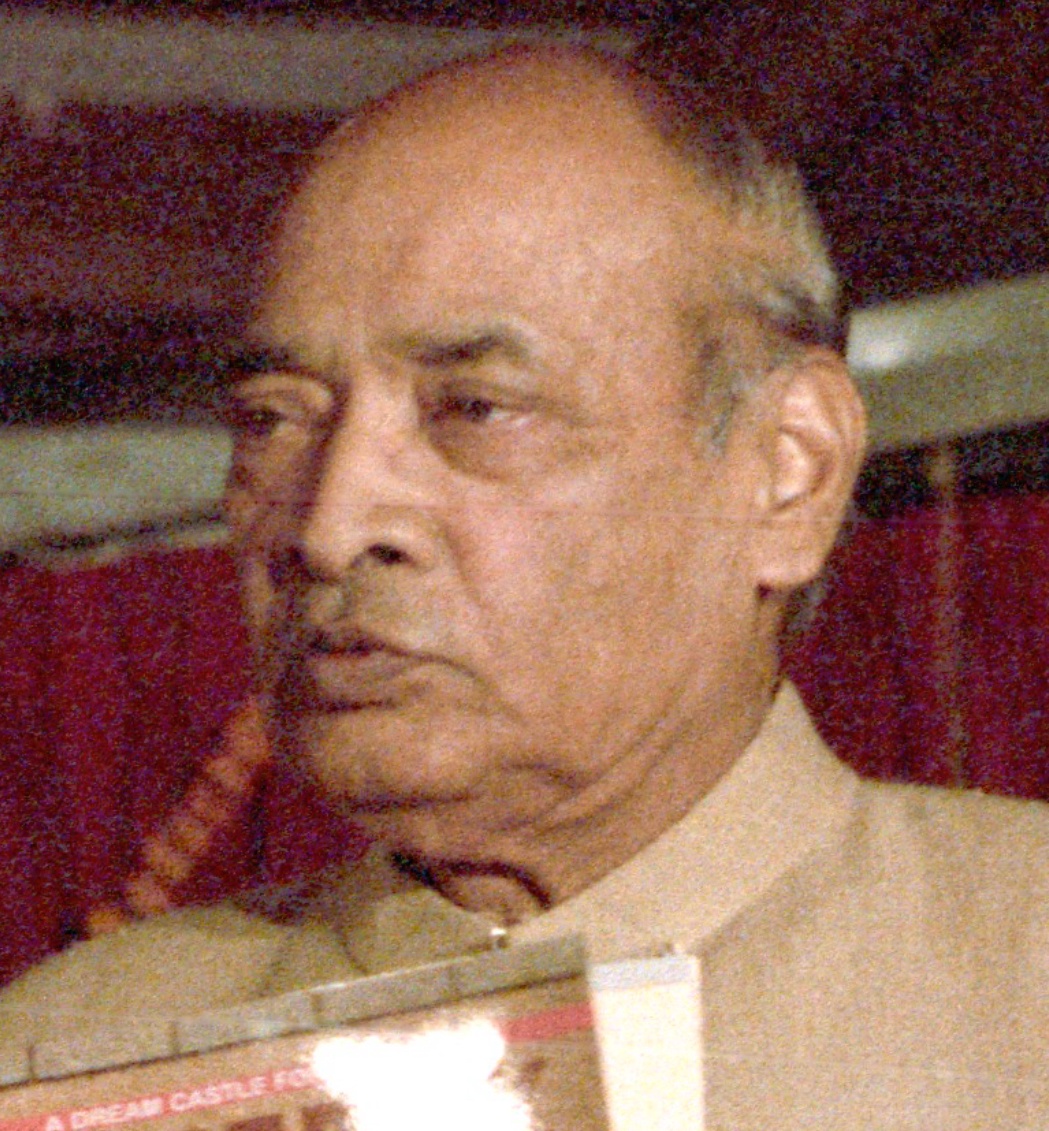
P. V. Narasimha Rao
Activist and former Prime Minister of IndiaWikipedia
17
MENTIONS
10
EPISODES
5
PODCASTS
Search complete. 17 mentions across 10 episodes found for "P. V. Narasimha Rao".
Oct 17, 2026

Hamish HodderHOST
It kickstarted what is now known as the economic liberalization of India.
Hamish HodderHOST
India's first prime minister since the crisis was Narasimha Rao, and one of the most important things he did was get rid of Licence Raj.
Hamish HodderHOST
Licence Raj was a set of regulations that had been in place since the '50s that made it really difficult for businesses to obtain the licenses they needed to operate.
Hamish HodderHOST
Removing these licenses profoundly improved India's economic activity, and since then, India has been an economic machine, with GDP increasing from 266 billion in 1991 to over 3.5 trillion today.

Shekhar GuptaHOST
Then 1981, and then we had two facilities between '91 and '93.
Shekhar GuptaHOST
That started the Manmohan Singh, Narasimha Rao reform.
Shekhar GuptaHOST
India did not pick up all of that loan.
Shekhar GuptaHOST
It did not need that because the economy picked up.
Shekhar GuptaHOST
I won't say shift, but swing to the left.
Shekhar GuptaHOST
Following the reform of 1991 under Narasimha Rao and Manmohan Singh, ICICI was the first mover.
Shekhar GuptaHOST
1994, ICICI incorporated a bank and then, then the two entities merged.
Shekhar GuptaHOST
That is ICICI and the bank.

Kushal MehraHOST
From 1983 to 1989, there was on and off SIR under Indira Gandhi and then Rajiv Gandhi.
Kushal MehraHOST
From 1992 to 1995, there was next SIR exercise under PV Narasimha Rao.
Kushal MehraHOST
2002 to 2004 under Sri Atal Bihari Vajpayee.
Kushal MehraHOST
2004 I think after that same SIR was continued by Sri Manmohan Singh and in 2005 it was ended by Sri Manmohan Singh.
Shekhar GuptaHOST
The return of communism was seen as a philosophical vindication and a signal as if the Cold War was to resume.
Shekhar GuptaHOST
It made a hidebound, scripture-driven diplomatic group, Indian diplomatic group so smug that their dispatches even clouded the judgment of one as astute and smart as P.V. Narasimha Rao.
Shekhar GuptaHOST
He made one of his stupidest statements ever, and really it was one of his rare mistakes diplomatically, and that statement was made on the day of the so-called communist coup when he said in Parliament it was a warning to all reformers in a hurry because the coup collapsed on August 21 in a little more than 48 hours, and the reformers were back in power.
Shekhar GuptaHOST
If anything, the coup hastened the fall of communism, and by the time I got there a day later in Moscow, cheery mobs were already yanking out and shattering statues and busts of the great communist leaders.
Shekhar GuptaHOST
Both said the Russians would regret what they were doing.
Shekhar GuptaHOST
How could they do this to Lenin, Stalin and even Trotsky, who built the great Red Army? You could see where unquestioning faith and ideology-- You could see where unquestioning faith and ideology had clouded diplomatic judgment even among our brightest.
Shekhar GuptaHOST
You could also see why and how Rao had been persuaded-- P.V. Narasimha Rao had been persuaded to make so silly and hasty a statement.
Shekhar GuptaHOST
Who is the diplomat I'm talking about here? Do I look like such a namak haram to you that they will feed me and I will reveal the names to you? On the two occasions that I have been dragged into foreign policy issues non-journalistically, once unwittingly and once deliberately, I have seen a brilliantly sympathetic and fair response from the IFS and a particularly surly and, and unhappy one too.

speaker_0NARRATOR
At the peak of the emergency, the Indian government was forced to airlift gold to London to secure emergency loans.
speaker_0NARRATOR
The ultimate response to the crisis undertaken under the aegis of the reformist finance minister, Manmohan Singh, under the prime minister, PV Narasimha Rao, was to dismantle the license raj that had defined the Indian state for decades.
speaker_0NARRATOR
The onerous regulatory regime into which the Indian IT industry was born was dismantled.
speaker_0NARRATOR
Foreign investment was liberalized, and the Indian economy was more or less open to the world.
Shekhar GuptaHOST
It was incidentally backed by the BJP.
Shekhar GuptaHOST
PV Narasimha Rao inherited national security in shambles with Punjab and Kashmir on fire, a hostile Clinton administration and human rights organizations, global human rights organizations at India's throat.
Shekhar GuptaHOST
How he responded ending the insurgencies in Punjab and Kashmir and rebalancing ties with the US is, is a story of restoration of the Indian hard state.
Shekhar GuptaHOST
The successors Vajpayee and Manmohan Singh took two of the riskiest decisions, nuclear tests and the nuclear deal.
Shekhar GuptaHOST
Of course, her assassination then also brought in a sympathy wave.
Shekhar GuptaHOST
Then Rajiv, despite his majority of four one five in a house of five forty-five, also lost direction by nineteen eighty-seven and never recovered, as did P.V. Narasimha Rao.
Shekhar GuptaHOST
He had a rousing start with the nineteen ninety-one reform.
Shekhar GuptaHOST
By nineteen ninety-three, his government was dead man walking, crippled by Ayodhya, Babri Masjid, and Arjun Singh's secular rebellion.
Shekhar GuptaHOST
There've been other Supreme Court interventions which I will mention later, especially the one in which Justice Ahmadi's five-member bench in Supreme Court in July nineteen ninety-five, I think 14th of July nineteen ninety-five, passed an order laying down the principle that all three members of this EC's equal powers.
Shekhar GuptaHOST
[chuckles] That was caused by the fact that when T.N. Seshan was Chief Election Commissioner, the sole Chief Election Commissioner, the government of the day, the Narsimha Rao government in nineteen ninety-three, it appointed two more election commissioners, that is Dr. M.S. Gill and G.V.G. Krishnamurthy.
Shekhar GuptaHOST
T.N. Seshan allocated no work to them.
Shekhar GuptaHOST
He just let them be.
Shekhar GuptaHOST
Supreme Court of India, the five-judge bench said, "No, you will not be above the other two.
Shekhar GuptaHOST
The other two government can appoint as many members as it wishes, and all of you, all three of you in this case, will have the same rights and same powers." So that judgment also forms the bedrock of the Election Commission of India as much as Article Three Twenty-Four does.
Shekhar GuptaHOST
Now, ninety-three, Narsimha Rao may have added two more members because he was Seshan pidit.
Shekhar GuptaHOST
Everybody was Seshan pidit because Seshan was running elections in a way that nobody had dared to run until then.

Subramanian SwamyPANELIST
Now, this is something which is a real big black dot on Mr. Narsimha on on our people who are running the country.
Subramanian SwamyPANELIST
Modi is primarily because he has been talking about it, criticizing the previous governments that Modi had targeted, like Narasimha Rao and others.
Subramanian SwamyPANELIST
So consequently, I would say that this is something that needs to be answered.
Subramanian SwamyPANELIST
and i hope they after seeing our um session today uh they will uh at least put out some kind of piece of paper that you know well these facts are correct but at the same time this problem was there that problem was there or maybe pakistan came created problem for us something like that so this is the uh second point the third thing is that we find uh that of the Niti Aayog selections, we find that 8.7 crore youth are standing in queues and applying and so on so forth and they are not able to get even after having acquired the modern techniques and so on.
28 MINS LATER
Subramanian SwamyPANELIST
And more and more as a one of these countries that we see in Africa and other places.
Subramanian SwamyPANELIST
yeah
Arvind ChaturvediPANELIST
yeah I want to Ramesh answer your question um you have said that why it is uh uh poor people are still suffering and they are not uh endorsing what government is claiming let me tell you I have been studying the Indian statistics Indian data uh for last uh maybe about 40 years reforms been introduced by Manmohan Singh and Narasimha Rao in 1991.
Arvind ChaturvediPANELIST
They had tremendous results and Dr. Swami will support me when I say 8 to 9% growth rate was achieved in the first five years of the reform and which was phenomenal.