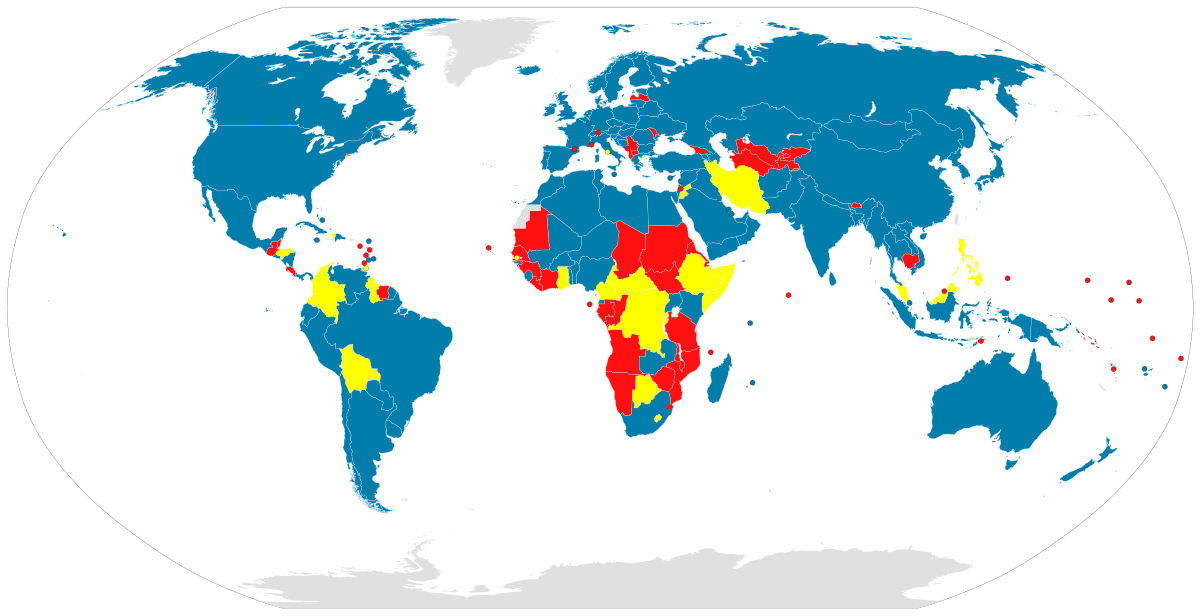
Outer Space Treaty
157
MENTIONS
67
EPISODES
62
PODCASTS
Search complete. 157 mentions across 67 episodes found for "Outer Space Treaty".
Sep 18, 2026

Larisa BrownGUEST
The- there's the problem because there's no real rules and regulations.
Larisa BrownGUEST
There is this 1967 Outer Space Treaty, and that bans nuclear weapons in orbit, but critics obviously point out that it allows the deployment of conventional weapons in space, and it also allows the use of ground-based weapons against satellites.
Larisa BrownGUEST
So w- in this context, it's kind of useless.
Larisa BrownGUEST
So this was written, negotiated by this legal subcommittee of the United Nations, and it was based on these joint drafts that had been submitted by the United States and al- also the, the Soviet Union back then, and the UK was also a player there.

Matt EricksonHOST
China has a relay satellite in cislunar space and is performing robotic missions on the far side of the moon.
Matt EricksonHOST
The Outer Space Treaty of 1967, which the U.S. signed, outlaws certain military behaviors on the moon and states that it shall be used, quote, exclusively for peaceful purposes.
Matt EricksonHOST
The establishment of military bases, installations, and fortifications, the testing of any type of weapons, and the conduct of military maneuvers on celestial bodies shall be forbidden.
Matt EricksonHOST
The use of military personnel for scientific research or for any other peaceful purposes shall not be prohibited.
Matt EricksonHOST
Our adversaries, our potential adversaries, such as the PRC, are actively pursuing activities in the cislunar parts of space.
Matt EricksonHOST
So that's sort of the expansion, if you will, of, I would say, the end zone, if you will, in the football game.
Matt EricksonHOST
When asked if the Outer Space Treaty limits the military's cislunar ambitions, Gagnon said that it did not limit orbital operations.
Matt EricksonHOST
The United States Space Force will continue to execute safe and responsible space operations in all regions of space and in all orbits, he said.

Amitabh SinhaGUEST
These are all old laws that were framed immediately after the beginning of the space age.
Amitabh SinhaGUEST
So we have this, the Outer Space Treaty.
Amitabh SinhaGUEST
It has a very longish name actually, but it's commonly known as the Outer Space Treaty.
Amitabh SinhaGUEST
That was done in 1967.
Amitabh SinhaGUEST
And there have been, uh, at least four or five other sister agreements that are actually a fallout of this outer space agreement.
Amitabh SinhaGUEST
The Outer Space Treaty is, does not just talk about weapons, but is a general sort of framework on the regulation of activities in space.
Amitabh SinhaGUEST
What can countries do, cannot do.
Amitabh SinhaGUEST
It says space has to be utilized for peaceful purposes only.

Swasti RaoHOST
And, um, let me just also begin, uh, asking a little bit about the legality of the entire system because that gives a vantage point to a lot of people that are trying to follow, uh, you know, developments in space and especially strategic developments in space.
Swasti RaoHOST
So one is the Outer Space Treaty of 1967.
Swasti RaoHOST
Obviously, it has a heavy Cold War context, but if you look at it from the lens of the Outer Space Treaty, you know, all of this is rather illegal, isn't it? Or help us understand how to interpret that le- uh, legality, uh, that, um, sort of started in the Gold War years, but obviously we are now in 2026.
Swasti RaoHOST
So how has that evolved?
Malcolm DavisGUEST
Well, the Outer Space Treaty says in Article 4 that you cannot deploy weapons of mass destruction in space, and in a practical sense they're talking about nuclear weapons because deploying biological chemical weapons in outer space is kind of pointless.
Malcolm DavisGUEST
So you can't deploy nuclear weapons in outer space.
Malcolm DavisGUEST
It does not say anything about deploying non-WMD capabilities in space.
Malcolm DavisGUEST
So the deployment of non-nuclear weapons, you know, conventional weapons you might call them, such as jammers or, uh, directed energy weapons or even kinetic kill weapons, is entirely legal under the 1967 Outer Space Treaty.

Maria PozzaGUEST
Look, under international law, Jesse, we don't have a formal definition of what is a space weapon as such.
Maria PozzaGUEST
But the Outer Space Treaty 1967, so it's a Cold War treaty, under Article 4 prohibits the use of nuclear weapons and other weapons of mass destruction in orbit.
Maria PozzaGUEST
So, Jesse, whilst the International Space Treaty, or the Outer Space Treaty, I should say, doesn't ban conventional weapons in Earth's orbit, space doesn't operate in a legal vacuum.
Maria PozzaGUEST
So the UN Charter applies to space as well, and that's going to include the prohibition on the use of force.
Jesse MulliganHOST
Hmm.
Jesse MulliganHOST
Outer Space Treaty 1967, you say.
Jesse MulliganHOST
I imagine a fair bit has changed the landscape since then.
Maria PozzaGUEST
Absolutely.

Dave SchraderHOST
There is no evidence that the American systems are nuclear and the Air Force has not revealed what they're designed to do, but the announcement has reopened a far more disturbing mystery.
Dave SchraderHOST
The 1967 Outer Space Treaty prohibits nations from placing nuclear weapons or other weapons of mass destruction in orbit.
Dave SchraderHOST
And here we are nearly 60 years later.
Dave SchraderHOST
There is still no dependable system for inspecting a satellite and determining what its payload is.

CornHOST
The paper is the product.
CornHOST
And the reason they can't sell actual land is the Outer Space Treaty of 1967.
CornHOST
Article 2 is beautifully short.
CornHOST
Outer space, including the moon and other celestial bodies, isn't subject to national appropriation by claim of sovereignty, by means of use or occupation, or by any other means.

Gordon KeithHOST
I don't understand what that means, but okay.
Gordon KeithHOST
There's something called the, and this is very childishly named, the 1967 Outer Space Treaty.
Gordon KeithHOST
Wow,
Craig MillerHOST
that is childish.

Rick FisherGUEST
Now, saying that must also have the caveat that for the United States especially, any kind of disclosure of these capabilities would have been illegal.
Rick FisherGUEST
These capabilities would have been highly classified over probably decades to advance the overriding American objective of preventing a weapons race in space and trying to give strength to diplomatic initiatives, starting back with the 1967 Outer Space Treaty and perhaps many other initiatives at the United Nations and in private conversations to try to put a cap on the weaponization of space.
Rick FisherGUEST
Something that I would also add that the Chinese have resisted almost from the get-go.
Rick FisherGUEST
Any real attempt towards space transparency, nuclear weapons transparency and the such has been staunchly opposed by the Chinese communist government.
Rick FisherGUEST
Check in with you, David.
John BatchelorHOST
We've got a question for Rick.
David LivingstonHOST
Rick, I suspect any minute now we will start getting countless charges of violations of the Outer Space Treaty leveled against the administration, maybe from members of Congress.
David LivingstonHOST
Who knows? From what you see in that chart of the types of weapons, are these OST violations?

Jamil JafferHOST
So John, is this stuff legal? Is this appropriate? What's, what's going on here? Is there domestic international law that bars or permits this?
John LipskyPANELIST
So, uh, principally, the, the, the only real thing in play here is the 1967 Outer Space Treaty-
Jamil JafferHOST
Mm
John LipskyPANELIST
... uh, which the US, uh, China and Russia are all party to.
57 more episodes mention Outer Space Treaty.
Create an account to see the whole feed, search across every transcript, and follow the entities you care about.