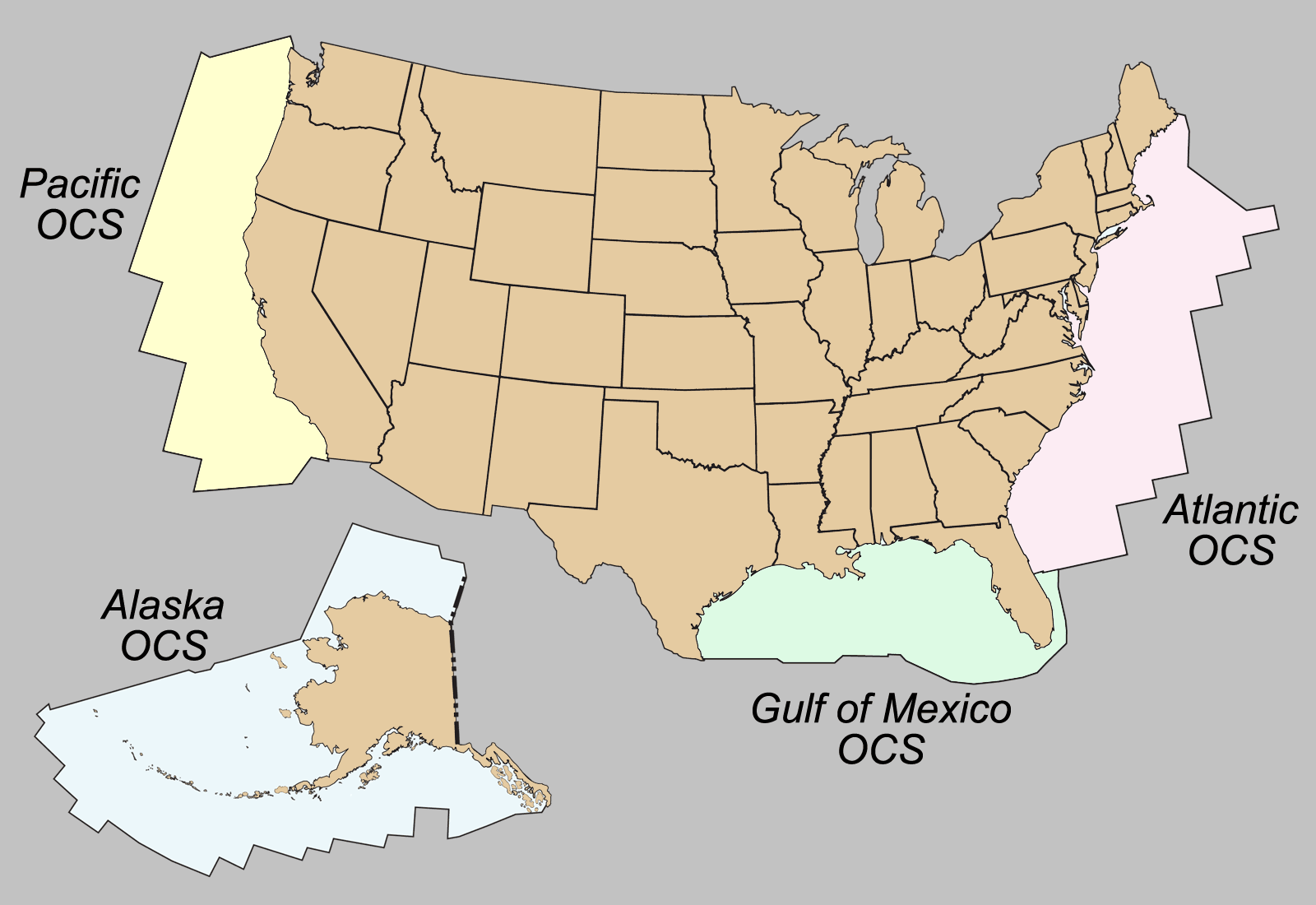
Outer Continental Shelf
34
MENTIONS
10
EPISODES
10
PODCASTS
Search complete. 34 mentions across 10 episodes found for "Outer Continental Shelf".
Oct 22, 2026

Tyler PriestGUEST
So I thought it was important to look at this history, taking into consideration the perspective of the federal government or the federal OCS program.
Tyler PriestGUEST
as it's called the federal outer continental shelf program.
Tyler PriestGUEST
And it's, you know, it's, it's organizational, um, uh, characters changed over time.
Tyler PriestGUEST
Uh, but that's, that's what sort of, you know, drove me to write this book.
Tyler PriestGUEST
So the book tries to develop four themes.
Tyler PriestGUEST
The first is that I argue that we need to look at this as sort of, you know, the last major burst of territorial expansion for the United States.
Tyler PriestGUEST
The Outer Continental Shelf Lands Act of 1953 basically added 278,000 square miles to U.S. domain.
Tyler PriestGUEST
And it's a It's not sovereign territory, and this is what kind of interests me about offshore.

Tyler PriestGUEST
We all know about the Santa Barbara blowout of 1969, but that's about the only thing that many people know about offshore oil in the United States until the Deepwater Horizon.
Tyler PriestGUEST
So I thought it was important to look at this history taking into consideration the perspective of the federal government or the federal OCS program, as it's called the federal outer continental shelf program.
Tyler PriestGUEST
And it's, you know, it's, it's organizational characters changed over time.
Tyler PriestGUEST
But that's, that's what sort of, you know, drove me to write this book and a lot of what we got access to a lot more information about the, the history of the, of the federal management of the OCS in the deep water, in the, in the oil spill commission and the, and a lot of the, Minerals Management Service records that became public then.
Tyler PriestGUEST
And then you also have a major reform of the, the OCS program that had been sort of fought over since Santa Barbara in 69.
Tyler PriestGUEST
So the book tries to develop four themes.
Tyler PriestGUEST
The first is that I argue that we need to look at this as sort of You know, the last major burst of territorial expansion for the United States, the Outer Continental Shelf Lands Act of 1953 basically added 278,000 square miles to U.S. domain.
Tyler PriestGUEST
And it's a...

Tyler PriestGUEST
The first is that I argue that we need to look at this as sort of the last major burst of territorial expansion for the United States.
Tyler PriestGUEST
The Outer Continental Shelf Lands Act of 1953 basically added 278,000 square miles to U.S. domain.
Tyler PriestGUEST
And it's not sovereign territory, and this is what kind of interests me about offshore.
Tyler PriestGUEST
It's this kind of unique political space.
19 MINS LATER
Filippo De ChiricoHOST
So with the Eisenhower administration, you have two pieces of legislation that change the scenario completely.
Filippo De ChiricoHOST
The first one is the submerged Landsat, which deals with the tidelands situation.
Filippo De ChiricoHOST
And then around the same time, he also signs another piece of legislation, which is the Outer Continental Shelf Lands Act.
Filippo De ChiricoHOST
So what do these two laws entail and what are the politics of it?

Tyler PriestGUEST
So the book tries to develop four themes.
Tyler PriestGUEST
The first is that I argue that we need to look at this as sort of You know, the last major burst of territorial expansion for the United States, the Outer Continental Shelf Lands Act of 1953 basically added 278,000 square miles to U.S. domain.
Tyler PriestGUEST
And it's a...
Tyler PriestGUEST
It's not sovereign territory, and this is what kind of interests me about offshore.
20 MINS LATER
Filippo De ChiricoHOST
So with the Eisenhower administration, you have two pieces of legislation that change the scenario completely.
Filippo De ChiricoHOST
The first one is the submerged Landsat, which deals with the tidelands situation.
Filippo De ChiricoHOST
And then around the same time, he also signs another piece of legislation, which is the Outer Continental Shelf Lands Act.
Filippo De ChiricoHOST
So what do these two laws entail and what are the politics of it?

Kristi LieskeGUEST
And what that is going to look like, and that's what we are actively working towards right now, finishing up is this online GIS based public facing tool.
Kristi LieskeGUEST
where a user can visualize our planning area, which includes the Delaware Bay and the Atlantic Ocean all the way past the Outer Continental Shelf.
Kristi LieskeGUEST
And they can visualize the data that we have on the different activities and resources that occur within our planning area.
Kristi LieskeGUEST
And they can toggle on and off.

Joel SpangenbergHOST
But I think you probably would find it important too.
Joel SpangenbergHOST
But getting to the Outer Continental Shelf, the Department of the Interior, they're I'm sorry, the Marine Minerals Administration actually has an MOU now with the NRC, too.
Joel SpangenbergHOST
So you see this regulatory infrastructure being created.
Joel SpangenbergHOST
You know, what in terms of the regulatory kind of framework do you still think needs to evolve before these maritime nuclear technologies and applications can really become commercially viable?

speaker_3NARRATOR
A massive program must be initiated to increase energy supply, to cut demand, and provide new standby emergency programs to achieve the independence we want by nineteen eighty-five.
speaker_3NARRATOR
The largest part of increased oil production must come from new frontier areas on the Outer Continental Shelf and from the Naval Petroleum Reserve Number Four in Alaska.
speaker_3NARRATOR
It is the intent of this Administration to move ahead with exploration, leasing, and production on those frontier areas of the Outer Continental Shelf where the environmental risks are acceptable.
speaker_3NARRATOR
Use of our most abundant domestic resource, coal, is severely limited.
speaker_3NARRATOR
We must strike a reasonable compromise on environmental concerns with coal.

Gretchen KershawGUEST
Stuff around advanced transmission technologies, behind-the-meter generation, virtual power plants, data collection requirements, a lot of provisions around permitting for specific energy infrastructure, so geothermal, hydropower facilities.
Gretchen KershawGUEST
They amend the Outer Continental Shelf Lands Act, the Federal Land Policy Management Act, ancient mining laws, and a lot more.
Gretchen KershawGUEST
So there is a whole...
Gretchen KershawGUEST
Every- whatever you're interested in in this industry is in this bill.

Erik MilitoGUEST
One is access, making sure we have the opportunity to lease acreage.
Erik MilitoGUEST
If you're going to produce any energy, you need acreage to do it, and you do that through leasing, and that can be done through the administration, through the Outer Continental Shelf Lands Act, or through Congress.
Erik MilitoGUEST
So the one big, beautiful bill act mandated lease sales, which was a big correction we needed because the Biden administration essentially shut down a lot of the leasing activity.
Erik MilitoGUEST
And that really put a damper on our offshore production.
Erik MilitoGUEST
So it's all managed by the federal government.
Erik MilitoGUEST
So it's important that we have Congress legislating and the administration regulating in a way that enables rather than restricts.
Erik MilitoGUEST
And the legislation, the Outer Continental Shelf Lands Act, is intended to be enabling.
Erik MilitoGUEST
Unfortunately, some administrations have used it to restrict.

speaker_2SOUNDBITE_SPEAKER
Senator Martin Heinrich, Democrat Nemeday, today is introducing a bill that would give a 30% tax break to long-haul transmission lines, Latitude Media has learned.
speaker_2SOUNDBITE_SPEAKER
The 10-year investment tax credit would apply to new lines and upgrades that cross interstate and regional boundaries, or are at least 100 miles long, as well as those in the U.S. outer continental shelf where offshore wind is often cited.
speaker_1HOST
Heinrich's offering a 30% ITC for 10 years, but only for lines adding at least 500 megawatts and crossing regions or running 100 miles.
speaker_1HOST
It's