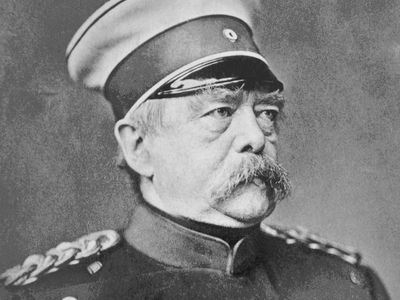
Otto von Bismarck
Former Chancellor of the German ReichWikipedia
314
MENTIONS
68
EPISODES
60
PODCASTS
Search complete. 314 mentions across 68 episodes found for "Otto von Bismarck".
Nov 5, 2026

speaker_0NARRATOR
Il est considérablement plus intelligent que les meilleurs humains dans tous les domaines.
speaker_0NARRATOR
Par exemple, bien meilleur qu'Einstein en physique et bien meilleur que Bismarck en politique.
speaker_0NARRATOR
Près d'un million de chercheurs en IA surhumains travaillent jour et nuit à une vitesse quarante fois supérieure à celle des humains.
speaker_0NARRATOR
Les chercheurs humains en alignement ne peuvent espérer suivre le rythme.

Bill BupertHOST
We're going to discuss what happened.
Bill BupertHOST
Let's remember that in the year 1870 in which he was born, that was within the span of Otto Bismarck creating from a number of... shall we say, city-states, modern Germany as we speak.
Bill BupertHOST
I just arrived at the conclusion the other day, did not realize it, but finally made the connection.
Bill BupertHOST
Same thing happens with the Japanese.

Bill BupertHOST
We're going to discuss what happened.
Bill BupertHOST
Let's remember that in the year 1870 in which he was born, that was within the span of Otto Bismarck creating from a number of... shall we say, city-states, modern Germany as we speak.
Bill BupertHOST
I just arrived at the conclusion the other day, did not realize it, but finally made the connection.
Bill BupertHOST
Same thing happens with the Japanese.

James HouserHOST
Part 1 was all context, but now we actually get started with the wars of German unification.
James HouserHOST
Our episode will focus on the rise of Otto von Bismarck, the Prussian military reforms, and the Second Schleswig War of 1864, the rematch between Denmark and Prussia.
James HouserHOST
But first, it's time for a recap.
James HouserHOST
Previously on the Unknown Soldiers Podcast.
James HouserHOST
Friedrich Wilhelm IV, the romantic, indecisive king of Prussia who refused the crown from the gutter.
James HouserHOST
He will be leaving us in this episode when he dies and passes the throne to his younger brother, Prince Wilhelm, the grapeshot prince, the hardline soldier who wanted to turn the cannons on Berlin in 1848.
James HouserHOST
We have Otto von Bismarck, the fire-breathing young Prussian conservative we met very briefly last time and who is about to become the star of our show.
James HouserHOST
Friedrich von Wrangel, Papa Wrangel, the tough old Prussian general who marched into Berlin to end the revolution and who led Prussian forces in the First Schleswig War.

Mike UplandHOST
Here's something I found interesting when I started looking into the history.
Mike UplandHOST
Back in 1889, Germany introduced one of the world's first national old-age pension systems under Chancellor Otto von Bismarck, and the age for receiving benefits was originally 70.
Mike UplandHOST
Then, when the United States created Social Security in 1935, the retirement age was set at 65.
Mike UplandHOST
Now, here's the interesting part.

Thomas777GUEST
And also in the autumn of 1914, the summer of 1914, Germany hadn't been at war for decades.
Thomas777GUEST
The Franco-Prussian War, I mean, that's what there's many people who believe that Bismarck cultivated that war in order to bring the several German states into the Northern Confederation and the crushing victory scored over France.
Thomas777GUEST
That's what led to Germany becoming a real power and consolidating.
Thomas777GUEST
If that's true, that makes Bismarck the greatest Machiavellian who ever lived.
Thomas777GUEST
But regardless, you know, this idea of, oh, Germany was just hellbent on militarism, like where was German militarism? Like one of the reasons they had so many problems in the early stages of the war, they had a bunch of their combat commanders who were still in service were elderly men.
Thomas777GUEST
You know, you had a bunch of reservists on the frontier in East Prussia who were in their 40s and 50s.
55 MINS LATER
Pete QuiñonesHOST
How are you doing, Thomas?
Thomas777GUEST
I'm doing well, thank you.

ThomasGUEST
And also, in the autumn of 1914, the summer of 1914, Germany hadn't been at war for decades.
ThomasGUEST
The Franco-Prussian War, I mean, that's what, there's many people who believe that Bismarck cultivated that war in order to bring the several German states into the Northern Confederation and the crushing victory scored over France.
ThomasGUEST
That's what led to Germany becoming a real power and consolidating.
ThomasGUEST
If that's true, that makes Bismarck the greatest Machiavellian who ever lived.
ThomasGUEST
But regardless, you know, this idea of, oh, Germany was just hellbent on militarism, like where was German militarism? Like one of the reasons they had so many problems in the early stages of the war, they had a bunch of their combat commanders who were still in service were elderly men.
ThomasGUEST
You know, you had a bunch of reservists on the frontier in East Prussia who were in their 40s and 50s.
57 MINS LATER
Pete QuiñonesHOST
How are you doing, Thomas?
ThomasGUEST
I'm doing well, thank you.

Christine NorthrupGUEST
I mean, that's how it's supposed to be.
Christine NorthrupGUEST
But now, I mean, even the retirement age of 65 is just a belief system was put in place by Otto von Bismarck in 1885 in Germany because he wanted the pensioners to have a year or two where they didn't have to work before they died.
Christine NorthrupGUEST
But they died at, you know, 67, 68.
Christine NorthrupGUEST
Well, I think we're finally turning that around because we've been, life expectancy has been going down, but I want everyone listening to be an exception to that.

Tim O'CallaghanCORRESPONDENT
Prussia was a powerful state in what is now known as modern-day Germany.
Tim O'CallaghanCORRESPONDENT
In the years before 1870, Prussia's Chancellor Otto von Bismarck had brought together an alliance of northern and central German states.
Tim O'CallaghanCORRESPONDENT
He saw war with France as an opportunity of increasing German nationalism and bringing together the remaining southern German states into the Union.
Tim O'CallaghanCORRESPONDENT
so he provoked them through a diplomatic telegram.

Francisco NahoeGUEST
I mean, the United States made off like a bandit because those people came to the United States and founded universities and hospitals and cultural institutions, right and left.
Francisco NahoeGUEST
I've often thought that the Catholic Church in the United States ought to celebrate Otto von Bismarck's birthday as a first class feast day.
Francisco NahoeGUEST
Because we benefited so tremendously from the Catholic intellectuals who were forced out of Germany during the period.
Francisco NahoeGUEST
But the second place of Protestant scholarship was really Oxford and Cambridge.
58 more episodes mention Otto von Bismarck.
Create an account to see the whole feed, search across every transcript, and follow the entities you care about.