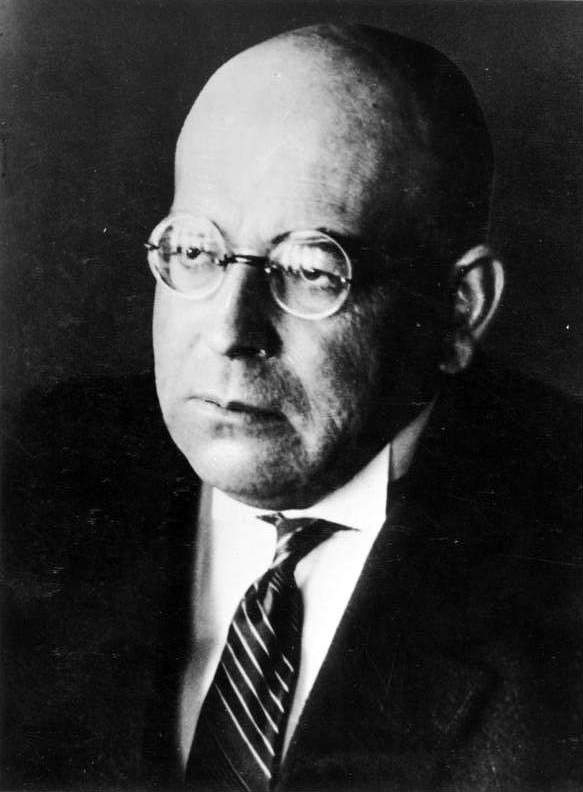
Oswald Spengler
German polymathWikipedia
120
MENTIONS
28
EPISODES
12
PODCASTS
Search complete. 120 mentions across 28 episodes found for "Oswald Spengler".
Oct 10, 2026

ThomasGUEST
But the idea of socialism, it didn't originate with Marx.
ThomasGUEST
And that was one of Spengler's important points.
ThomasGUEST
Even if you don't accept Spengler's view of history, and you think it's just kind of needlessly esoteric and mystical, his essay Prussianism and Socialism, and then later, to a lesser degree, his book...
ThomasGUEST
Yeah, it's like a longer essay.
ThomasGUEST
It's been beefed up with secondary analyses.
38 MINS LATER
ThomasGUEST
about man kind of, like, rationally choosing to, like, organize politics this way, and that's nonsense.
ThomasGUEST
Maybe that's a topic for another episode, but yeah, yeah.
Pete QuiñonesHOST
I like that you mentioned how Europeans view politics versus Americans, especially back then because, and then earlier you had mentioned how, you know, people read Spengler and he seemed, it seems esoteric because I recommended Imperium to somebody and they started reading it and they're like, this, does it stay this esoteric? And then that's when you realize it's like, well, Politics isn't one thing.

BenUNKNOWN
Yeah, that's an interesting analog.
ChrisHOST
Which is close to, um, Oswald Spengler's, uh, criticism of Marxism.
JasonHOST
That it is the socialism of capitalism? [laughs]
ChrisHOST
Yeah.

Jefferson LeeHOST
I'm not happy about this.
Jefferson LeeHOST
But recently I've kinda started to take the, the Spenglerian approach to the destruction of the West, in that it was, to an extent, kind of baked into the cake a long time ago.
Jay DyerGUEST
Yeah.
Jay DyerGUEST
Exactly.

Pete QuiñonesHOST
You know, Mosley's people read this, and they were like, "This is, this is insane.
Pete QuiñonesHOST
This, nothing, there's nothing like this anywhere else." And I think that really the only thing that they could have compared it to at the time would have been Spengler, but it was he had taken a step beyond that.
Paul FahrenheidtGUEST
Yes.
Paul FahrenheidtGUEST
No, that's, that's, that's exactly how to, uh, how to describe it.
Paul FahrenheidtGUEST
Yeah.
Paul FahrenheidtGUEST
Yeah, dissident, dissident right, these spheres, our thing, the Cosa Nostra, whatever the f- the 5,000 names that we have for it.
Paul FahrenheidtGUEST
If I had to recommend a single book and you only had to read one, I would recommend Imperium, and this is because Imperium not only has Spengler, not only has Yockey, but its metaphysics are drawn almost entirely, not, not, not entirely, Yockey has his own, his own, uh, precepts, but drawn largely from the Evolian framework.
Pete QuiñonesHOST
Mm-hmm.

speaker_2SOUNDBITE_SPEAKER
A German school teacher saw the same thing 60 years before Glubb, and he saw it more clearly, and it made him one of the most hated men in European intellectual life.
speaker_2SOUNDBITE_SPEAKER
Oswald Spengler had no academic post.
speaker_2SOUNDBITE_SPEAKER
He'd resigned from teaching, moved into a dark apartment in Munich, and lived on a small inheritance while he wrote a book almost nobody wanted.
speaker_2SOUNDBITE_SPEAKER
It came out in 1918, into a Germany that had just lost a war, and it said something no one was ready to hear.

Rusty RenoHOST
... uh, in his time for his conservatism, kind of went against the grain.
Rusty RenoHOST
But there's that other question, like, well, what, what was it like to grow up and as a bright young thing, as he certainly was, and, you know, have people encouraging you or the lure of reading Oswald Spengler when you're 17 years old and...
Rusty RenoHOST
So let's talk about that.
Rusty RenoHOST
I mean, he, he benefited from, you know, famous conservative figure, but he benefited from changes in English schooling after World War II-
5 MINS LATER
Dan HitchensGUEST
So I-- 'cause I interviewed a few of, um, Scruton's school friends and, and contemporaries for the piece, and, and one of them...
Dan HitchensGUEST
O-o-one thing they talked about was the, these books which Scruton and his friend Dave would sort of carry around the school, which had this kind of totemic status for, for them.
Dan HitchensGUEST
Um, Spengler's Decline of the West and Eric Heller's The Disinherited Mind, both quite dense, knotty studies-
Rusty RenoHOST
Mm-hmm

Rusty RenoHOST
... uh, in his time for his conservatism, kind of went against the grain.
Rusty RenoHOST
But there's that other question, like, well, what, what was it like to grow up and as a bright young thing, as he certainly was, and, you know, have people encouraging you or the lure of reading Oswald Spengler when you're 17 years old and...
Rusty RenoHOST
So let's talk about that.
Rusty RenoHOST
I mean, he, he benefited from, you know, famous conservative figure, but he benefited from changes in English schooling after World War II-
5 MINS LATER
Dan HitchensGUEST
So I, 'cause I interviewed a few of, um, Scruton's school friends and, and contemporaries for the piece, and, um, one of them...
Dan HitchensGUEST
O- o- one thing they talked about was the, these books which Scruton and his friend Dave would sort of carry around the school, which had this kind of totemic status for, for them.
Dan HitchensGUEST
Um, Spengler's Decline of the West and Eric Heller's The Disinherited Mind, both quite dense, knotty studies-
Rusty RenoHOST
Mm-hmm
Paul FahrenheidtGUEST
In addition, I've done some writing for a up-and-coming online publication called Praxarchy.
Paul FahrenheidtGUEST
That's P-R-A-X-A-R-C-H-Y dot com, um, where you can find actually, um, um, you can find one of my articles on Yawkey himself and his conception of race and, uh, and, and several other things, parallelism, Spenglerian theory, and the like.
Paul FahrenheidtGUEST
Um, I have a Twitter, which, you know, most people can find me on.
Paul FahrenheidtGUEST
Uh, but I am, I, I'm really just a serial guest.
31 MINS LATER
Paul FahrenheidtGUEST
It, it-- The, the, the, the 20th century is the century of Spengler to Yockey.
Paul FahrenheidtGUEST
And, um, uh, Yockey really, he, you know, even in his own terms, he really only claims to be kind of following along in that tradition and going further.
Paul FahrenheidtGUEST
Um, but what he does is he focuses on things, you know, that, that Spengler missed, including race, including, um, um, including politics, including, um, the, uh, the years from 1933 until, uh, 1945, which, um, are extremely important and needed, needed to be understood, needed to be, um, uh, put into a Spenglerian framework.
Paul FahrenheidtGUEST
And, um, matter of fact, even, even, even in the, in the first, in the first paragraph of the foreword of, uh, Imperium, uh, Yockey s- Yockey pretty much outlines exactly what this book is.

Joshua RueblGUEST
So, like, uh, yeah, I'm into, like, Crowley, uh, Golden Dawn stuff, but my stuff is a syncretism between Kenneth Grant's Typhani and Thelema, and, uh, a lot of the Nordic Germanic, a say true stuff.
Joshua RueblGUEST
And I'm heavily influenced by, uh, Oswald Spengler as well.
Joshua RueblGUEST
Julius Evola, Renee Gunan, and the chaos magic of Austin, us and spare.
Joshua RueblGUEST
So, yeah, it's like, There's a lot that I could say about that, but that's generally what I'm into.
Pete QuiñonesHOST
The ultimate source of the sovereign mandate, in common with the territory availed to it and the founding acts or acts of dominion leading to its capture, capture use and exclusive appropriation, represented as much of an unknown quantity as the origin of the language spoken by the ethnos in question.
Pete QuiñonesHOST
A sacred act or succession of acts by a liminal figure or figures, the shedding of blood in the course of conquest, and the realization of these processes as the fulfillment of fortune, the winning of a bargain to the victor, and among those ancient populations whose cultural psychology tended towards the cultivation of religious belief structures, what Spengler designated Magian culture forms, the completion of a discrete covenant with the creator.
Pete QuiñonesHOST
European political order and ultimately the normative paradigm on international relations in the modern era in formal conceptual terms began and ended with the devastation of Germany.
Pete QuiñonesHOST
Between the defenestration of Prague on May 13th, 1618, and the conclusion of the Treaties of Osnabrück and Münster on October 24th, 1648, a seemingly endless sectarian war, grindingly brutal and simultaneously tactically complex and technologically primitive, left virtually no Central European territory unscathed.
18 more episodes mention Oswald Spengler.
Create an account to see the whole feed, search across every transcript, and follow the entities you care about.