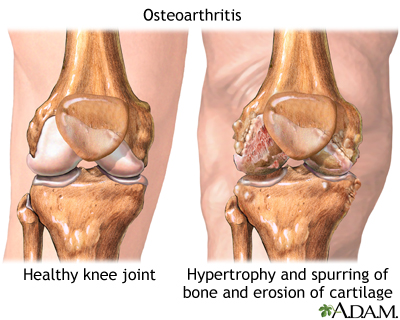
osteoarthritis
DiseaseWikipedia
38
MENTIONS
10
EPISODES
10
PODCASTS
Search complete. 38 mentions across 10 episodes found for "osteoarthritis".
Oct 26, 2026

Clare ArdernHOST
It's great to have you listening today.
Clare ArdernHOST
Music musculoskeletal rehabilitation, chances are you'll work with people who are at risk of or who have developed osteoarthritis.
Clare ArdernHOST
OA is common and there's no cure for it.
Clare ArdernHOST
So in place of a cure, your focus might shift to strategies to reduce the risk of joint trauma, which might be the trigger for osteoarthritis developing years later, or to strategies designed to slow the progression of the disease.
Clare ArdernHOST
Which strategies to choose and how effective are they? These are two questions my guest tackles today.
Tarcisio de CamposGUEST
Thanks Claire for having me.
Clare ArdernHOST
There's plenty of discussion in our broader musculoskeletal rehabilitation community about knee osteoarthritis.
Clare ArdernHOST
For a long time, we focused on how to manage OA.

Randall CooperHOST
The title of the paper is called Risk of Knee Osteoarthritis After Different Types of Knee Injuries in Young Adults, a population-based cohort study.
Randall CooperHOST
It was published in the British Journal of Sports Medicine.
Randall CooperHOST
And what it assessed was it was a Swedish population cohort of about 150,000 adults aged between 25 and 34. comparing the risk of clinically diagnosed OA in people with and without a recorded knee injury.
Randall CooperHOST
And they followed them up for up to 19 years, which I think is really cool.
Randall CooperHOST
As we know, the Nordic guys do some wonderful research around knees and osteoarthritis.
Randall CooperHOST
This is a big study and it's got some really cool findings.
Randall CooperHOST
What they found in the study was that the knee injury increased the risk of future OA by about sixfold.
Randall CooperHOST
So an adjusted hazard ratio of 5.7 in the first 11 years and then 3.4 after that.

Veronia FemiHOST
I'll be your host for today's episode.
Veronia FemiHOST
Today, we're discussing one of Curie's recently published articles, Low-Dose Radiation Therapy for Osteoarthritis, a Critical Review and Proposal for Integration into Contemporary Care.
Veronia FemiHOST
I'm joined today by Dr. Krishan Patel, a PGY-4 resident at Northwestern, and Dr. Jessica Schuster, one of the co-authors of this review and leaders in the field from UW Health, to discuss the science behind low-dose radiation therapy, the current clinical evidence, and where this approach may fit into osteoarthritis management.
Veronia FemiHOST
Dr. Schuster and Dr. Patel, thank you so much for joining us.
Veronia FemiHOST
Great.
Veronia FemiHOST
So switching gears to something completely unrelated to cancer, osteoarthritis.
Veronia FemiHOST
So Osteoarthritis, also known as OA, is often thought of as a degenerative wear and tear condition.
Veronia FemiHOST
So in your opinion, how has our understanding of the inflammatory component of OA helped shape our interest in low-dose radiation therapy in the radon community?

Maziar BadiiGUEST
There are genetic factors as well.
Maziar BadiiGUEST
So the spine, I see a lot of patients with neck and back pain, osteoarthritis in their spine.
Maziar BadiiGUEST
That's another very common area that's affected by OA.
Brendan ByrneHOST
And so like kind of Like, you know, pretty much every disease, there are genetic factors, their environmental factors, and there are lifestyle factors.
Brendan ByrneHOST
What are the genetic factors around osteoarthritis? Are people, are some people just a little bit more preconditioned or more likely to have osteoarthritis than others?
Maziar BadiiGUEST
Yeah, it's been known that there has been a genetic involvement of osteoarthritis for a long time because firstly it's you see these clusters in families where people who have family history are more likely to develop osteoarthritis, but you also see the patterns where, so people who have spinal osteoarthritis with some OA in their hands, and then the hips and knees, they seem to go together.
Maziar BadiiGUEST
And then when you ask them, they say that, yes, there is a family history as well that is a part of what they see in their parents or in their siblings with the same type of hands or the same history that siblings also have BOA or hip OA.
Brendan ByrneHOST
Yeah.

Lee HerringtonGUEST
I suppose with these sort of presentations, you want to quickly discount, has the ACL graft failed? And what we've got is a grossly unstable knee.
Lee HerringtonGUEST
You are probably thinking this is an early OA knee presentation, which we would look around them having osteochondral breaks problems or bony edema, which is probably creating the problem.
Lee HerringtonGUEST
And then underlying that, we've got plus or minus.
Lee HerringtonGUEST
Have we got competent meniscus? Is there an underlying meniscal problem as well? But generally, what we're looking at is, we called it within the case study a grumpy knee.

Steve MehlerGUEST
I'll demo you later.
Adam ChristmanHOST
As we wrap up, I'll be remiss if we don't talk about OA.
Adam ChristmanHOST
We know that we see a lot of cranial cruciate ligament disease associated with osteoarthritis or vice versa.
Adam ChristmanHOST
How are you dealing with that? And, you know, what about like OA and any joint?
Steve MehlerGUEST
I mean, it's one of my favorite topics to talk about.
Steve MehlerGUEST
I think osteoarthritis, we've got to remember it's progressive.

Chris BiseGUEST
[lip smacks] Uh, I think what you're getting at is it's more of a management role, and it's more of a who is best suited to manage a musculoskeletal disorder.
Chris BiseGUEST
And if you think about OA, OA is a multifactorial, um, disorder.
Chris BiseGUEST
There are things that we can treat, there are interventions that we can apply, but there are some things that we can't do.
Chris BiseGUEST
There are times that a patient's going to potentially need, um, medication for that, and they'll need a primary care physician to potentially, um, prescribe that medication.

Stephanie BryantGUEST
Yeah.
Stephanie BryantGUEST
Osteoarthritis is a, you know, really a multifactorial disease, which I think really makes it challenging to treat and why there really hasn't been kind of therapies that, that are able to, to, to prevent it or, or reverse it.
Stephanie BryantGUEST
Um, and so it's a disease that really affects the whole joint, um, cartilage being kind of one of the main, main tissues that, that it impacts, but it is a whole joint disease.
Stephanie BryantGUEST
During the development of, of osteoarthritis, um, the cartilage will weaken or soften, um, over time as it really starts to, to degenerate.
14 MINS LATER
Shelley SchlenderHOST
It's like you're talking about good food and nutrition.
Stephanie BryantGUEST
That's a good way to think about it.
Shelley SchlenderHOST
Osteoarthritis tends to happen more in people whose bodies are aging, so the maintenance and repair has slowed down.
Shelley SchlenderHOST
It doesn't mean if you repair bones this way, that their joints this way, that they're gonna live forever.

Jack CushHOST
The end of study is 80 weeks.
Jack CushHOST
The stu- study did include 574 patients with moderate to severe osteoarthritis with radiographic evidence of OA, and 243 people with sleep ap- apnea.
Jack CushHOST
Of the 574 with OA, WOMAC pain scores were significantly better with the new triple receptor agonist drug retatrutide compared to placebo, roughly about 3.5 versus -1.9 drop in, uh, WOMAC scores.
Jack CushHOST
Similarly, the, uh, sleep apnea was improved, uh, on the, uh, incretin therapy versus placebo.
Jack CushHOST
Um, this is gonna be on the market.

Eric ChristensenHOST
Uh, me-mechanistically, again, it, it focuses more so on, uh, COX-2 inhibition, um, and not dual COX-1 and COX-2 inhibition, which most NSAIDs do, uh, to a gr-greater extent there.
Eric ChristensenHOST
Uh, OA, RA, acute pain, um, other inflammatory conditions, um, kinda goes pretty standard with the usual indications for, uh, celecoxib.
Eric ChristensenHOST
All right, so what's special, what's unique about celecoxib and the advantage of a COX-2 inhibitor versus a, a traditional non-selective NSAID? All right, the big thing is GI risk.
Eric ChristensenHOST
So it generally has a lower risk of serious GI events, um, compared to, uh, traditional NSAIDs like naproxen and ibuprofen, okay? Now, this doesn't mean that ulcers, GI bleeding can't occur.