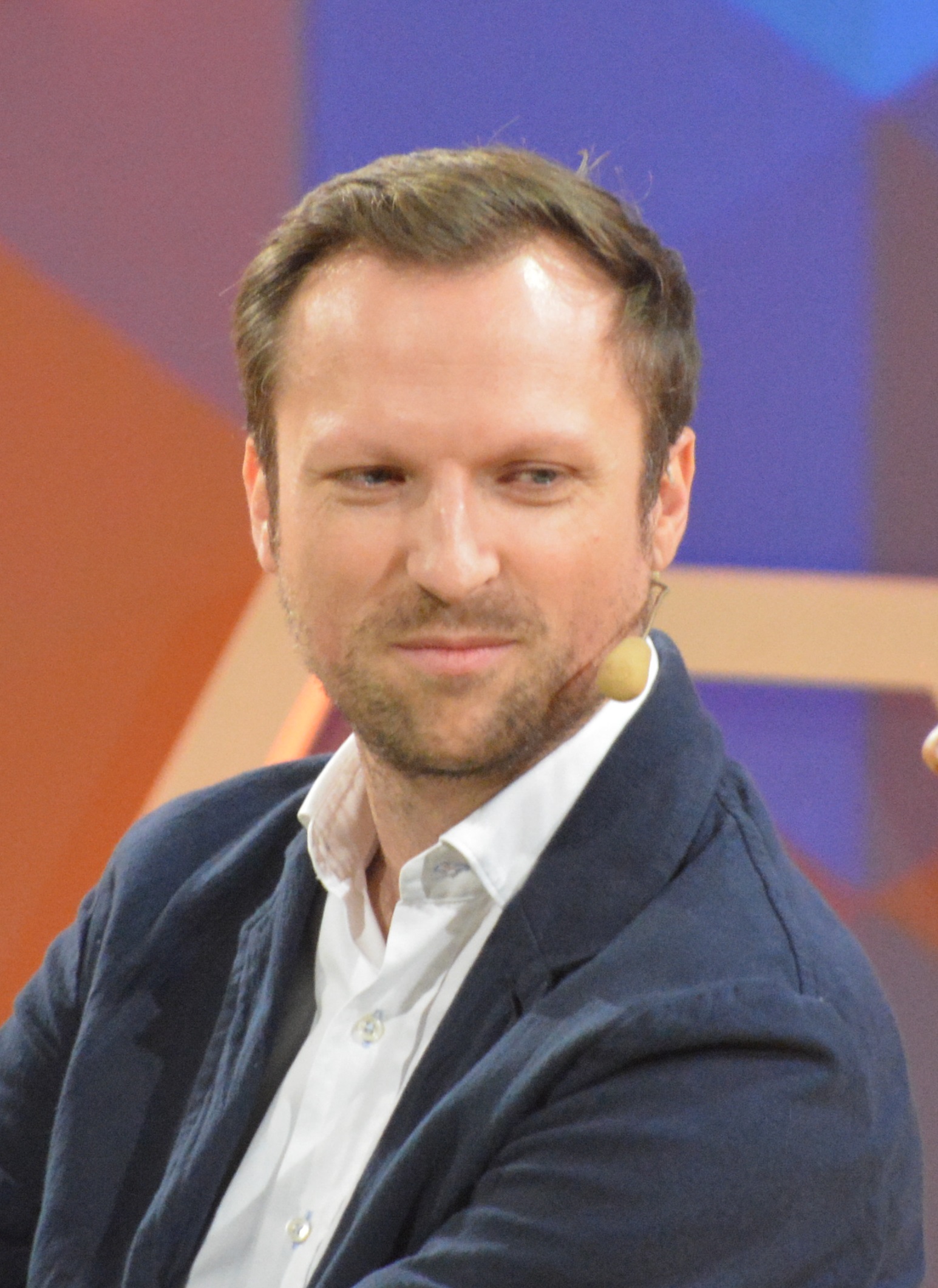
Orlando von Einsiedel
British film director
8
APPEARANCES
8
PODCASTS
Sep 11, 2026


Tiller RussellHOST
Like, which is what being alive is, you know what I mean? But, like, that's so challenging to do in an improvisational setting and, um, like how do you achieve, you know, as a director, what are you doing to get the performance that you need on the day, in the moment with your actors?
29:38

So, uh, so I mean, the first thing I'd say is Me- Mina Dhalla who, who plays young Lotte, she, she, she's, she's wonderful.
29:45
But both Mina and Chirag were, had, you know, had done a lot of theater work, so they were very used to, to improvisation, and, and, you know, and working in, in, in that style.
29:56
And I, I won't get too technical on, on you, Taylor, but you know, the, the, the, the sort of the style of, of acting wo- uh, you know, directing actors that, that I'm familiar with is, is, is a, is a technique called the Meisner technique, and a lot of that is it relates to building an emotional backstory for the cast so that, they, you know, they, they, they really, they have things to draw on on the day.
30:20
Because that, that, for us, that was the most important thing is, like, do they have an emotional core that they can draw on- That's beli- that, for them, is believable.
30:28
To, no matter where we are, you know, where we are in India, what the scene is, that they feel grounded with, with that emotional truth.
30:36
Um, so we spent a lot of time rehearsing that and, and building that up to, to the point where it felt on location they'd always be able to find that, um, and center themselves.
5 MINS LATER


6:56
Um, and, um, and, and that, you know, that- that's normally, that's normally the end of a documentary.
7:02
You know, if there's limited archive, how do you possibly tell, you know, a, a story which happened decades ago? Despite being terrifying, it was also kind of freeing and exciting to try and problem solve how to get around it.
7:18
I made a film almost 10 years ago now about my family, and I, I had a brother who, who tragically took his own life.
14 MINS LATER

4:58
um and said this is our this is our parent's story um maybe you'd be interested in reading about it anyway this turns out to be um uh carl and emily von shedvin who are pk and lotta's children and co-producers on the film uh and i read the book and obviously my mind was blown um and i i got to meet pk and lotta um soon afterwards and you know you've seen the film you're meeting them now they are such warm generous open-hearted individuals and I think we all we shared a vision on on what a documentary about their story could be like and you know we set about the task of raising money and pulling together a team and a year or so later we set off all together.
6 MINS LATER


Mike KasparHOST
Well, tell me a little bit about how you got to know PK and what led to the making of this wonderful film, The Cycle
1:17
Okay, so I was giving a talk in Sweden at a Nobel Peace Prize event, as one does.
1:25
And I finished this talk and two young people came up to me and handed me a book and said...


Ben DuchekHOST
So let me ask you this, how'd you decide to take that path? And then where'd you draw the line of the, like the difference between this is how it felt and this is what actually happened.
3:28
Okay, so when I learned about PK's story, I was really excited because the story is extraordinary.
3:35
And then I met PK and Lotta and fell head over heels in love with both of them and wanted to spend the next few years of my life with them sharing their story.
3:44
But the challenge was there was very little archive footage from PK's journey.


40:39
So I was handed a book by P.K. Lott's children and I read it and it sort of blew my mind.
40:46
And then I was lucky enough to meet these two who are the most open, warm-hearted people.
40:51
But also for a long time, I've been wanting to make a film that's unashamedly optimistic and brings feelings of joy and human connection.
40:59
And in the subject of love, I think it's something we can all agree on right now.


34:58
I'd learned a little bit about India's caste system in school, but frankly, I knew very, very little.
35:05
I think whenever you make a film outside of your own socio-economic experience, it's an enormous responsibility.
35:12
And it's incumbent on you as the filmmaker, as the film team, to surround yourselves, therefore, with people who have that lived experience, who understand it.
35:22
And, you know, we worked with cast experts through pre-production, production and post-production.


Noor NanjiCORRESPONDENT
Orlando, do you think many people outside of India will be shocked that this level of discrimination based on a person's caste exists?
21:35
Well, I think, I think discrimination exists in all, in all societies.
21:39
I think more than anything, this is also, it's, as, as Priyanka was saying, this is a story about extraordinary human resilience and a man learning to, to, to love himself, and by loving himself, being able to love others.
22:30
So, you know, whenever you make a film outside of your own socioeconomic experience, it's an enormous responsibility.
22:39
That began by working together with PK, Lotta, and the whole family, but we also surrounded ourselves with experts.
22:46
We worked with a number of caste experts on this film and, you know, I, I, I, I, I knew very little about this before getting into it and have done my best to, to educate myself, and hopefully we've done, we've done a job of representing this correctly in the film.