Orexin
HormoneWikipedia
11
MENTIONS
7
EPISODES
7
PODCASTS
Search complete. 11 mentions across 7 episodes found for "Orexin".
Sep 25, 2026

Sam FazeliHOST
Thanks, Yaron.
Sam FazeliHOST
We, we're never scared of a controversy, are we? Um, let's, uh, move on to, um, Matt to talk about Orexin.
Sam FazeliHOST
I just want to remind, uh, everyone that Orexin initially, or targeting Orexin, was initially thought as a g-good way of trying to deal with, uh, obesity or weight loss.
Sam FazeliHOST
And then, of course, it moved over to, um, um, treatment of, of, uh, insomnia.
Sam FazeliHOST
I-I've actually personally tried Quviviq, find it quite a good, uh, drug for when you're traveling and you need your jet lag dealt with.
Sam FazeliHOST
So we're gonna ask, um, Matt to talk us through this and, and what he thought of, of the data and the news.
Matt GlineHOST
Yeah.
Matt GlineHOST
So, so, um, this week, Alkermes, which is one of the, one of the furthest along players in the Orexin space, put out some data on ADHD, uh, which, um, yeah, I think most notably the Orexin study in ADHD succeeded.

Aalap AsurlekarHOST
Music Remember, NICE recommends sleep hygiene as a foundation, CBTI as first-line active treatment and hypnotics only as short courses at the lowest effective dose when CBTI isn't available, hasn't worked or isn't suitable.
Aalap AsurlekarHOST
More recently, NICE has approved a new class of hypnotics, daridorexant, a dual orexin receptor antagonist.
Aalap AsurlekarHOST
Orexin, also called hypocretin, is a brain chemical that promotes wakefulness and we'll be returning to it properly in our next episode on narcolepsy, where the story of its discovery is remarkable.
Aalap AsurlekarHOST
Dyridorexent works by blocking orexin's wake-promoting signal rather than by acting on the same GABA system as Z-drugs and benzodiazepines.
Aalap AsurlekarHOST
NICE recommends it specifically for adults with chronic insomnia.

CornHOST
Taper too fast and you get rebound insomnia, anxiety, potentially seizures if it's a high enough dose of a benzo.
CornHOST
If it's an orexin antagonist, which is the newer class, the suvorexant and lemborexant type drugs, the mechanism is different.
CornHOST
Orexin is a wake-promoting neuropeptide, and blocking it promotes sleep.
CornHOST
Tapering, that's less about seizure risk and more about the insomnia coming back as the receptors resensitize to orexin.
CornHOST
But the clinical problem is the same.

Meg AlexanderGUEST
And interestingly, it has activity in other domains like pain, and seizures, and anxiety, for example.
Meg AlexanderGUEST
But what are we looking to find? Given that I just said this could be the next Orexin or a PD1-like moment for the brain, we're trying to get as much early as possible as we can, as much insight, uh, much like we did with the epilepsy program.
Meg AlexanderGUEST
So specifically in the phase one study, what we're looking for is the traditional metrics, but we're also conducting exploratory electrophysiology to try to show signs of neuroactivity consistent with the mechanism of action, so GABA or the braking system in our brain working more effectively.
Meg AlexanderGUEST
But what this phase one will kick off is a really important translational study that I think could be quite meaningful for the world and the investment community as well.
Meg AlexanderGUEST
Uh, we've guided that we'll start that challenge before the end of this year.
Meg AlexanderGUEST
It's a short study, but what it will do is ask and answer potentially many important questions about neuroactivity, neuroactivity on mechanism, translational biomarkers that we've already established, and it uses biomarkers on electrophysiology that give us a read-in to the predictive clinical effect.
Meg AlexanderGUEST
And that's a big deal because if we have an Orexin or PD1-like target of the brain where we have broad therapeutic activity and could work in a number of psychoses from Alzheimer's, to PD, to schizophrenia, to others-
BradHOST
Mm-hmm

Ragavendra R. BaligaHOST
Today is September 12th.
Ragavendra R. BaligaHOST
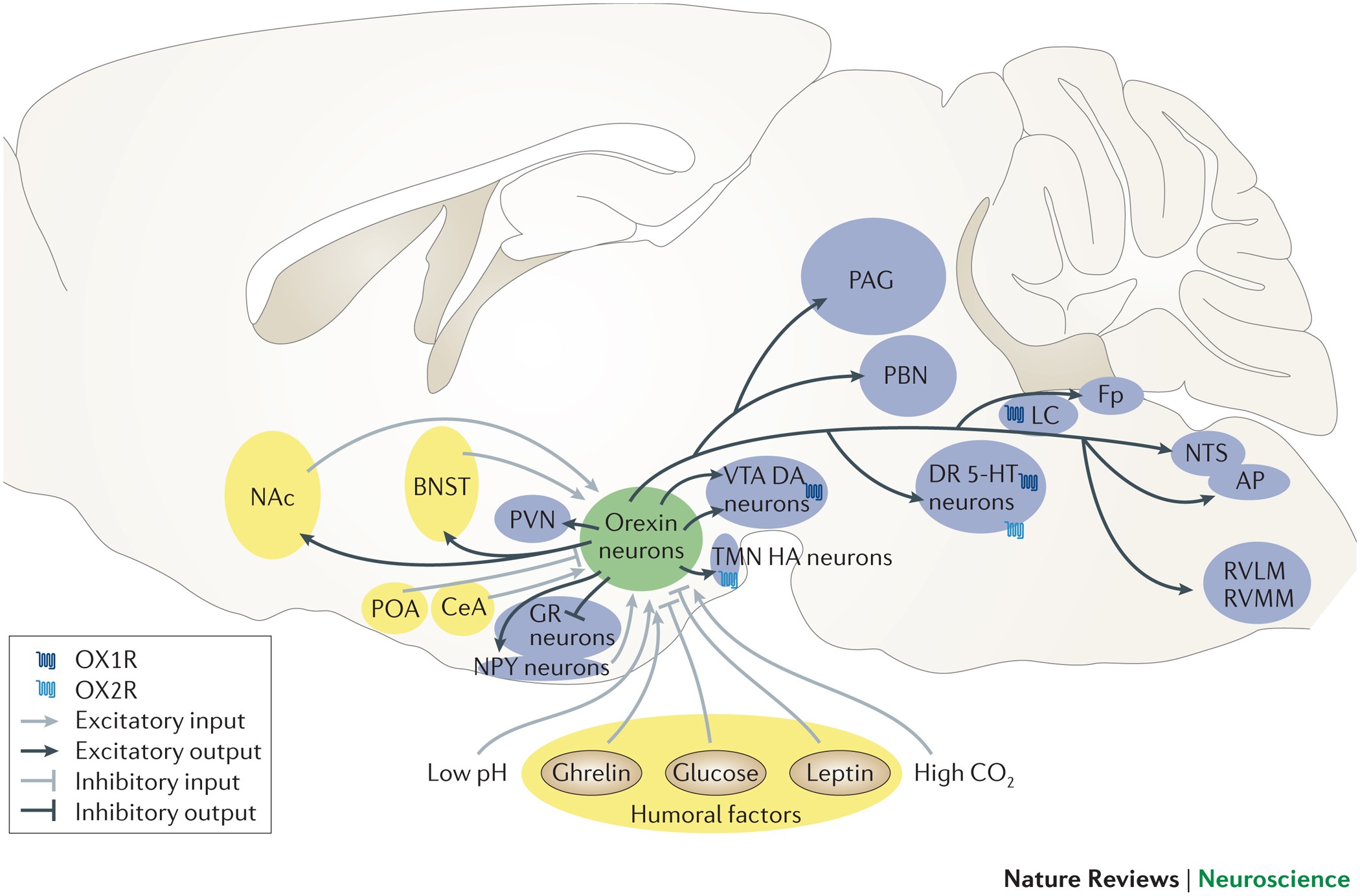
What is orexin? Orexin or hypocretin comprises two excitatory hypothalamic neuropeptides, orexin A and orexin B, acting through OX1 receptor and OX2 receptor.
Ragavendra R. BaligaHOST
Why does it matter? Orexin stabilizes wakefulness and suppresses REM sleep while integrating metabolic, circadian, emotional stress and reward signals.
Ragavendra R. BaligaHOST
Narcolepsy link.
Ragavendra R. BaligaHOST
Narcolepsy type 1 is an orexin deficiency disorder caused by near complete loss of orexin producing neurons.

Adam BuncherHOST
Got it.
Adam BuncherHOST
And what is it that they're inhibiting? They're orexin,
Ross WalkerHOST
O-R-E-X-I-N, which is an important chemical that affects wakefulness.
Ross WalkerHOST
So you take this and it inhibits the wakefulness.
Adam BuncherHOST
Okay,

speaker_0HOST
Hello and welcome to this episode of the VJ Neurology podcast.
speaker_0HOST
In this episode, we're shining a spotlight on the evolving landscape of orexin agonists for the treatment of narcolepsy.
speaker_0HOST
Orexin plays a critical role in regulating wakefulness and loss of orexin signaling is a key feature of narcolepsy type 1.
speaker_0HOST
The development of orexin agonists therefore represents a novel approach to treatment aiming to restore the signaling pathway that is disrupted in the disease.
speaker_0HOST
On August 5th, 2026, Obaparaxin was approved by the FDA for the treatment of narcolepsy type 1 in adults, making it the first orexin-targeted therapy to receive regulatory approval.