Oppositional defiant disorder
DisorderWikipedia
60
MENTIONS
32
EPISODES
31
PODCASTS
Search complete. 60 mentions across 32 episodes found for "Oppositional defiant disorder".
Nov 5, 2026

Erika OlsonGUEST
A lot of times when I describe what it is, this happened just last week with one of my old classmates.
Erika OlsonGUEST
He was like, well, do you know what oppositional defiant disorder is? And I was like, I do know what that is and that they're similarly presenting sometimes PDA and, you know, ODD, but they're coming from very different places.
Erika OlsonGUEST
So like PDA is fully driven by, you know, anxiety and this fear, almost like a primal fight or flight fear of losing autonomy or control.
Erika OlsonGUEST
Yeah.
Erika OlsonGUEST
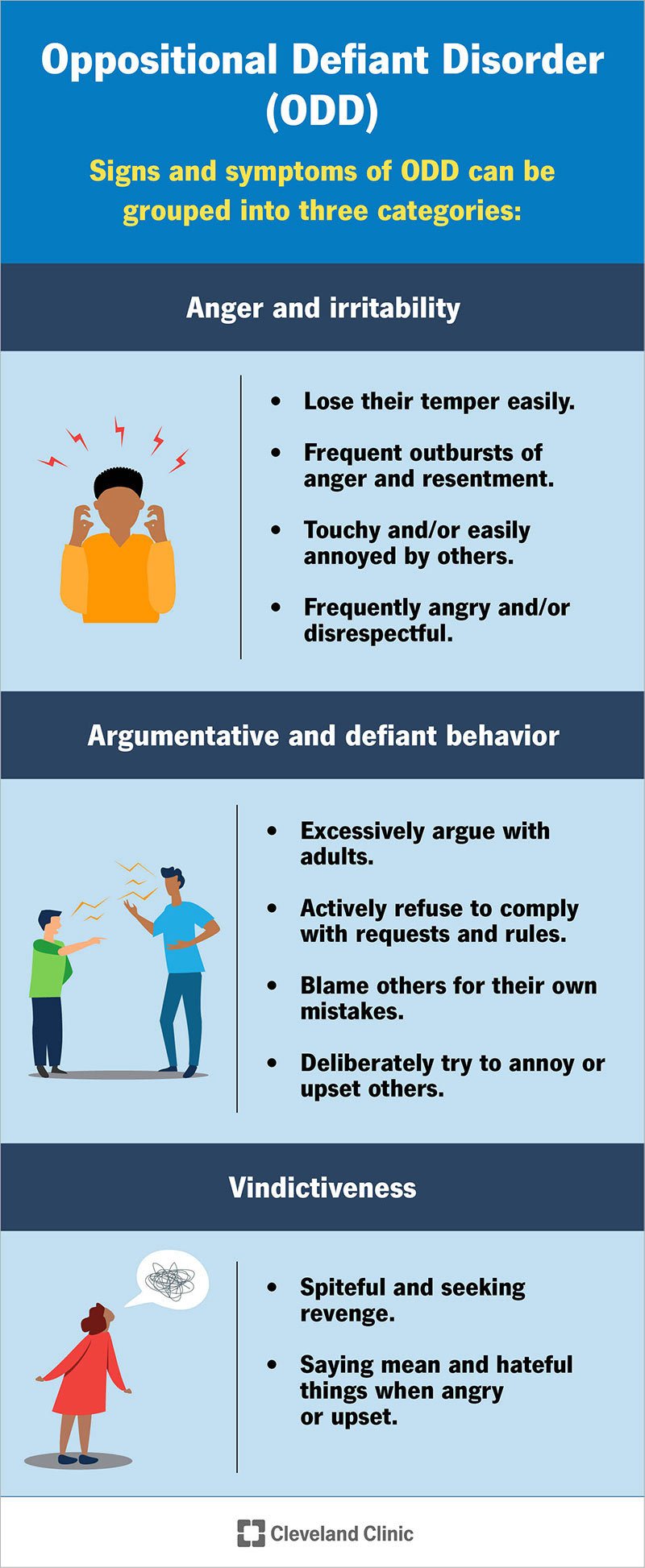
Whereas oppositional defiant disorder is driven by anger.
Erika OlsonGUEST
Anger, they want to challenge authority, like that's their thing.
Erika OlsonGUEST
So ODD is a formal recognized diagnosis.
Erika OlsonGUEST
Like that's been around for a long time.

Sharon CollonGUEST
We have five beautiful humans living under this roof and all of them have ADHD, but we also have autism level 2.
Sharon CollonGUEST
We have OCD, ODD, Tourette's or tick disorder, a whole lot of letters amongst us all.
Sharon CollonGUEST
And on a Tuesday morning...
Sharon CollonGUEST
Before I had the functional family, it was pretty intense.

Cristie KhouryGUEST
So we often see misdiagnosis as well in children or adolescents.
Cristie KhouryGUEST
Sometimes we see it diagnosed as generalized anxiety disorder or ODD, oppositional defiance disorder or conduct disorder.
Cristie KhouryGUEST
But in effect, it's actually the primary diagnosis should have been ADHD all along.
Cristie KhouryGUEST
So it's not easy.

Patrick LockwoodGUEST
So I prefer the prevention approach as opposed to the diagnosis and treatment approach.
Patrick LockwoodGUEST
When it comes to kid disorders and like ODD is clearly a parenting disorder.
Patrick LockwoodGUEST
It's not a it's not an actual kid disorder.
Patrick LockwoodGUEST
The kids acting out, it's usually the parents fault.

Annie EliseHOST
Also there was a couple here in, was it here in San Diego or Jupiter? I can't remember one of the two and they had adopted a son and they made a makeshift holding cell for him, which I'm like, why would you even adopt a child if this is what you're going to do? And there have been a lot of cases where, where we've heard of that.
Annie EliseHOST
Some of the parents say that the reason they did that is for the child's own protection if they were diagnosed with ODD, which is oppositional defiance disorder or something like that.
Annie EliseHOST
But more times than not, it was ruled that that wasn't the case.
Annie EliseHOST
And I think it was just the easy excuse for parents to make.

KatiaHOST
That's true.
KatiaHOST
He would have been, what, ODD to the extreme? Oppositional defiant disorder disorder.
GarnetHOST
Yep.
GarnetHOST
Yeah.

Nik LewisGUEST
We're seeing lots of that come through our kids at the moment, our young people.
Nik LewisGUEST
We're getting lots and lots of more neurodiverse people, young people with, you know, autism, ADHD, ODD, all the labels you can possibly think of.
Nik LewisGUEST
So we're seeing more and more in that.
Nik LewisGUEST
And as we're seeing more and more in that, people are looking for alternative ways for kids to find their calm.

Erin PaigeHOST
So this is the kiddo that comes to you.
Erin PaigeHOST
They're like three years old and They've got an autism diagnosis, an OCD diagnosis, a PDA diagnosis, whatever, ODD, all these different labels that don't necessarily describe that child, but kind of give, they muddy the picture, if you will, rather than give you a very clear idea of how that child is behaving and moving through life.
Erin PaigeHOST
a child that is unable to thoroughly communicate symptoms for whatever reason.
Erin PaigeHOST
So whether this child has apraxia and is unable to speak or is just learning to communicate with a letter board or is an infant or is a child that maybe has some cognitive delays and just can't really express themselves in the way that we need them to in order to take the case properly.

Ludovico Saint Amour di ChanazGUEST
Something can be real without having a birth origin or whatever.
Ludovico Saint Amour di ChanazGUEST
for example, like ODD, oppositional defiant disorder.
Ludovico Saint Amour di ChanazGUEST
A lot of people with ADHD have, by the way, this is something that is mostly acquired from the environment.
Ludovico Saint Amour di ChanazGUEST
And we are going to talk about it in the next segment, I am sure, because you mentioned you wanted to talk about trauma.
29 MINS LATER
Kristen CarderHOST
In your opinion, is rejection sensitive dysphoria a genetic component of ADHD? Or is rejection sensitivity just a normal response to an ADHDer's life of repeated rejection?
Ludovico Saint Amour di ChanazGUEST
In great energy fashion, I'll do a tangent and I'll go back to the initial point.
Ludovico Saint Amour di ChanazGUEST
I mentioned earlier ODD, Opposition Defined Disorder.
Ludovico Saint Amour di ChanazGUEST
You might be familiar also with

Jheri SouthGUEST
I'm going to be really strong about this and this will teach them a lesson.
Jheri SouthGUEST
And most ADHDers, for example, if you double down that way, they either completely shut down and learn to become a people pleaser, which is very damaging for them in all relationships and being able to advocate for themselves, or they become rebellious and they have this attitude of, we know ODD is something that most ADHD years, or at least it could happen.
Jheri SouthGUEST
They're prone to, as their brain is developing, depending on their environment, it could manifest into oppositional defiance disorder.
Jheri SouthGUEST
So as parents, we want to first just really understand what neurodivergence is and and what it's not, what the child can control, and what they can't, so that we aren't triggering more of that shame, which then usually leads to worse behaviors.
22 more episodes mention Oppositional defiant disorder.
Create an account to see the whole feed, search across every transcript, and follow the entities you care about.