Operation Fortitude
WarWikipedia
31
MENTIONS
9
EPISODES
9
PODCASTS
Search complete. 31 mentions across 9 episodes found for "Operation Fortitude".
Oct 19, 2026

Greg JacksonHOST
British intelligence works closely with the French resistance, organizing sabotage missions triggered by coded messages broadcast over the BBC.
Greg JacksonHOST
Amid all of this, a sleight of hand operation, Operation Fortitude builds a phantom army group in Southeast England.
Greg JacksonHOST
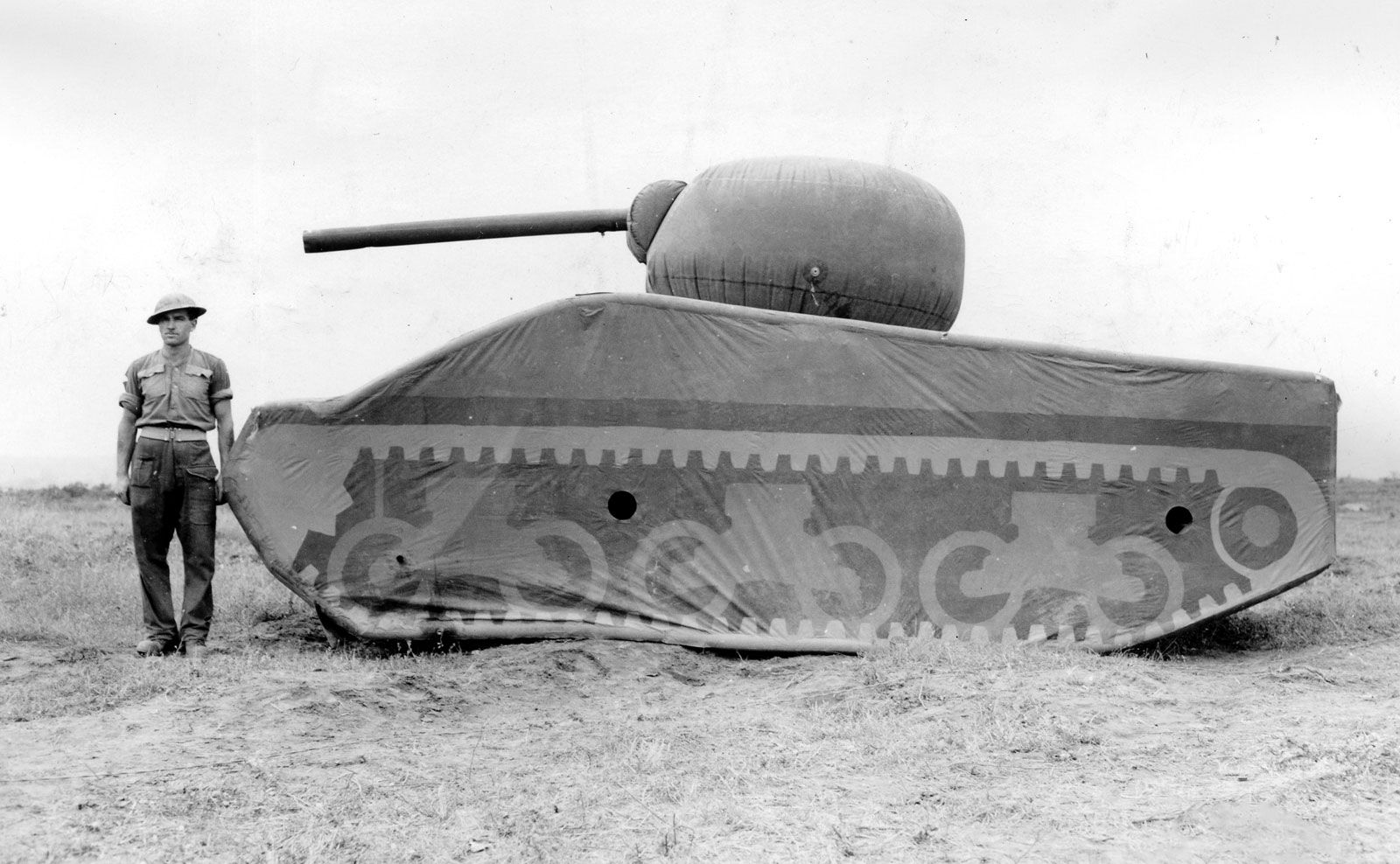
There are some real units and real radio traffic, yes, but also inflatable, fake tanks and artillery, fake aircraft, and even scarecrows in uniform.
Greg JacksonHOST
It might look ridiculous up close, but to the rare Luftwaffe aircraft that stamps a photo with a flat 2D lens, it's absolutely convincing.

Tom GulleyHOST
[laughs] Anyway, they had more respect for Patton than any other Allied commander, and considered him to be central to any plan to invade Europe from England.
Tom GulleyHOST
Now, because of this, Patton was made a prominent figure in a deception scheme called Operation Fortitude during the first half of 1944.
Tom GulleyHOST
Through the British network of double agents, the Allies told the Germans and the intelligence, they gave them a set, steady stream of false reports about troop sightings, and that Patton had been named commander of the First United States Army Group.
Tom GulleyHOST
They did this to convince the Germans that Patton was preparing this massive command for an invasion at Pas de Calais.
Tom GulleyHOST
Speed, use of armored vehicles, never retreating, you know, all of that stuff, constant engagement of his armored, you know, vehicles with the enemy's front lines, pressure, that kind of thing.
Tom GulleyHOST
This entire ruse helped to mask the real location of the invasion of Normandy, and Patton was ordered to keep a low profile to deceive the Germans into thinking he was in Dover throughout early 1944, when he was actually training the Third Army.
Tom GulleyHOST
As a result of this deception, Operation Fortitude, the German 15th Army actually remained [laughs] to defend against Patton's supposed attack, and they believed in this false story so strongly that they held their position in Pas de Calais even after the invasion [laughs] of Normandy, believing the invasion of Normandy was a diversionary force.
Tom GulleyHOST
Patton flew to France a month later and then returned to combat command.

Chris WilliamsonHOST
1942, he was brought to Britain and became a British double agent, receiving the code name Garbo.
Chris WilliamsonHOST
He became, uh, central to Operation Fortitude, the Allied deception surrounding D-Day.
Chris WilliamsonHOST
So he, uh, the network reported where they were going to go.
Chris WilliamsonHOST
Failed chicken farmer rejected by British intelligence, volunteers to spy for Hitler, invents an entire fake spy network, becomes one of Germany's most trusted agents, secretly works for Britain, feeds Hitler false information, plays a major role in D-Day.

speaker_4HOST
They had fed the Nazis a mountain of sophisticated misinformation, fake radio traffic, inflatable tanks, double agents, trying to convince Hitler that the invasion would land at Pas-de-Calais, not Normandy.
speaker_5HOST
The deception was called Operation Fortitude.
speaker_4HOST
But to know if Hitler actually bought the lie, the Allies couldn't just intercept low-level Enigma traffic from a U-boat captain or a field commander.
speaker_4HOST
They needed to read the mail of the German high command.

speaker_0NARRATOR
Therefore, a specific deception effort would be needed to keep the enemy focused on the wrong target.
speaker_0NARRATOR
This led to the creation of Operation Fortitude on the 20th of January, 1944, at the same time that Normandy was finalized as the location for the landing.
speaker_0NARRATOR
The official purpose of Fortitude was to induce the enemy to make faulty strategic dispositions in relation to operations by the United Nations against Germany.
speaker_0NARRATOR
Whereas Operation Bodyguard served as the umbrella plan for all Allied deception efforts, Fortitude would primarily focus on distracting the enemy from the landing at Normandy.
speaker_0NARRATOR
The operation would be split into two main efforts, Fortitude North and Fortitude South.
speaker_0NARRATOR
The northern focus of the plan would be a fake buildup of men and material for a supposed invasion of Norway.
speaker_0NARRATOR
This was of particular interest to the Führer, who believed holding Norway was key to the German war effort.
speaker_0NARRATOR
A deception effort pointing towards the invasion of his prized possession in Scandinavia would hopefully convince the Wehrmacht to send reinforcements there, where they would join the more than 300,000 German troops already occupying the country.

Derek LevandowskiHOST
We just have no idea.
Derek LevandowskiHOST
But having Stanton on the bench kind of reminds me of Operation Fortitude in World War II.
Derek LevandowskiHOST
So the Allies used inflatable tanks and a fake army to throw off the Germans and and make them think that the invasion was going to be in one location, and the actual invasion was at Normandy.
Derek LevandowskiHOST
So it was just like psychological warfare.

James EllmanGUEST
Anyway, Patton was put in charge of part of the deception operation, which was implemented by British intelligence.
James EllmanGUEST
It was called Operation Fortitude.
James EllmanGUEST
There was a Fortitude North and there was a Fortitude South.
James EllmanGUEST
Fortitude North was the fictitious British Fourth Army in Scotland that was supposedly going to land in Norway.
James EllmanGUEST
And then there was the FUSAG, the first U.S. Army group, which was supposedly going to land in Calais in France.
James EllmanGUEST
The British had captured... all the German agents in Britain, I don't think any of them escaped their net, and turned most of them into double agents and fed the Germans these stories about these two fake armies.

Phil ThompsonHOST
Before I read your book, um, I wasn't aware of Operation Sparrow.
Phil ThompsonHOST
And I've been covering stories of espionage on my channel for a while now, and the well-known campaigns are like Fortitude and the Double Cross system.
Phil ThompsonHOST
Everybody, well, a lot of people will be more familiar with those.
Phil ThompsonHOST
So I'm just wondering why h- is Operation Sparrow been not, uh, known about until, until now?
Jason BellGUEST
So, so the, the initial Allied plan for Bodyguard, uh, was basically spring of 1944, uh, we're going to make it look like the invasion's gonna happen, uh, in Southeastern Europe and, and some other places.
Jason BellGUEST
And then as we move forward closer to actual D-Day, when, uh, German intelligence is going to pick up on these signs that something is happening on, on the Southeastern coast of England, then we'll admit, well, sure, there's some kind of invasion happening, but it's going to be, uh, near France's, uh, border with Belgium, so, so to the north of where Normandy would actually happen.
Jason BellGUEST
All of these different deception plots, so, so Double Cross and Fortitude, uh, and Sparrow were all part of this.
Jason BellGUEST
They were being sponsored by different bureaus with some communication between them, not a- not always perfect communication.

Tom SpahrHOST
Could you share with us one of those historic examples, perhaps from one of those two studies or just your favorite historic example?
Mike PoseyGUEST
Yeah, Operation Fortitude South is probably my favorite example.
Mike PoseyGUEST
So the Allies were about to invade into Normandy, and they wanted to mislead Hitler as to the exact location.
Mike PoseyGUEST
So Hitler expected the main attack to come from at the Pas de Calais, and he expected the Allies to position at Dover.
6 MINS LATER
Mike PoseyGUEST
They said that there's two types.
Mike PoseyGUEST
There's an M type, which is misleading, where you want your adversary to be very certain and very wrong.
Mike PoseyGUEST
So for instance, Operation Fortitude South is a terrific example of this.
Mike PoseyGUEST
fooling Hitler that the invasion would occur at the Pas de Calais instead of Normandy.