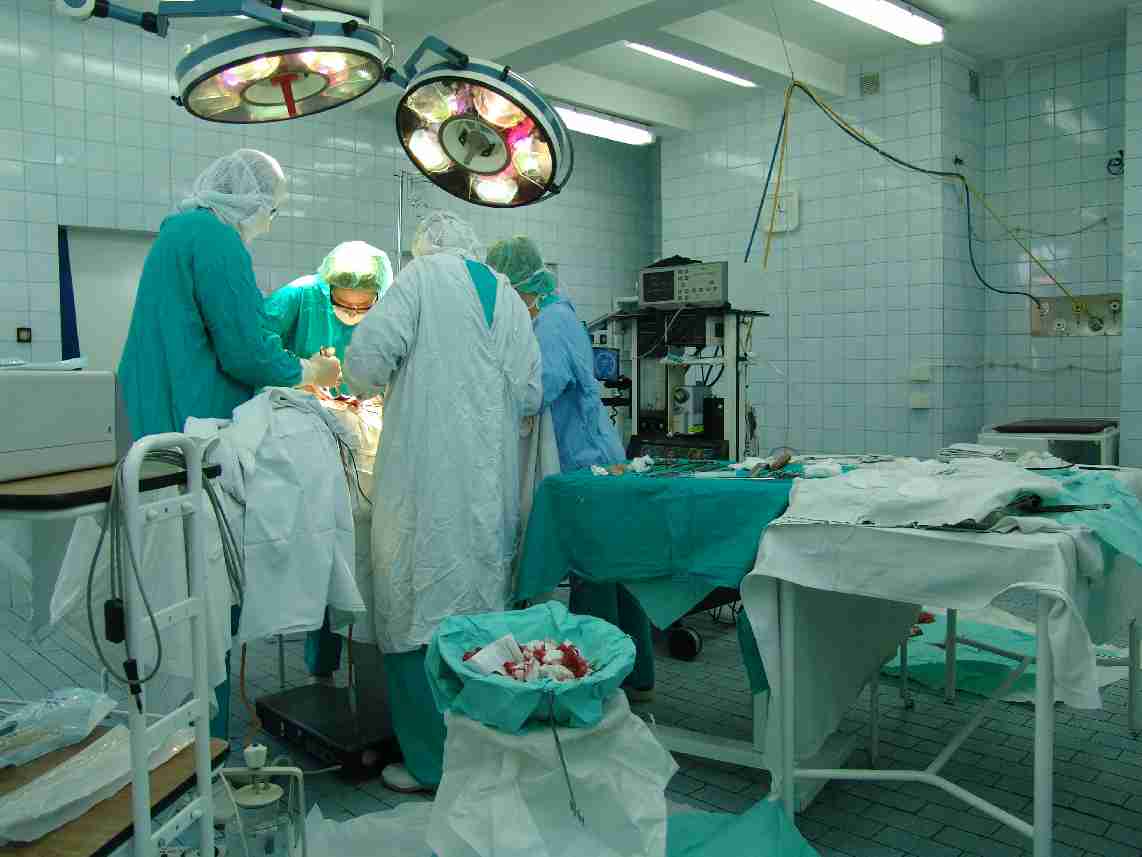
Operating theater
53
MENTIONS
15
EPISODES
14
PODCASTS
Search complete. 53 mentions across 15 episodes found for "Operating theater".
Sep 22, 2026

Andrea TooleyHOST
We'll be discussing three articles, and I'm excited to start with our first with Dr. Lely.
Andrea TooleyHOST
This is Healthcare System Cost Analysis of Common Ophthalmic Procedures Performed in an Operating Room versus an Office Procedure Room.
Andrea TooleyHOST
This is from the authors out of Jules Stein, Ethan Osias is the first author, and Daniel Rootman is our senior author.
Andrea TooleyHOST
And Gary, I think you're the perfect person.
Gary LelliPANELIST
Some of them we do, some of them I don't actually do, but that's okay.
Gary LelliPANELIST
Posteritosis, sectropian, entropian, pterygium, and chelation for band keratopathy.
Gary LelliPANELIST
And they basically looked at the cost of these procedures, whether they're performed in an operating room setting or in the office-based setting.
Gary LelliPANELIST
They also looked at the reimbursement that goes to the physician depending on where these two procedures are performed.

Derek DoneganGUEST
But in the acute setting, the person with, say, the femur fracture who crashes his motorcycle, they come into the emergency room or the trauma bay.
Derek DoneganGUEST
and they could potentially have other injuries going on from an orthopedic surgery perspective, that patient is added on to the OR schedule either that day or the next day and taken to the operating room by an orthopedic surgeon or traumatologist to fix their femur.
Derek DoneganGUEST
Now, an orthopedic trauma surgeon, if it's just that one femur that came in, that's all they're doing.
Derek DoneganGUEST
But that tends not to be the case.
12 MINS LATER
Derek DoneganGUEST
Now, that being said, you do this long enough, you start to understand that and you change your style in those moments, right? And if I think that people who have been doing this long enough and that are successful at it, can see that and see that coming and have a different way of working, right? And adapt to that environment to still optimize outcomes.
Dan DworkisHOST
Can you press on this? Could you give us an example of what, like, what would you do differently or what type of thing would you change in that moment?
Derek DoneganGUEST
Yeah, I think fortunate to have a couple people in the operating room with us.
Derek DoneganGUEST
And so if at that time, if I have a medical sales consultant for, so for trauma and actually almost all of orthopedics that are very implant dependent, companies have representatives that kind of bring the implants in or are, we'll call them set experts for lack of a better term.

Elizabeth JoneschildGUEST
So the title of doctor, does that make you the captain? Perhaps.
Elizabeth JoneschildGUEST
But the most important... leadership skill I think that one has is to make sure that those who are part of your team, like for example, I'll just pick being in the operating room, right? When I'm doing a surgery, there's myself, there's a surgical tech, there's another physician, the anesthesiologist, there's a nurse circulating, there's a nurse managing the OR.
Elizabeth JoneschildGUEST
There's my medical assistant.
Elizabeth JoneschildGUEST
And it is making sure each one of those team members understand their role and making sure that they are valued, right, in this system.

speaker_4HOST
Part of the reason for selecting this project is that this is an area I've had some experiences.
speaker_4HOST
This is a picture of me from about 15 years ago in the operating room.
speaker_4HOST
And this is some of our early work.
speaker_4HOST
It's from 2009 to design software in the operating room.
speaker_4HOST
And this is a particular piece of work that we designed a network interface that allowed a research computer to talk to the system that was actually running the surgery over a network protocol to get data out in real time so we could do research visualizations and other measurements without actually disrupting the process of surgery.
speaker_4HOST
So the surgeon used the system on the left.
speaker_4HOST
Where are you right now? Where are you touching? So this is the guidance.
speaker_4HOST
So this is the triptych of planning, initialization, and guidance that constitutes this process.

Pamela MehtaHOST
yeah that's
Zayed AlmadidyGUEST
embarrassing that's not something that i didn't want to be known as that type of surgeon so i just always made sure that i was somewhere in the operating room because it goes back to my dad he's like you put in the work you're going to be prepared and i tried to put in the work by being in the or as much as i could
Pamela MehtaHOST
No, that's great.
Pamela MehtaHOST
So obviously you've done that work, which is amazing.

Kim TuckerHOST
I'm from the University of Arizona.
Kim TuckerHOST
So today's episode shifts the focus squarely into the operating room, so specifically how we navigate the moment in total hip arthroplasty when things don't go exactly as planned.
Kim TuckerHOST
We spend a lot of time in arthroplasty talking about preoperative optimization, patient selection, and risk stratification, but the reality is even in well-selected patients, intraoperative challenges are inevitable, and how we respond to those moments is often what defines those outcomes.
Kim TuckerHOST
So this episode centers on a symposium review from the twenty-twenty-five AAOS annual meeting that breaks down intraoperative challenges in primary total hip arthroplasty in four key domains: exposure, acetabular preparation, femoral management, and restoration of leg-leg offset and stability.
7 MINS LATER
William HamiltonGUEST
Yeah.
Kim TuckerHOST
I really appreciate that too.
Kim TuckerHOST
I think y- we were saying that outs- outside, like just being able to be flexible is so important in the operating room because you're also like guiding your whole team.
Kim TuckerHOST
So if you respond poorly, like the stress level in the whole OR just kinda goes up.

Nicholas FogelsonHOST
Because I go back and look at my video and I'm like, well, I think I did the surgery well.
Nicholas FogelsonHOST
I'm not sure what else I would do in the operating room.
Nicholas FogelsonHOST
And at that time, I didn't have the experience to say, you know what, we need to give it more time.
Nicholas FogelsonHOST
And now what I've seen is that a subset of patients will take four, six, sometimes even a little longer to feel the benefit of what we've done.
Nicholas FogelsonHOST
Yeah,
Shanti MollingHOST
if there's a reflexive coughing or emesis.
Nicholas FogelsonHOST
So in the old way we used to do it, we tell people don't eat or drink, you had people coming into the operating room dehydrated potentially.
Nicholas FogelsonHOST
And that delayed recovery.
Jennifer Sivak-CallcottGUEST
And this concept's really important not only for diagnosis, but it's kind of critical or crucial in choosing the types of activities that may support you through your career.
Jennifer Sivak-CallcottGUEST
We did find in our survey study that if you exercise more than five hours a week, you were less likely to modify your operating room practice.
Jennifer Sivak-CallcottGUEST
Interestingly, we found no correlation with BMI.
Jennifer Sivak-CallcottGUEST
And about 20 years ago, there was a study in ophthalmologists, not oculofacial surgeons, ophthalmologists, and they found that performing more than four cases a week or seeing more than 100 patients in a clinic a week was associated with increased neck, upper extremity, and lower back symptoms.
Kelsey RoelofsHOST
Yeah, absolutely.
Kelsey RoelofsHOST
I think the thing that is really coming through to me listening to both of you is that there is good data that sort of correlates the symptoms we have with the amount of time we spend in awkward positions.
Kelsey RoelofsHOST
And it's not just the awkward positions in the operating room.
Kelsey RoelofsHOST
It's the awkward positions that happen throughout our entire workday, really, in a variety of settings.

Ali GolabchiGUEST
And The nice thing is that you get really good accurate representation, so you can really take that motion out and look at it on a computer, or as I said, if they're making animation, they put a character on top of that and stuff like that.
Ali GolabchiGUEST
But the challenge is you need all the cameras there and you need to do it in a controlled environment, so you can't really do it in an operating room or those environments.
Ali GolabchiGUEST
The marker-less systems, one is still sensor-based, which is wearables.
Ali GolabchiGUEST
So that's where you have your IMUs, right? So these are sensors that, again, people put on body and then it tracks movements of different body parts.
5 more episodes mention Operating theater.
Create an account to see the whole feed, search across every transcript, and follow the entities you care about.