Online analytical processing
26
MENTIONS
11
EPISODES
10
PODCASTS
Search complete. 26 mentions across 11 episodes found for "Online analytical processing".
Sep 19, 2026

Joran Dirk GreefGUEST
It's also not an analytics database like DuckDB.
Joran Dirk GreefGUEST
It's not OLAP.
Joran Dirk GreefGUEST
So it's not OLAP.
Joran Dirk GreefGUEST
It's not OLGP.
Joran Dirk GreefGUEST
It's only transaction processing.
14 MINS LATER
Joran Dirk GreefGUEST
In SQL, again, it would be like 8,000 in 8,000 queries.
Joran Dirk GreefGUEST
So you just have way more string serialization overhead Everything is, it's general purpose, it's strings.
Joran Dirk GreefGUEST
Maybe, Lukasz, this is the way to think of Tiger Beetle, like DuckDB, OLAP, Postgres, OLGP.

Rishi SapraGUEST
To do a simple DAX query, it has to do, you know, 50 joins in the back between all these tables and try and understand how they all relate, and your DAX becomes stupidly complex because it has to then pick out all these tables in different places.
Rishi SapraGUEST
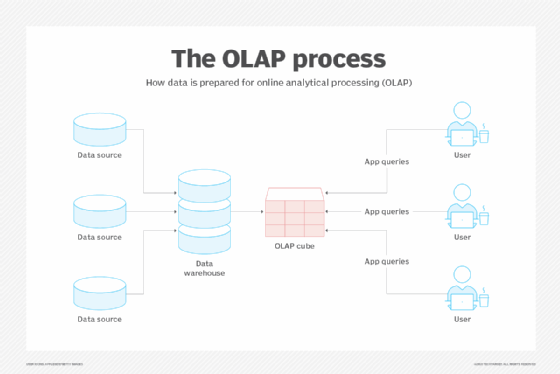
So you need to denormalize and actually turn it from an OLTP, or online transactional processor model, data model, into an OLAP, tabular model, which is just dimensions and facts.
Rishi SapraGUEST
And there is rep- repetition and redundancy, and that's okay because it's just a structure that Power BI could work with and it can aggregate over, analyze it.
Rishi SapraGUEST
So that's, that's data model.
Rishi SapraGUEST
So now you've then said semantic model.
Rishi SapraGUEST
And a- again, obviously data model is part of semantic model.
Rishi SapraGUEST
That OLAP tabular structure is for a semantic model.
Rishi SapraGUEST
That's the data structure you need or is ide- ideally well-suited to.

Rob CollieGUEST
But it was very much this traditional world but I describe as traditional BI.
Rob CollieGUEST
You're talking OLAP
Frank La VigneHOST
clues and stuff like that.
Frank La VigneHOST
I remember hearing about this in the 90s.
Rob CollieGUEST
It's pixels.
Rob CollieGUEST
There's not a lot of intelligence going on in the BI part there.
Rob CollieGUEST
And analysis services, by contrast, was this incredibly – you mentioned OLAP cubes.
Rob CollieGUEST
It was this incredibly intelligent product that allowed you to blend and mesh data from multiple different workflows, multiple different silos, different phases of your business all in one place and express business logic, what is gross profit very precisely – And then ask any sort of like, ask any question you want of your data model without having to go rewrite a whole bunch of SQL each time you wanted to ask a new question.

Tobias MaceyHOST
And as you're talking about the different formats and shapes and requirements around these projections of context, it just makes me think about the perennial challenge of every data engineer everywhere of having to battle the siloization and fragmentation of information where the data warehouse, one of its primary goals is get all the data in one place so we can do something with it, which is never sufficient.
Tobias MaceyHOST
And so you end up having to build all these different views and projections over that and reflected into another system if you wanted to be able to do OLAP versus just historical querying.
Tobias MaceyHOST
And I'm curious how you're seeing some of the complexities grow as you're bringing these fast moving machine operators into the mix and some of the ways that you can have a shared ground truth that everything else is built and projected from rather than having to do bespoke implementations and multiple different ways.
Tobias MaceyHOST
that's a great

Michael WatsonHOST
And that translation from a business use case to an engineer was all about contextualization of the problem and having the engineer understand to some extent be responsible for like, okay, I understand software and data best practices.
Michael WatsonHOST
I understand OLAP versus OLTP databases.
Michael WatsonHOST
I understand like when it should be relational versus JSON structured.
Michael WatsonHOST
I know how to write Python code and how to use pandas.

Shachar MeirGUEST
Um, AI is interesting because in, in a lot of different ways, so I see everybody's getting excited about self-service analytics all of a sudden.
Shachar MeirGUEST
I think Jefferson is now commenting old-school business, uh, intelligence, OLAP.
Shachar MeirGUEST
Yes, none of these things are new.
Shachar MeirGUEST
All of these concepts had existed for many, many, many years.

Robert BlumenHOST
Let's start out with a background question.
Robert BlumenHOST
You can run these OLAP workloads less efficiently on a general purpose database.
Robert BlumenHOST
What is the cutover point where you want to switch to a specialized OLAP for your workloads?
Sahil WaliaGUEST
Absolutely.
Sahil WaliaGUEST
For the audiences not familiar, OLTP is essentially transactional.
Sahil WaliaGUEST
So one of the examples I would look for is when you're looking for latency budget of milliseconds, you want to stay in OLTP
Robert BlumenHOST
world.
Sahil WaliaGUEST
But when your latency budget is in about seconds and minutes and you're audience is mostly analytical, training the ML workloads on data, and it's not dependent on transactional data, I would move towards the OLAP.

Shane ThomasHOST
What is DuckDB for those that are watching that maybe aren't as in tune with different types of
Abhi AiyerHOST
databases? It's like an OLAP database for analytics data.
Abhi AiyerHOST
It stores the data in a file and then you have a SQL-like querying language on it.
Abhi AiyerHOST
Because agents love file systems and you can spin up sandboxes and stuff, the question is, do you really need a full-on database? Or can you just store a file in S3 and that's your database? Monstro uses DuckDB for local observability You could use it in production.
Abhi AiyerHOST
Much like a lib SQL from Terso allows you to have a SQL database locally through SQLite.
Abhi AiyerHOST
Same kind of concept.
Shane ThomasHOST
Yeah, and the biggest OLAP database being Clickhouse, right?
Abhi AiyerHOST
Yeah.

Cindi HowsonHOST
Thank you for taking us through that.
Cindi HowsonHOST
I also think, you know, if I can argue with you about something, I was a little bit shocked that you were still writing about OLAP, Sandeep, whereas I'm trying to tell customers cubes are dead, like stop that.
Cindi HowsonHOST
We don't need that anymore.
Cindi HowsonHOST
You have open storage formats.
Sanjeev MohanGUEST
between your BI layer, your data transformation layer, your storage layer.
Sanjeev MohanGUEST
So we have completely opened up, unbundled storage, and now I can bring any compute engine.
Sanjeev MohanGUEST
The only reason I mentioned OLAP is because it's a journey and it's not going to go away anytime soon.
Sanjeev MohanGUEST
So that's why I didn't want to exclude it.
Amit ChandakGUEST
Now, SQL DB replicate data again in Delta format, which is very similar to warehouse.
Amit ChandakGUEST
So live versus means OLTP versus OLAP.
Amit ChandakGUEST
In OLAP we have a choice versus technology or versus, uh, basically the structured, unstructured data.
Amit ChandakGUEST
Now, lakehouse can have unlimited historical data also.
Amit ChandakGUEST
We call time travel.
1 more episode mentions Online analytical processing.
Create an account to see the whole feed, search across every transcript, and follow the entities you care about.