One Health
153
MENTIONS
44
EPISODES
37
PODCASTS
Search complete. 153 mentions across 44 episodes found for "One Health".
Nov 1, 2026

Kat FendallHOST
My guest is Dr. Maureen Murray.
Kat FendallHOST
Assistant Director of One Health at Lincoln Park Zoo's Urban Wildlife Institute in Chicago, in the US.
Kat FendallHOST
She studies how cities shape the health of wildlife and the people living alongside them.
Kat FendallHOST
And since 2018, she has been running the Chicago Red Project.
11 MINS LATER
Maureen MurrayGUEST
When it's really their urine and feces that... can make us sick and can be a lot more cryptic and we might not know that we're being exposed so i consider that more of a public education need i think people are becoming more aware of hantavirus and maybe how to safely clean up mouse droppings because of hantavirus but awareness of leptospirosis is not very high and it's something where if you have puddles in your alley If rats are urinating into those puddles, those leptospirosis can be persistent in water and soil for weeks at a time.
Maureen MurrayGUEST
And so if you have a dog that likes to dig in soil or drink out of puddles, dogs can also get leptospirosis.
Maureen MurrayGUEST
And it's a really fascinating disease to me from a One Health perspective, because you have these wildlife reservoirs, one of which is rats.
Maureen MurrayGUEST
Raccoons are another.

Daniel GriffinGUEST
We may do a little bit of an overlap because I know folks at Notre Dame might be trying to do a fundraiser for Dixon.
Daniel GriffinGUEST
So, you know, just let us know if there's a A little bit of an overlap there because we're going to be doing that One Health lecture series in memory of Dixon.
Daniel GriffinGUEST
But this is it.
Daniel GriffinGUEST
And then we're going to do Vincent's favorite fundraiser, which will be Microbe TV.

Collin O'MaraGUEST
And again, not to get people down at all, because I think we can absolutely overcome this, but, you know, we'll need real investment, right? We're going to need the Recovering America Wildlife Act or some vehicle, right? Like we're going to need new revenue streams to do this work.
Collin O'MaraGUEST
It shouldn't be just a wildlife thing, right? It should also be about public health and I think the role of One Health and the role of preventing zoonotic disease transfer and things like that, there's all these kind of new pieces that are part of the constellation at a time when the federal budget kind of percentage at least committed to our activities has never been smaller.
Collin O'MaraGUEST
And so, I mean, I think navigating that reality is going to determine our success over the next 30, 60, 90 years.
Ed ArnettHOST
There's a lot there on where we're at with the current threats.

Libby FritzGUEST
You know, like it was really fun to hear the audience reaction to it.
Libby FritzGUEST
But one of the things that you, as you were setting up your talk and you were kind of laying the groundwork, you talked about Indiana and why we were looking at it and you touched on the One Health Initiative and all of the strengths that we have.
Libby FritzGUEST
And there was definitely audience members that had audible like, huh, to that or it made sense.
Libby FritzGUEST
And so I think it was another validation that One Health and Indiana's play in this space made sense.
Christy WrightGUEST
I agree.
Christy WrightGUEST
That was interesting to be in another space.
Christy WrightGUEST
But I agree, Libby.
Christy WrightGUEST
That was... really kind of exciting was like people really were interested in that and what's happening in our ecosystem because of the assets that we have here.

Kelcey HarperGUEST
And so it really got me interested in kind of how you know, we interact with our environment.
Kelcey HarperGUEST
I had previously done some foodborne surveillance testing and kind of looking at the environmental aspect and the kind of one health principles where the environment and animals and human health are really all intertwined together.
Kelcey HarperGUEST
And so that kind of gave me like a bit of a passion for more of the environmental side of microbiology and how it can translate into aiding in human health, population health, and really just being able to detect pathogens, you know, before we even are able to see clinical cases, which is something that wastewater has been able to do, which has been wonderful for public health response.
Sophia ChandrasekarHOST
So with that, what exactly is wastewater surveillance?
37 MINS LATER
Kelcey HarperGUEST
And it wasn't until I started working in the public health lab during COVID and kind of found some new opportunities and growth opportunities that I was like, oh, shoot, this is super cool.
Kelcey HarperGUEST
And, you know, I'm really like big into nature and everything.
Kelcey HarperGUEST
And just, you know, that kind of connection that, you know, I talked about the one health principles earlier, and, you know, just, it's not just human health it's everything else too um we can't have our best health without good environmental health and environmental practices and animal health i mean look at antimicrobial resistance too like it's not just humans it's uh it's animals as as well and you know that's and yeah
Sophia ChandrasekarHOST
the moose yes oh

LucyHOST
So this really helps teams identify where changes in prescribing behaviour and practice policy could support antibiotic stewardship.
LucyHOST
It's quick to do, it gives you really useful data and every submission contributes to the wider One Health effort to tackle antimicrobial resistance.
LucyHOST
So please head to the MonitorMe webpage and find out more.
Abby McLennanCORRESPONDENT
Now get your diaries out because there's

Byron BreedloveGUEST
Virchow stressed that diseases of humans and animals are interconnected and devised the term zoonosis to describe the links between infectious diseases and animals in human health.
Byron BreedloveGUEST
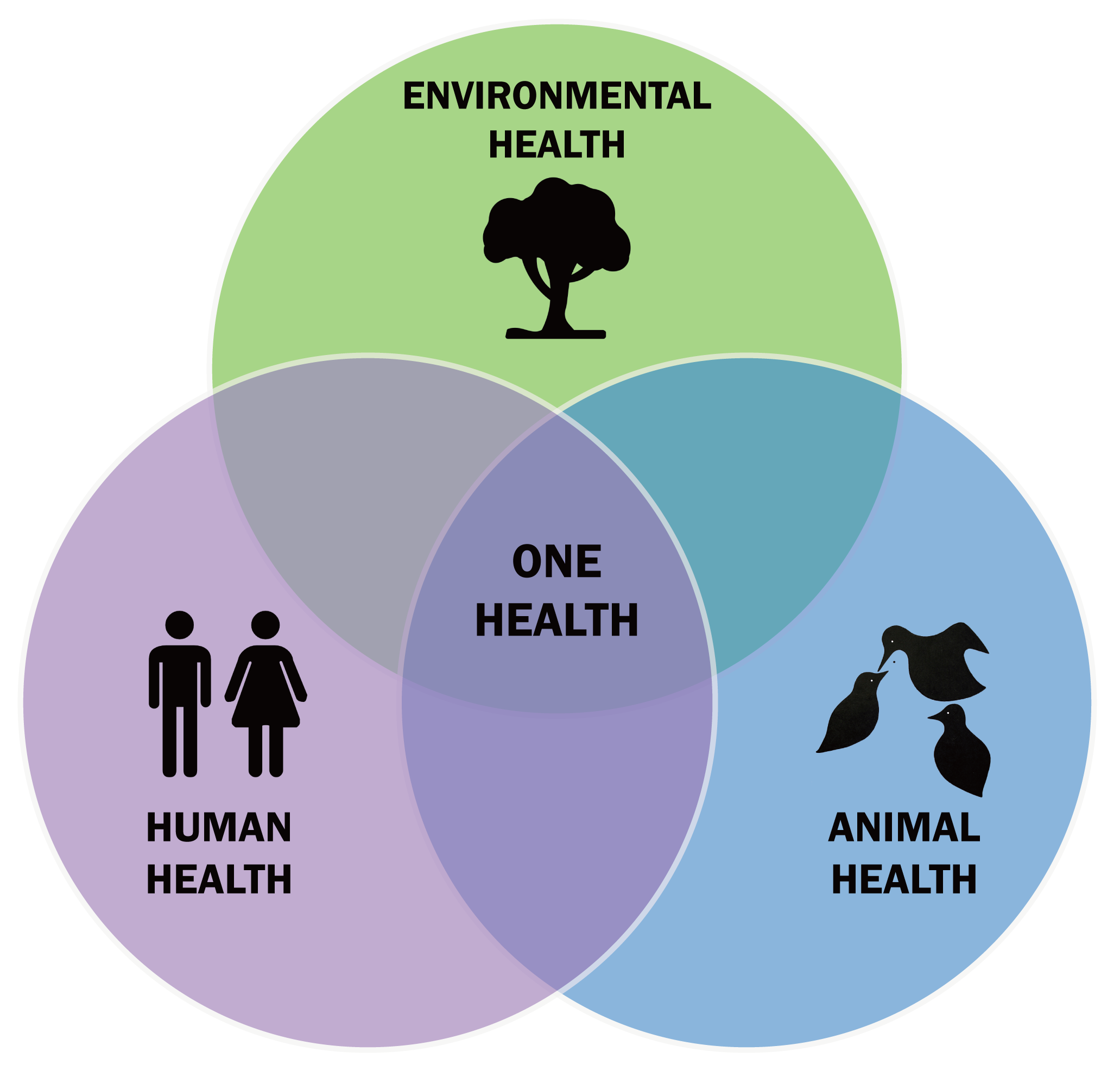
The ring of people forming the outer edge of a timeless symbiosis can serve to symbolize the modern One Health concept, an initiative that requires close collaboration among researchers in the animal, human, and environmental health sectors to protect and preserve life.
Sarah GregoryHOST
Thank you, Byron.
Sarah GregoryHOST
Listeners can read Byron's cover essay, Everything Within a Circle is One Thing, at cdc.gov. I'm Sarah Gregory for Emerging Infectious Diseases.

Sierra BainbridgeGUEST
And to actually bring forth a proposal we determined that we had to generate a curriculum to base this proposal upon.
Sierra BainbridgeGUEST
And we had just kind of started to work with the idea of One Health on a prior campus, the University of Global Health Equity, which was looking at One Health being the idea that human, animal, and ecological health are inextricably linked.
Sierra BainbridgeGUEST
And it's really from the realms of public health, veterinary, medical, that this came forth and particularly to reduce zoonotic disease transmission.
Sierra BainbridgeGUEST
To think of these things holistically is how we can kind of minimize these jumps of disease.
Sierra BainbridgeGUEST
And this school in particular was, it's Harvard School of Public Health and Partners in Health and really trying to think about how you deliver healthcare to Sub-Saharan Africa.
Sierra BainbridgeGUEST
And it was actually the donor that said, we want this to be a One Health institution.
Sierra BainbridgeGUEST
And so that forced us as the designers to dig in deep and really learn about this approach.
Sierra BainbridgeGUEST
And for us as the landscape architects just made so much sense because veterinarians had taken up the animal health aspect and medical, the medical kind of realm of, or the, you know, sorry, doctors and schools of medicine had taken up the human health aspect, but no one had really taken up the ecological aspect.

Cliff RedfordGUEST
And look, part of it is it's a nice place to visit, especially when it's cold here.
Cliff RedfordGUEST
But we go there and we do spay and neuter clinics and what are called One Health clinics.
Cliff RedfordGUEST
This time we were in Lucy, which is between MoBay and Negril.
Cliff RedfordGUEST
We were actually guests at a resort there and taking care of all their cats.

Daisy LundHOST
We're increasingly presented with chicken as a healthy, sustainable alternative to other meats, while the way we produce huge quantities of it raises some pretty uncomfortable questions.
Daisy LundHOST
And it becomes apparent that when we talk about poultry, we need to consider a one health approach because the health of animals, people and the environment are all connected.
Clare DayHOST
And given we like to look at the evidence on this podcast, even when things are looking this bleak on a broader scale, what does the scientific evidence actually tell us about eating poultry? Is chicken genuinely beneficial for individual health, or is it simply less harmful than some of the foods we might replace it with? And what happens when we compare chicken, not with bacon or beef, but with beans, lentils, tofu, nuts and whole grains? Because perhaps the most important question isn't simply, is chicken healthy? It's compared with what and at what cost?
Daisy LundHOST
And to help us answer some of these questions, we're joined by various guests who all have expertise in this area.
37 MINS LATER
Clare DayHOST
And so we keep getting pulled back to this idea that smaller, more local farms are the solution.
Clare DayHOST
But as you say, when you're looking at the escalating demand for meat, not just in the UK, but globally, it really seems unlikely that that would be on anybody's radar politically for solving the problem.
Clare DayHOST
When I was watching a One Health clip of a conference that they were having, we were talking about it on one of our other episodes, weren't we, Daisy? It was all about, we just need to do more surveillance, we just need to have more vaccines when diseases appear, and we can manage this, we can contain it.
Clare DayHOST
That sounds very dystopian to us, but I wondered what really science thought about that, because sometimes When you're a scientist, you just sort of like, well, give me a problem.
34 more episodes mention One Health.
Create an account to see the whole feed, search across every transcript, and follow the entities you care about.