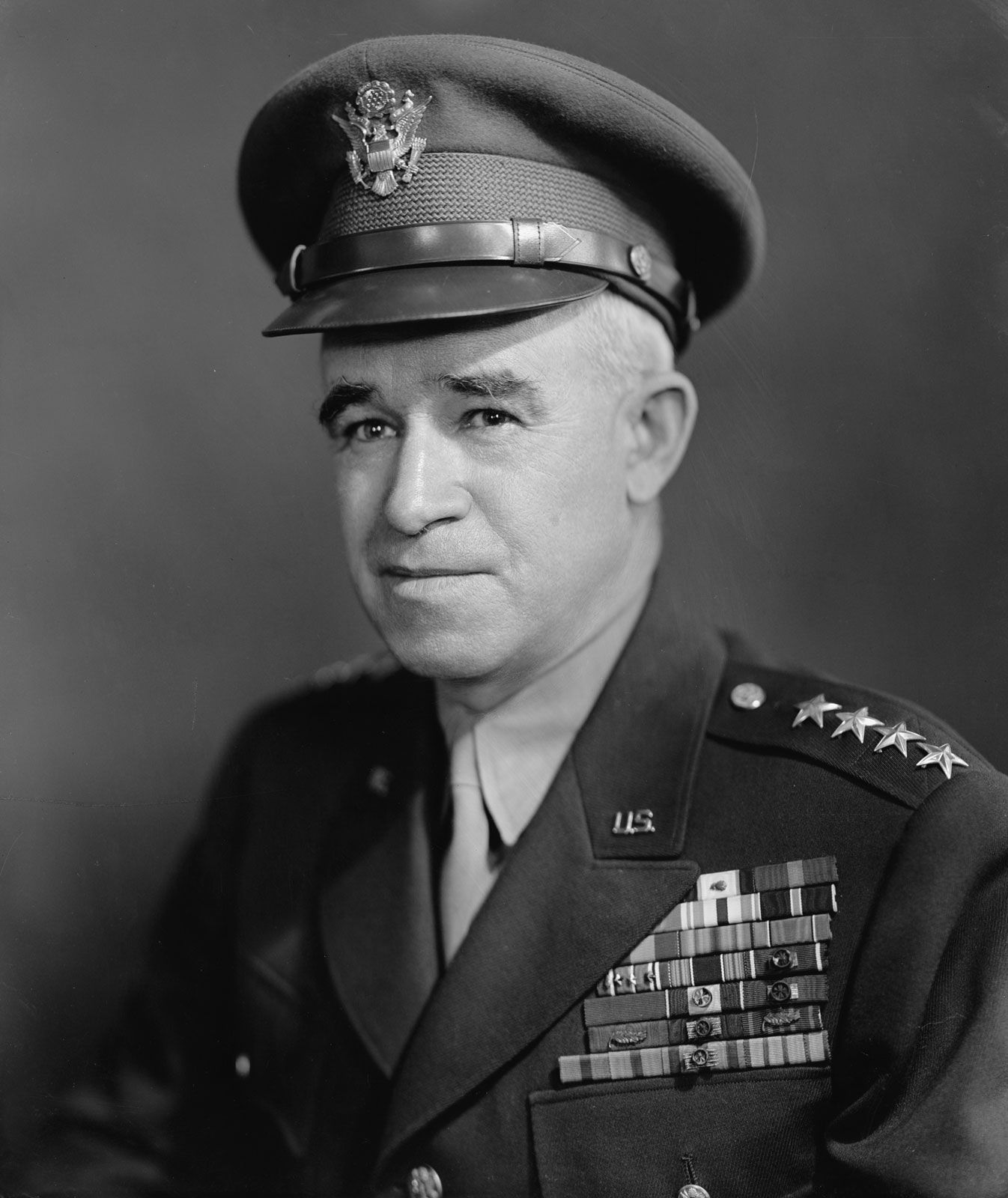
Omar Nelson Bradley
Former United States Chairman of the Joint Chiefs of StaffWikipedia
54
MENTIONS
30
EPISODES
28
PODCASTS
Search complete. 54 mentions across 30 episodes found for "Omar Nelson Bradley".
Oct 5, 2026

Stephen AmbroseSOUNDBITE_SPEAKER
Rommel also had high blood pressure and other problems, but Rommel was pulled out so that he wouldn't be there for the humiliation of the final surrender and so that he would be available for the defense of France when the time came.
Stephen AmbroseSOUNDBITE_SPEAKER
And in May, May 8th of 1943, Tunis fell to General Bradley's forces, and the Axis had now been cleared out of North Africa.
Lee HabeebHOST
And you've been listening to Stephen Ambrose tell the story of the Kasserine Pass, the early difficulties, and then ultimately the victory that led to our victory in North Africa and on to bigger things and harder things in Northern Europe.
Lee HabeebHOST
And great job on the production, as always, by Greg Hengler.

Thomas777GUEST
One of the good things he did was in 1979, uh, Carter, uh, Carter tapped William Odom, who was a general, a very brilliant guy.
Thomas777GUEST
He, Odom was rare because he kind of had the, the logistical brilliance of, uh, of Omar Bradley, but he was also a real warrior.
Thomas777GUEST
You know, he was like a, he was like a soldier's general.
Thomas777GUEST
He understood combat.
1 HR 1 MIN LATER
Thomas777GUEST
But beyond that, what's fascinating to me is even men who you would think would have known better, like Eisenhower.
Thomas777GUEST
Okay, Eisenhower, whatever else can be said about him, the guy was something of a savant in, in terms of logistical, uh, and engineering military matters, and he was a protege of Pershing, Blackjack Pershing, who was an under-understated figure in contemporary histories.
Thomas777GUEST
He hasn't made-- Eisenhower said, uh, Eisenhower said, uh, to one of his adjutants, and this was relayed by Omar Bradley, you know, uh, when there was discussion as to, you know, the issue of allowing the Soviets to take Berlin, Eisenhower said something to the effect of, "Well, my God, like, who would want it? You know, they're gonna lose, you know, a hundred thousand men taking it." And Bradley, he was stupefied by that.
Thomas777GUEST
He's like, "Well, what do you mean? You know, like, how, [chuckles] you know, how, how can you say that?" You know, uh, and, uh, Eisen- and Eisenhower's retort was something like, "Well, as a military objective, it's meaningless.

ThomasGUEST
One of the good things he did was in 1979, uh, Carter, uh, Carter tapped William Odom, who was a general, a very brilliant guy.
ThomasGUEST
He, Odom was rare because he kind of had the, the logistical brilliance of, uh, of Omar Bradley, but he was also a real warrior.
ThomasGUEST
You know, he was like a, he was like a soldier's general.
ThomasGUEST
He understood combat.
1 HR 3 MINS LATER
ThomasGUEST
But beyond that, what's fascinating to me is even men who you would think would have known better, like Eisenhower.
ThomasGUEST
Okay, Eisenhower, whatever else can be said about him, the guy was something of a savant in, in terms of logistical, uh, and engineering military matters, and he was a protege of Pershing, Blackjack Pershing, who was an under- understated figure in contemporary histories.
ThomasGUEST
He hasn't made-- Eisenhower said, uh, Eisenhower said, uh, to one of his adjutants, and this was relayed by Omar Bradley, you know, uh, when there was discussion as to, you know, the issue of allowing the Soviets to take Berlin, Eisenhower said something to the effect of, "Well, my God, like, who would want it? You know, they're gonna lose, you know, 100,000 men taking it." And Bradley, he was stupefied by that.
ThomasGUEST
He's like, "Well, what do you mean? You know, like, how, [chuckles] you know, how, how, how can you say that?" You know, uh, and, uh, Eisen- and Eisenhower's retort was something like, "Well, as a military objective, it's meaningless.

David WollenHOST
And I read this somewhere from – it was a memoir, I think, from World War II.
David WollenHOST
And a couple of the different generals of that era, I think maybe the most famous of them would have been Eisenhower, but another one, General Bradley.
David WollenHOST
looking back at World War II, said, amateurs talk strategy, professionals talk logistics.
David WollenHOST
And I just looked up the Eisenhower quote.

James EllmanGUEST
Patton accused Patton of being a poor planner.
James EllmanGUEST
Bradley pointed out that Patton often neglected logistics so that it reduced the readiness and effectiveness of the forces under his command.
James EllmanGUEST
And Patton's own superiors, Eisenhower and Bradley in World War II and General Rockenbach in World War I, repeatedly castigated him for failing to transmit appropriate situation reports to headquarters.
James EllmanGUEST
Um, And Patton's leadership style was the antithesis of jointness.
James EllmanGUEST
He repeatedly clashed with the Navy, the Air Force, and allied British forces, and he caused significant unnecessary friction in operations in which he was involved.
Lee ReynoldsHOST
I won't say his strategy.
Lee ReynoldsHOST
I don't know enough about that, and I think you pointed out well that he wasn't that – He was an army commander, but he wasn't higher than that.
Lee ReynoldsHOST
So the strategy I think more fell on Bradley at least later in the war.

Adam GrossworthHOST
Yeah.
Adam GrossworthHOST
Uh, and then the Dean Martin Celebrity Roast of Bob Hope, the season premiere of the Dean Martin Celebrity Roast, uh, with Gerald Ford, Henry Kissinger, Ronald Reagan, Howard Cosell, Jack Benny, James Stewart, Omar Bradley, Rich Little, Foster Brooks, and Phyllis Diller.
Adam GrossworthHOST
W- cursed.
Christy BauerHOST
Nope.

Rob ManessGUEST
And the task force was simply to look at the U.S. war colleges, because those colleges are supposed to develop generals and admirals that can win our nation's wars and that know the difference between a lawful and unlawful order and that could tell the President of the United States, under good military advice, that something is a dumb thing to do, like trying to create a, I don't know, a liberal democracy in a century civilization in Afghanistan that That's really a fool's errand.
Rob ManessGUEST
Those are the kinds of individuals that our war colleges are supposed to produce, like Dwight Eisenhower and George Patton and Omar Bradley and those kinds of folks.
Rob ManessGUEST
Well, if you haven't noticed, they haven't really been winning very many wars up until recently with this Iran conflict and war.
Rob ManessGUEST
And I'm not going to even debate that with anybody.

William CooperHOST
Another is to man the bases we would need in time of war and to maintain the lines of communication with our men overseas.
William CooperHOST
General Bradley explained our approach to the defense problem when he said, "Our basic military structure consists of two main elements: the forces in being and the mo-mobilization base.
William CooperHOST
Because the United States will not make war of its own volition, a fact as apparent to any aggressor as it is to us, our forces in being are maintained at a strength which can prevent disaster in the event we are attacked.
William CooperHOST
And which can strike a retaliatory blow that will be strong enough to slow down the aggressor while we mobilize.
William CooperHOST
It would be economically foolhardy and politically inconsistent for us to maintain forces in being sufficient to win a major war.
William CooperHOST
Our mobilization base must provide the educational training and logistical facilities that will assure us of a quick expansion of the armed forces in order that we can eventually bring the full might of this nation in conjunction with allied nations to bear upon the enemy.
William CooperHOST
In June 1950, not quite four months after General Bradley had spoken these words, communist forces invaded South Korea, an act of raw, unprovoked aggression.
William CooperHOST
Under the authority of the Security Council, American armed forces went into action from their nearest bases in Japan more than a hundred miles away.

speaker_5HOST
The Times guestbook during this era was astonishingly eclectic.
speaker_5HOST
You had visionary architects like Frank Lloyd Wright, military leaders like Omar Bradley, and even Ronald Reagan.
LewisHOST
Although, just to keep our timeline straight, when Reagan visited the tower in the 1950s, he was there strictly in his capacity as the president of the Screen Actors Guild, not as the president of the United States.
speaker_5HOST
Right, right.
ThomasGUEST
And I don't understand why the U S Navy deploys commandos to landlocked countries, but, What do I know? But bringing it back, it was interesting because in what can be known as the great debate over the Korean War, you know, a bunch of and in the lead up to the the big schism between MacArthur and Truman, a bunch of.
ThomasGUEST
Joint Chiefs of Staff elements and experts and Army brass, including Omar Bradley, who was then Chairman of the Joint Chiefs, they were cross-examined by these senators who were basically asking, why is there this binary and apocalyptic victory metric? And the senator from Connecticut, Brian McMahon, he put it to Bradley, well, what constitutes victory? He said, did we lose the War of 1812? Because upon ejecting the British, we didn't sail to London, burn it down, kill 10 million Englishmen, and then overthrow the monarchy and socially engineer, I'm paraphrasing, the United Kingdom into some American client state.
ThomasGUEST
And then Bradley stipulated that...
ThomasGUEST
Well, you know, there's a place for political negotiation that it's got to be paramount, you know, and in his words, quote, I think you must and you must vary from being willing to accept rather small thing.
20 more episodes mention Omar Nelson Bradley.
Create an account to see the whole feed, search across every transcript, and follow the entities you care about.