Olmecs
PeopleWikipedia
117
MENTIONS
51
EPISODES
46
PODCASTS
Search complete. 117 mentions across 51 episodes found for "Olmecs".
Nov 24, 2026

Tom FranklinHOST
Okay, wait a minute.
Tom FranklinHOST
Are you talking about the Olmecs?
ElisaGUEST
Yes.
Tom FranklinHOST
And what did she call them? The rubber gum people?
5 MINS LATER
ElisaGUEST
oh yeah i'd love to
Tom FranklinHOST
i'd love to too man Yeah, so tell me more.
Tom FranklinHOST
What did your grandmother say about the rubber people or the Olmecs, as they call it? We don't even know what they're really called.
ElisaGUEST
Right.

Ed EastonHOST
If there was an Aztec sitting in this conversation, they'd say, I mean, you're splitting hairs here because, I mean, we're talking about a bastardisation.
Ed EastonHOST
This is all so far away from the cacao we would talk about in our Aztec or our Maya or our Olmec episodes.
Ed EastonHOST
No, no, no.
Ed EastonHOST
If Americans like theirs a little bit cheesy and we like ours a little bit milky, who's to say? Who's to say that, I don't know, the Brits have it right or the Swiss have it right? We are all taking something that was essentially a bitter drink served warm or cold and have turned it into a mass-produced solid bar full of sugar and milk.

Kevin McKeeHOST
Yes.
Kevin McKeeHOST
The Olmecs.
Skyler CuthillGUEST
Yeah, let's have a drama about the Olmecs.
Skyler CuthillGUEST
That's right.
Skyler CuthillGUEST
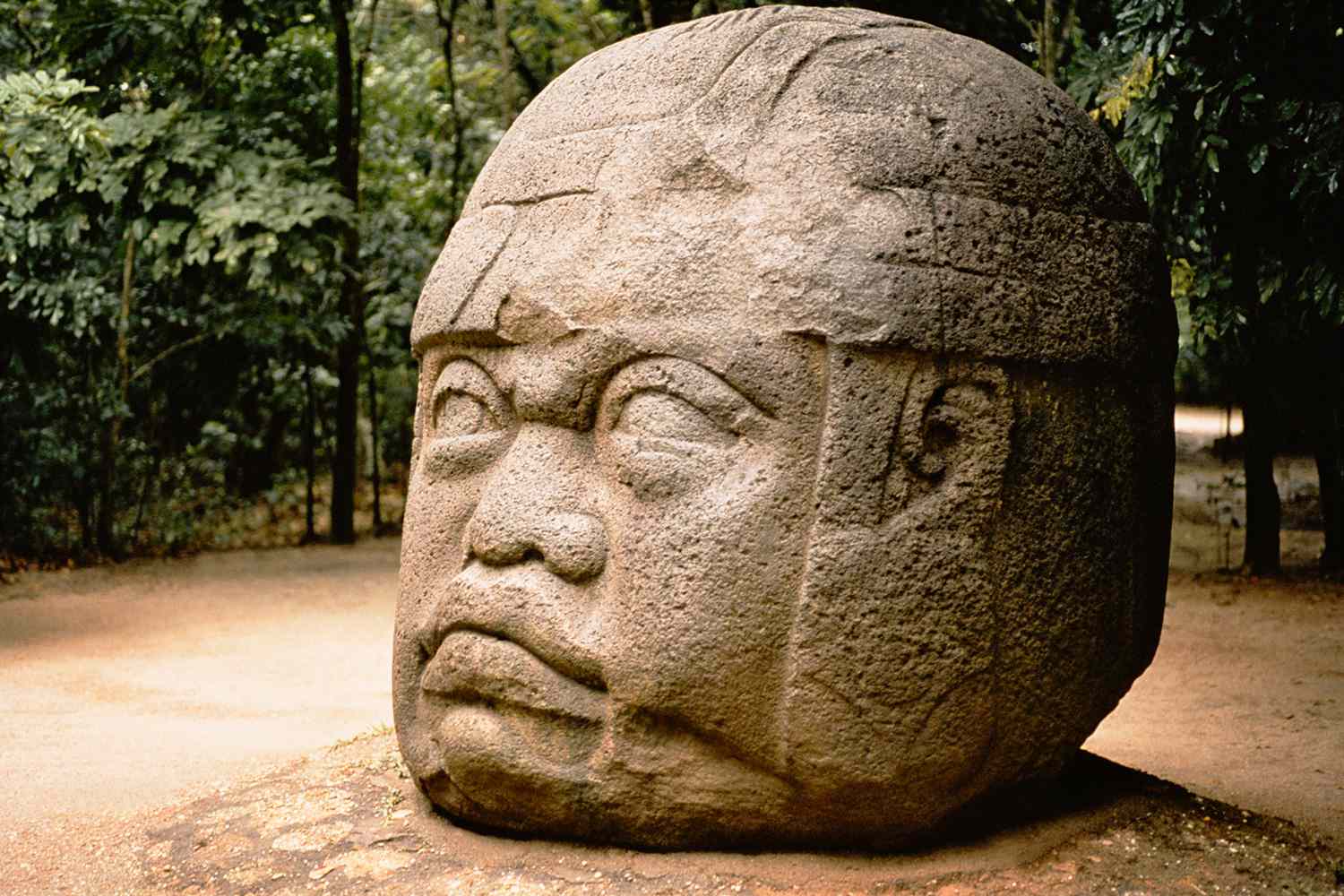
Let's do something with the big stone

Robert BittoHOST
I'm your host, Robert Bitto.
Robert BittoHOST
The Afrocentric claims that African Americans are the true indigenous peoples of the Americas, and specifically that they founded or formed the core of Mesoamerican civilizations such as the Olmecs, Maya, and Aztecs.
Robert BittoHOST
represent a strand of pseudo-history that has circulated for over a century and gained renewed visibility online, especially within the last 10 years.
Robert BittoHOST
These ideas range from assertions of pre-Columbian African voyages that created or heavily influenced New World civilizations to broader arguments that the first peoples of the Americas were melanated or black populations who crossed via the Bering land bridge or even earlier Atlantic roots, with little change in appearance, later being displaced or reclassified.
Robert BittoHOST
Contemporary popular versions often assert that African Americans themselves are indigenous, rather than primarily the descendants of enslaved West and Central Africans, brought after 1492.
Robert BittoHOST
What were some of the origins and developments of these claims? Speculation linking the Olmecs to Africa began almost immediately with modern discovery of their monumental art.
Robert BittoHOST
In 1862, José María Melgar reported the first colossal head at Tres Zapotes and described its features as those of a Negro race, specifically Ethiopian.
Robert BittoHOST
Similar comments appeared in late 19th century Mexican scholarship.

Dan StevensGUEST
And the air is electric and there's these dark clouds coming in.
Dan StevensGUEST
And, you know, we do see round boulders, you know, where the I think it's where the Olmec heads are.
Dan StevensGUEST
We see these large round boulders.
Dan StevensGUEST
Costa Rican

Trebles GarciaHOST
They had a god for everything.
Trebles GarciaHOST
You go back to the Olmecs in Mesoamerica, Mesoamerica did it too.
Trebles GarciaHOST
In fact, Mesoamerica did it so much.
Trebles GarciaHOST
that they were running out of women, that they would take the women from the other tribes, and they would use them for prostitution to walk them streets, if you catch what I mean.
Kitty NasonGUEST
Yeah, and they've always been there and they were used by...
Kitty NasonGUEST
Aztecs, Olmecs, Mayans.
Kitty NasonGUEST
It's such a core American food.
Kitty NasonGUEST
And chocolate comes from there

SteHOST
Yeah, that's what I was thinking of.
SteHOST
You know, the Olmecs or...
SteHOST
Yeah, yeah.
SteHOST
Like

Val Jon FarrisGUEST
And that's what's fascinated me over the years is that each of these sites are different and they each have a different purpose.
Val Jon FarrisGUEST
And when you get to know the people who live around them, sometimes I will go and live near or with the Mayan elders and the Zapotecs and the ancient, some of the tribes there, the Chichimecas and descendants of the Olmecas.
Val Jon FarrisGUEST
And I'd go live with them for a couple of weeks and talk with the elders.
Val Jon FarrisGUEST
And I'd get some translators to help me.
1 HR LATER
Dave ScottHOST
All right, let's move on to another question here from Stargazer.
Dave ScottHOST
Bell, are you familiar with the Las Bolas stones of Costa Rica? And if so, what are your interpretations of what they were used for or represent?
Val Jon FarrisGUEST
Well, I'm not familiar with the Las Bolas stones, but there are similar stones that were found in the pre-classic Olmecas down in southern Mexico.
Val Jon FarrisGUEST
And from my understanding, when I was talking to the elders and the people who have been around, have gotten word down through the centuries, is that the stones were used as...

Laura KennedyCORRESPONDENT
In Mesoamerican religious traditions, people linked caves and mountains with fertility, rainfall, and creation.
Laura KennedyCORRESPONDENT
The paintings date to roughly the 4th to 6th centuries A.D., Chalkatzingo is best known for Olmec-style monuments from 900 to 500 BC, so the paintings suggest the site kept its religious importance for centuries.
Laura KennedyCORRESPONDENT
The cave is small, with only about 7.4 square meters, or 80 square feet, of floor space.
Laura KennedyCORRESPONDENT
In 2022, archaeologists documented the paintings using digital photography and image enhancement.
41 more episodes mention Olmecs.
Create an account to see the whole feed, search across every transcript, and follow the entities you care about.