Oder
River in EuropeWikipedia
19
MENTIONS
10
EPISODES
10
PODCASTS
Search complete. 19 mentions across 10 episodes found for "Oder".
Sep 16, 2026

Pamela NagamiNARRATOR
In nine twenty-eight, he defeated the Wends and took their stronghold, Brennabar, Brandenburg, while in nine twenty-nine, he subdued Bohemia and crushed a formidable Wendish revolt in the Battle of Lenzen.
Pamela NagamiNARRATOR
By the year nine thirty-two, the land between Elbe and Oder owned the East Frankish king as lord.
Pamela NagamiNARRATOR
When in nine thirty-three, the truce ended and the Magyars once more invaded Saxony, Henry with his trained horsemen won a decisive victory over them.
Pamela NagamiNARRATOR
The following year saw the defeat of the Danish king and the establishment of the March or Frontier Province of Schleswig.
Pamela NagamiNARRATOR
The Schwabian duchy, with the hand of its heiress, he bestowed on his eldest son Liudolf, and Lorraine he entrusted to Conrad the Red, who afterwards married his daughter Liutgarda.
Pamela NagamiNARRATOR
Otto further checked the dukes by the appointment of Pfalzgraffen, or Counts Palatine, royal officials who represented the king's interests in the duchies.
Pamela NagamiNARRATOR
To guard against the Danes, Slavs, and Magyars, who began to stir restlessly on the death of Henry I, he also established Markgraffen, or Marquises, counts of the marches or borderlands, of whom the most famous were Hermann the Billung, whose march stretched from the Bay of Kiel to the mouth of the Oder, and Gero, who ruled to the south of him.
Pamela NagamiNARRATOR
Later on, the eastern frontier was defended by a line of marches, the Billung March, the North March, and the marches of Lausitz, Merseburg, Zeitz, and Meissen, extending from Elbe to Oder.

AlejandraHOST
The German counteroffensive in the Ardennes, which had begun in December of 1944 and became known as the Battle, Battle of the Bulge, had failed.
AlejandraHOST
And in the east, Soviet forces were moving towards the Oder River and increasingly close to Berlin.
AlejandraHOST
And the end of the Nazi Germany was approaching, although nobody could say exactly when it would come.
AlejandraHOST
And all of this is just to tell you how strange the atmosphere in which Dresden was found at that period, that time.

Pamela NagamiNARRATOR
From the time of Charles the Great, it was the policy of the German kings to extend their borders eastward by Christianizing and Germanizing the Slavs.
Pamela NagamiNARRATOR
This policy was followed most successfully, and soon all the land between the Oder, the Elbe, and the Danube was added to Germany.
Pamela NagamiNARRATOR
The Slavs to the east of the Oder, however, remained independent and established a Christian kingdom of their own, Poland.
Pamela NagamiNARRATOR
To the north and east of this kingdom two German military orders, the Teutonic Knights and the Knights of the Sword, settled on the Baltic coast in the 13th century with the object of converting to Christianity the Prussians, Lithuanians, and Estonians, who were then still heathen.
Pamela NagamiNARRATOR
The western portion of the lands of the Teutonic Knights was annexed by the King of Poland in 1466.

Michael LeggiereGUEST
And the reason why is because Northern Germany was key to his economic empire.
Michael LeggiereGUEST
As you can see from, as the slide says, Most of Britain's commercial commerce entered Europe either through Portugal or by the five great rivers of North Germany, from west to east, the Ems, the Weser, the Elba, the Oder, and the Vistula.
Michael LeggiereGUEST
So what Bonaparte had to do was to somehow... close these rivers down.
Michael LeggiereGUEST
And this is where we get to the part that most historians won't acknowledge and most people really don't know about.

David McWilliamsHOST
They are the people who live in West Germany, the people who were defined by the River Rhine.
David McWilliamsHOST
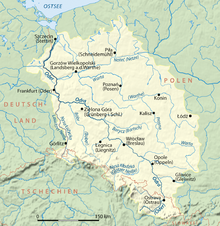
If you look at Germany, Germany is defined by three or four big rivers, right? You have the Rhine on the left-hand side, you have the Danube on the south side, and then you have the Oder and the Elbe on the eastern side, right? And so in effect, Germany is a square in the middle of Europe, which is defined by three or four great rivers.
David McWilliamsHOST
And of course, that is a function of geography, because what you have is you've got the Alps in the south of Germany, and you've got the Polish and Czech mountains on the southeast.
David McWilliamsHOST
So all those rivers flow.
David McWilliamsHOST
And the Baltic Sea in the
John DavisHOST
north.
David McWilliamsHOST
Yeah, and then the rivers flow either into the Black Sea, the Danube, into the Baltic Sea, the Oder, the Elbe, or into the North Sea, the Rhine.
David McWilliamsHOST
And that Germany there is defined by history.

CariHOST
There is a river there, what is it called?
ManuelHOST
Oder.
ManuelHOST
Exactly, Oder.
CariHOST
Frankfurt at the Oder.
CariHOST
There are two Frankfurts.
CariHOST
We're talking about Frankfurt at the
LampeGUEST
Main.
CariHOST
Frankfurt Oder is another Frankfurt,

Pamela NagamiNARRATOR
From the time of Charles the Great, it was the policy of the German kings to extend their borders eastward by Christianizing and Germanizing the Slavs.
Pamela NagamiNARRATOR
This policy was followed most successfully, and soon all the land between the Oder, the Elbe, and the Danube was added to Germany.
Pamela NagamiNARRATOR
The Slavs to the east of the Oder, however, remained independent and established a Christian kingdom of their own, Poland.
Pamela NagamiNARRATOR
To the north and east of this kingdom, two German military orders, the Teutonic Knights and the Knights of the Sword, settled on the Baltic coast in the 13th century with the object of converting to Christianity the Prussians, Lithuanians, and Estonians, who were then still heathen.
Pamela NagamiNARRATOR
The western portion of the lands of the Teutonic Knights was annexed by the King of Poland in 1466.

ClaudiaNARRATOR
According to Warclaw's official city website, more than several million tourists visited the city in 2025, a three-hour drive northwest from Krakow.
ClaudiaNARRATOR
Warclaw offers many distinct attractions, boldly colored market square, many beach bars along the Oder River, and a lamplighter who lights old-style lamps by hand every night.
ClaudiaNARRATOR
Another popular pastime in the city involving searching for small bronze gnomes outside of businesses or the ledges of buildings and in otherwise out-of-sight places.
ClaudiaNARRATOR
The gnomes stand less than one foot in height and depict everything from everyday professions to playful adventures such as conducting an orchestra, traveling, sipping coffee or even flying to worklaw on a pigeon one figurine appears to be in jail another pair of gnomes are named romeo and jalenka sitting on a bench connecting by a ribbon as the number of miniature statues has grown keeping track of them has become a challenge Two self-proclaimed Warclaw enthusiasts named Bartek and Stasiak created a website called Krakenclaw.pl.

Pamela NagamiNARRATOR
From the time of Charles the Great, it was the policy of the German kings to extend their borders eastward by Christianizing and Germanizing the Slavs.
Pamela NagamiNARRATOR
This policy was followed most successfully, and soon all the land between the Oder, the Elba, and the Danube was added to Germany.
Pamela NagamiNARRATOR
The Slavs to the east of the Oder, however, remained independent and established a Christian kingdom of their own, Poland.
Pamela NagamiNARRATOR
To the north and east of this kingdom two German military orders, the Teutonic Knights and the Knights of the Sword, settled on the Baltic coast in the 13th century with the object of converting to Christianity the Prussians, Lithuanians, and Estonians, who were then still heathen.
Pamela NagamiNARRATOR
The western portion of the lands of the Teutonic Knights was annexed by the king of Poland in 1466.

Pamela NagamiNARRATOR
To guard against the Danes, Slavs, and Magyars, who began to stir restlessly on the death of Henry I, he also established Markgraffen or Marquises, counts of the marches or borderlands, of whom the most famous were Hermann the Billung, whose march stretched from the Bay of Kiel to the mouth of the Oda, and Gero, who ruled to the south of him.
Pamela NagamiNARRATOR
Later on the eastern frontier was defended by a line of marches, the Billung march, the North march, and the marches of Lausitz, Merseburg, Zeitz, and Meissen, extending from Elbe to Oder.
Pamela NagamiNARRATOR
South of these lay the Slav duchy of Bohemia, which was finally subdued in 950, and the duchy of Bavaria whence Otto's brother Henry watched the Bohemians and drove back the incursions of the Magyars or Hungarians now settled on the Danube in the land which was called after them Hungary.
Pamela NagamiNARRATOR
Another check on the power of the nobles and a help in the restoration of internal unity was found in the influence of the Church.