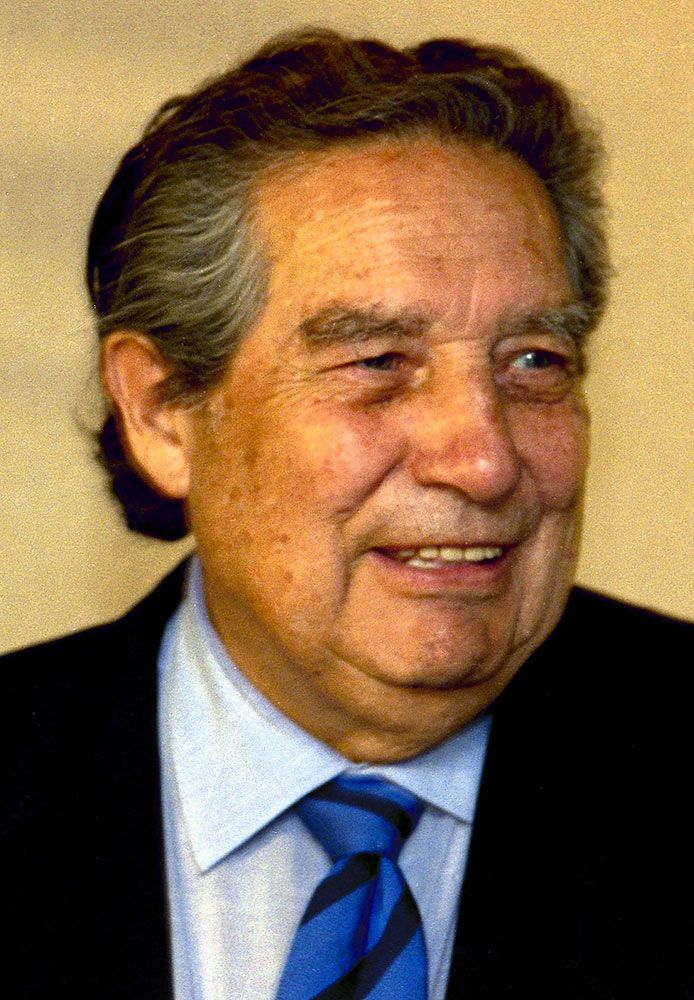
Octavio Paz
Mexican poet and diplomatWikipedia
30
MENTIONS
12
EPISODES
11
PODCASTS
Search complete. 30 mentions across 12 episodes found for "Octavio Paz".
Sep 14, 2026

speaker_0HOST
Enjoy!
Emmanuel Anguiano-HernándezNARRATOR
To what extent do measurements from an electroencephalography headset provide evidence of the aesthetic contemplation state of the person wearing it? In the 2015 neuroaesthetic research project Action Potential, the Art and Science Interspecifics Collective monitors the brain electrical activity of a group of visitors to an exhibition about Octavio Paz, the famous Mexican poet.
Emmanuel Anguiano-HernándezNARRATOR
and uses these measurements as material for sound composition.
Emmanuel Anguiano-HernándezNARRATOR
What is discovered in this experiment is not exactly a scientific result, since the EEG readings neither validate nor refute any hypothesis about aesthetic experience, but it is also non-art in a conventional sense, as it depends entirely on clinical measurement protocols.

Curly VelasquezHOST
Like, what's our relationship to Europe, and the rest of the world for that matter, after being colonized and gaining independence? And what's our relationship to our indigenous ancestors and our African ancestors too? Given the blend of indigenous, African, and European influences, who even are we? Anyone? Anyone? Whew.
Curly VelasquezHOST
Okay, how about we hash this out with Mexican writer Octavio Paz.
Curly VelasquezHOST
Here are the curly notes on Paz's 1950 essay, Los Hijos de la Malinche, The Sons of Malinche.
Curly VelasquezHOST
Malinche wasn't your average señora.

Martin KohanskiHOST
Now, nothing is harder to describe than something, so not doing is harder to talk about than doing.
Martin KohanskiHOST
This is why different writers talk about not doingness in different ways.
Martin KohanskiHOST
Some talk about tristizia, sadness, because sadness or depression does indeed make doing anything at all feel pointless.
Martin KohanskiHOST
Some talk about a disillusionment, or the feeling of what can I do about it anyway.

Lorena RuizNARRATOR
But night is also part of stability, rest, silence, space for introspection.
Lorena RuizNARRATOR
When the night goes, so too does the possibility of daydreaming, wrote Octavio Paz, evoking that symbolic and creative dimension of that is also lost with the disappearance of darkness.
Lorena RuizNARRATOR
A city that marginalizes the night also marginalizes the emotional and mental balance of its inhabitants.
Lorena RuizNARRATOR
The night is not an absence of productivity and business.

Ru MarshallGUEST
Fellini is a huge fan.
Ru MarshallGUEST
Octavio Paz, the Nobel Prize winning poet, writes the foreword to the Spanish version of the teachings.
Ru MarshallGUEST
You know, he was telling, he knew how to tell people just what they wanted to hear.
Ru MarshallGUEST
Yeah,

Addison AndersonNARRATOR
Today, Sor Juana has been recognized as the first feminist in the Americas She's the subject of countless documentaries, novels, and operas, and appears on Mexico's 200 peso bank note.
Addison AndersonNARRATOR
In the words of Nobel laureate Octavio Paz, "It is not enough to say that Sor Juana's work is a product of history.
Addison AndersonNARRATOR
We must add that history is also a product of her work." Check out these lessons to learn about other revolutionary women making good trouble and changing the course of history.
speaker_3ADVERTISER
On any journey using Uber, it helps to know you're getting into the right car.

THE INVISIBLE COLLEGE: Roberto Bolaño’s The Savage Detectives
Aug 30 · 10 Mentions
John PistelliHOST
And Bolaño's animus toward some of these older writers has been slightly overstated as, as animus toward them when I think it was animus toward the way in which they had been institutionalized and routinized.
John PistelliHOST
But if you read some of his interviews, he was not denying their literary merit, and there's even a rapprochement in this very novel with Octavio Paz, whom we'll discuss.
John PistelliHOST
And so I, I don't think we, I don't think we need to exaggerate the, uh, the, the hostility Bolaño felt toward their books or toward them as writers so much as he felt that they had become played out, over-institutionalized, and, and, and sort of the, the revolu- whatever revolutionary effect their work had initially had had been blunted by the time he came on the scene.
John PistelliHOST
And of course, Bolaño, like me, as we'll read, I have an excerpt, was just a complete contrarian.
1 HR 22 MINS LATER
John PistelliHOST
All right, here's a more, um, nuanced sense of the visceral realists and their place of Mexican or Latin American poetry more generally.
John PistelliHOST
"Our situation," and I think he's told this f- by Felipe Mueller, who is another friend of Arturo and Ulysses and another of the visceral realists.
John PistelliHOST
"Our situation, as far as I could understand, is unsustainable, trapped as we are between the reign of Octavio Paz and the reign of Pablo Neruda.
John PistelliHOST
In other words, between a rock and a hard place." All right, so what is the sort of synecdoche there of Neruda, who's Chilean like Bolaño, Bolaño, and Paz, who is Mexican like these other characters? Okay.
Roo MarshallGUEST
You know, John Lennon is a huge fan, Fellini is a huge fan.
Roo MarshallGUEST
Octavio Paz, the Nobel Prize-winning poet, writes the foreword to the Spanish version of the teachings.
Roo MarshallGUEST
You know, he was telling ...
Roo MarshallGUEST
He knew how to tell people just what they wanted to hear.

José LuisHOST
Y teníamos, vivimos cerca de la Romera Rubio, donde había una pulquería más tradicional, que eran los dos catarizos.
José LuisHOST
y que ahí de repente iba escritores a presentar libros, llegó a ir Octavio Paz, llegó a ir mucha gente a hablar de sus libros, ahí a la pulquería de los dos cacarizos, que era muy...
PacoGUEST
Los dos cacarizos, sí, sí, sí, tienes toda la
José LuisHOST
razón.

Martin CullingfordHOST
Now, let us set the scene.
Martin CullingfordHOST
The work, a substantial 70-minute one, sets an epic poem by the Mexican poet Octavio Paz.
Martin CullingfordHOST
The poem, a complex work, is a, it's kind of a meditation on cyclical time and the possibility of breaking its grip through poetry and love.
Martin CullingfordHOST
But you will both be closer to it than I.
24 MINS LATER
Martin CullingfordHOST
One other question I had.
Martin CullingfordHOST
Obviously, for audiences here in, in the UK, some people will know the poem, but for lots of people it'll be a, a sort of just, through this work, a discovery of the poem.
Martin CullingfordHOST
In Mexico, Octavio Paz, who died in 1998, was, was a huge figure in Mexican literature and indeed cultural life.
Martin CullingfordHOST
And you've already spoken about the place of this poem in, in, in the Mexican soul, as, as it were.
2 more episodes mention Octavio Paz.
Create an account to see the whole feed, search across every transcript, and follow the entities you care about.