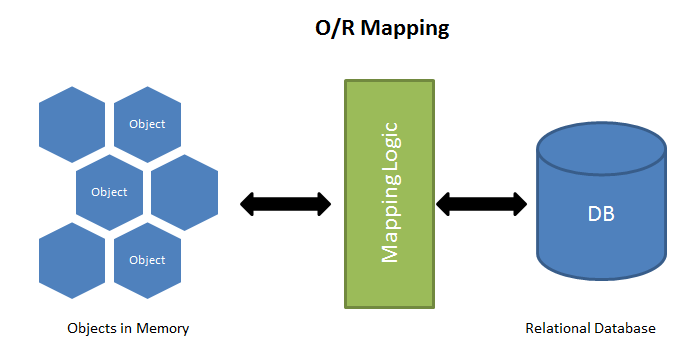
Object–relational mapping
43
MENTIONS
14
EPISODES
11
PODCASTS
Search complete. 43 mentions across 14 episodes found for "Object–relational mapping".
Sep 8, 2026

Michael KennedyHOST
When I saw the headline for the survey, I thought, oh, it's going to survey Django things.
Michael KennedyHOST
Like who's using this feature, the ORM, and then who's deploying this way versus that way.
Michael KennedyHOST
And no, it's more of a general thing.
Michael KennedyHOST
Just let's ask the Django people what they're up to.

Troy HuntHOST
In fact, even this morning, Stefan was like, I think I've figured out a good way to do this where we'll get really resilient retries, but we can't use EF Core.
Troy HuntHOST
I was like, well, why did we use EF Core to begin with? Going back nearly 13 years, I was just EF then, we used EF because an ORM saved us a lot of overhead writing code.
Troy HuntHOST
But now we have Copilot.
Troy HuntHOST
So do we just go, hey, Copilot, replace everything that's in EF Core with native SQL client and whatever retry or resiliency model that Stefan's built? So I think we can probably just do that and it will make life a lot easier.

Christopher BaileyHOST
In other cases, you know, again, we already talked about performance potential issues here that there may be other tools that could potentially speed it up or whatever.
Christopher BaileyHOST
I just remember somebody recently saying, well, I had it just write Instead of having an object relational mapper, an ORM kind of system, I had it just write the core SQL stuff and so forth.
Christopher BaileyHOST
And it had a bit of a performance boost, but at the end of the day, he was still having a hard time understanding the code out of it.
Christopher BaileyHOST
So there's going to be a balance there.
Den OdellGUEST
And, you know, we have to do the code reviews and everything.
Den OdellGUEST
we have that ultimate responsibility if something breaks, we're the ones who have to fix it.
Den OdellGUEST
And if it's just bytecode or if it's the low-level SQL that we just can't follow without having that ORM wrapper on top, then it's going to be a struggle.
Den OdellGUEST
Yeah, so, you know, my experience is it's good to have some layers in there.

Herman PoppleberryHOST
It passes all five criteria.
CornHOST
And the ORM generated types are derived from the schema, not authoritative over it.
CornHOST
The database is the source of truth.
Herman PoppleberryHOST
The types are projection.
Herman PoppleberryHOST
And then you need something that talks to it.
CornHOST
The ORM.
CornHOST
Django's ORM in this case.
CornHOST
This is the part where most front end developers have seen the syntax but haven't seen what it actually does.
CornHOST
You write item.objects.filter, and you get back what looks like results.
CornHOST
It's not results.
CornHOST
A query set is a specification of a query that hasn't run yet.
CornHOST
The ORM is aggressively lazy.

Zac ClarkHOST
Alright, so let's dive into interaction here.
Zac ClarkHOST
We're rocking two Sword Supply Shares and four Force of Wills, and I guess you can consider an Orm's Chant as interaction to some extent.
Zac ClarkHOST
Talk to me a little bit about this particular suite of interaction.
Johan LarsonGUEST
Yeah, well, the four Force of Wills are easy.
Johan LarsonGUEST
You're never going to play, like, Povtex on this deck over Souls of Plowshares, if I put it that way.
Zac ClarkHOST
Yeah.
Zac ClarkHOST
Alright, well, let's talk a little bit more about Orm's Chant, and why this is in the deck, as opposed to, say, something like Teferi
Johan LarsonGUEST
Timerap.
Zac ClarkHOST
Alright, so let's dive into interaction here.
Zac ClarkHOST
We're rocking two Sword Supply Shares and four Force of Wills, and I guess you can consider an Orm's Chant as interaction to some extent.
Zac ClarkHOST
Talk to me a little bit about this particular suite of interaction.
Johan LarsonGUEST
Yeah, well, the four Force of Wills are easy.
Johan LarsonGUEST
You're never going to play, like, a pop deck site in this deck if I put it that way.
Zac ClarkHOST
Yeah.
Zac ClarkHOST
Alright, well, let's talk a little bit more about Orm's Chant and why this is in the deck, as opposed to, say, something like Teferi Timerap.
Johan LarsonGUEST
Yeah, the reason is mostly it's cheaper.

speaker_4HOST
And that's actually the perfect way to look at the first step of our framework, which is absorption, the A in ADME.
speaker_4HOST
ORM.
speaker_4HOST
Yeah.
speaker_4HOST
Absorption is the physical movement of the drug from wherever it entered your body into the systemic circulatory system.

Artificial IntelligenceNARRATOR
Writing financial data in plaintext on a mobile device is an architectural failure.
Artificial IntelligenceNARRATOR
Reactive state and ORM, the core state management relies on for surgical UI rebuilds.
Artificial IntelligenceNARRATOR
For relational persistence, I use Drift, a reactive worm built on top of SQLite.
Artificial IntelligenceNARRATOR
Military-grade disk encryption.

Carlton GibsonHOST
Yeah.
Will VincentHOST
And it's the heavy hitters, models, which is sort of our ORM by proxy, admin, auth.
Carlton GibsonHOST
Yeah.
Will VincentHOST
There's a long tail-
Carlton GibsonHOST
And all the rest, yeah.
Carlton GibsonHOST
[chuckles]
Will VincentHOST
I mean, you know, I think most people if pushed to shove would say the ORM or the admin, that has to be in the top three, five-
Carlton GibsonHOST
Yeah
4 more episodes mention Object–relational mapping.
Create an account to see the whole feed, search across every transcript, and follow the entities you care about.