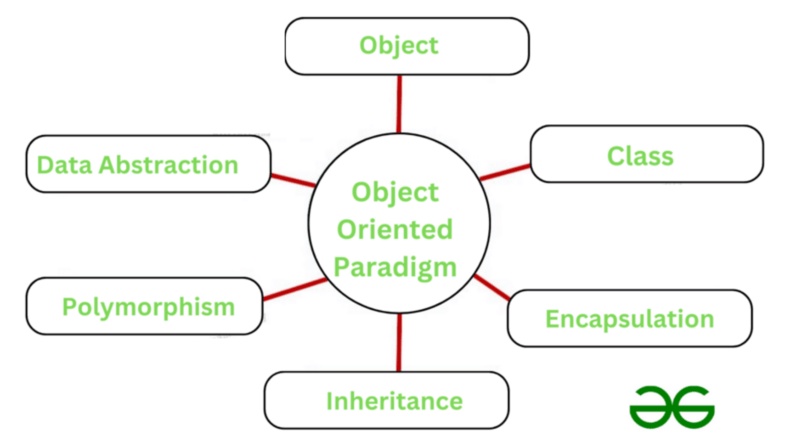
Object-oriented programming
Programming paradigmWikipedia
11
MENTIONS
4
EPISODES
4
PODCASTS
Search complete. 11 mentions across 4 episodes found for "Object-oriented programming".
Oct 15, 2026

Yuval ItzchakovGUEST
We're changing our architecture every three or four months because the world is changing, and we need to adapt ourselves to this new technology.
Yuval ItzchakovGUEST
So it's like everything is new all the time, right? And this is very different from, you know, 20 years ago when I was learning programming and like getting, and like this understanding and like OOP and functional programming and systems architecture, and like everything was like you got that knowledge and, and, and you took it with you wherever you went.
Yuval ItzchakovGUEST
And like nowadays, everything is completely different.
Yuval ItzchakovGUEST
So I don't care if they come with AI experience.
Yuval ItzchakovGUEST
Like, I wanted to work with people who knew things in the detail.
Yuval ItzchakovGUEST
But I understand now as a CTO, uh, who's, you know, looking to connect technology with the business and provide the business value and outcomes that, you know, times have changed.
Yuval ItzchakovGUEST
And now natural language is becoming our programming language the same way we used to do assembly and then we got to OOP and abstractions on top of that.
Yuval ItzchakovGUEST
We're now at this higher level of abstraction.

Artificial IntelligenceNARRATOR
Every time you write a class, ask How many places break if this changes? The lower that number, the better the design.
Artificial IntelligenceNARRATOR
Common OOP design mistakes.
Artificial IntelligenceNARRATOR
The God object.
Artificial IntelligenceNARRATOR
One massive class that accumulates everything.
Artificial IntelligenceNARRATOR
Practical, testable and boring in exactly the right way.
Artificial IntelligenceNARRATOR
Conclusion.
Artificial IntelligenceNARRATOR
OOP is a design mindset.
Artificial IntelligenceNARRATOR
OOP doesn't begin with syntax and end with four terms.

Calvin Hendryx-ParkerHOST
You know,
Michael KennedyHOST
everyone uses classes, objects, even if they're not big OOP folks, you still create objects.
Michael KennedyHOST
I mean, do you have a number? You know what I
Calvin Hendryx-ParkerHOST
mean? Well, it's just, and it's convenient, but I think if you were, again, performance debugging and triaging and you ran into this, you've been surprised.

speaker_5HOST
Which brings us to the core philosophy of Java.
speaker_5HOST
Object-oriented programming, or OOP.
speaker_5HOST
OOP fundamentally flips that old spaghetti code paradigm on its head.
speaker_5HOST
Instead of code acting on data, OOP is organized around the data itself.
speaker_5HOST
The core principle is that the data controls access to the code.
speaker_5HOST
But how does it actually do that?
speaker_5HOST
OK, I have to stop you, though.
speaker_5HOST
I'm looking at all these classes, these strict hierarchies, these heavily guarded black boxes.