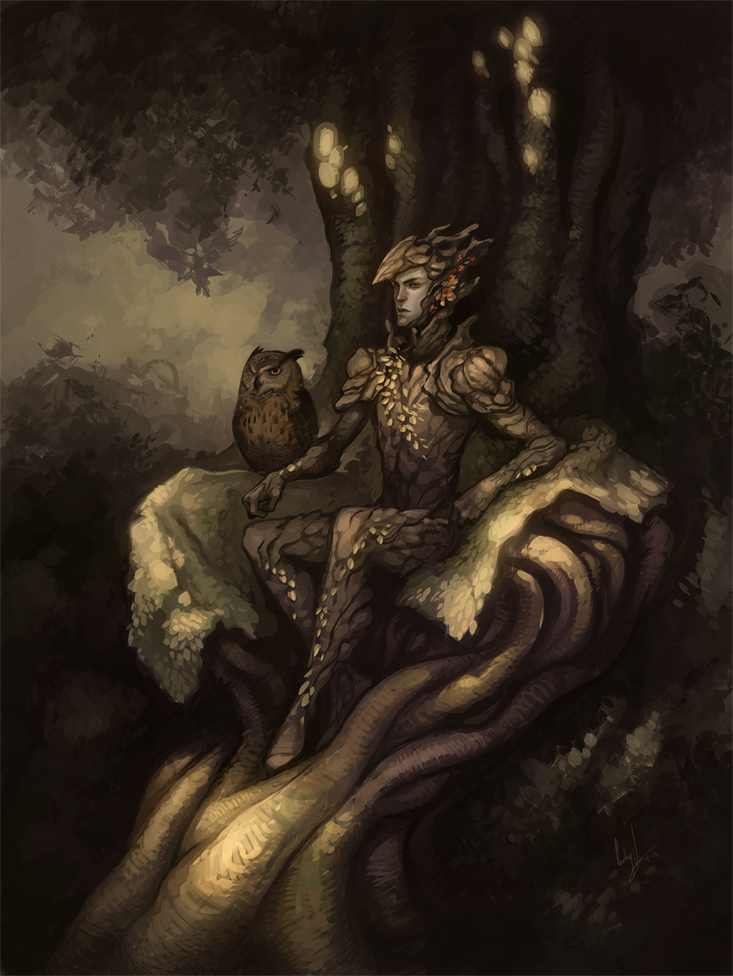
Oberon
Mythological characterWikipedia
429
MENTIONS
87
EPISODES
78
PODCASTS
Search complete. 429 mentions across 87 episodes found for "Oberon".
Sep 12, 2026

speaker_6NARRATOR
Chaucer uses the word fairy as well as for the individual as for the country or system, or what we should now call fairyland, or fairyism.
speaker_6NARRATOR
He knew nothing, it would seem, of Oberon, Titania, or Mab, but speaks of, quote, Pluto that is the king of fairy, and many a lady in his company, following his wife, the queen Proserpina, etc.
speaker_6NARRATOR
End quote.
speaker_6NARRATOR
The Merchant's Tale, one, one O one O one.
speaker_6NARRATOR
From this passage of Chaucer, Mr. Turwet, quote, cannot help thinking that his Pluto and Proserpina were the true progenitors of Oberon and Titania.
speaker_6NARRATOR
End quote.
speaker_6NARRATOR
In the process of the Wife of Bath's tale, it happed the knight, quote, In his way to ride in all his care Under a forest side, Whereas he saw upon a dance go Of ladies four and twenty, And yet moe, toward this like dance He drow full yearn, In hope that he some wisdom should learn.
speaker_6NARRATOR
Milton seems to have been upon the prowl here for his forest side.

Bruce KachokNARRATOR
Lamia by John Keats.
Bruce KachokNARRATOR
Section one: Upon a time before the fairy broods Drove nymph and satyr from the prosperous woods, Before King Oberon's bright diadem, Scepter and mantle clasped with dewy gem, Frighted away the Dryads and the Fauns From rushes green, and brakes, and cowslip lawns, The ever-smitten Hermes empty left his golden throne, Bent warm on amorous theft.
Bruce KachokNARRATOR
From high Olympus he had stolen light On this side of Jove's clouds to escape the sight Of his great summoner, and made retreat Into a forest on the shores of Crete.
Bruce KachokNARRATOR
For somewhere in that sacred island dwelt A nymph to whom all hoofed satyrs knelt, At whose white feet the languid Tritons poured Pearls while on land they withered and adored.

speaker_5NARRATOR
Chaucer uses the word fairy as well as for the individual as for the country or system, or what we should now call fairyland, or fairyism.
speaker_5NARRATOR
He knew nothing, it would seem, of Oberon, Titania, or Mab, but speaks of, quote, Pluto that is the king of fairy and many a lady in his company, following his wife, the queen Preserpina, etc.
speaker_5NARRATOR
End quote.
speaker_5NARRATOR
The Merchant's Tale 1.
speaker_5NARRATOR
10101 From this passage of Chaucer, Mr. Truitt, quote, cannot help thinking that his Pluto and Prasapina were the true progenitors of Oberon and Titania, end quote.
speaker_5NARRATOR
in the process of the wife of bath's tale it happed the knight in his way to ride in all his care under a forest side whereas he saw upon a dance go of ladies four and twenty and yet mo toward this like dance he drow full yearn in hope that he some wisdom should learn but certainly ere he came fully there evanish'd was this dance he wist not where end quote these ladies appear to have been fairies though nothing is insinuated of their size milton seems to have been upon the prowl here for his forest side in a midsummer's night dream a fairy addresses bottom the weaver hail mortal hail which sufficiently shows she was not so herself Puck, or Robin Goodfellow in the same play, calls Oberon King of Shadows, and in the old song just mentioned, the King of Ghosts and Shadows.
speaker_5NARRATOR
And this mighty monarch asserts of himself and his subjects, but we are spirits of another sort.
speaker_5NARRATOR
The fairies, as we already see, were male and female.

Christopher BrauerGUEST
There was a show some years ago, we did a production of Midsummer Night's Dream with a company of students and that's a tricky play because it's full of like date rape drugs, right? Like it's really not, you know, so you have to deal with that.
Christopher BrauerGUEST
So how do you deal with that without losing the inherent fun and comedy of the show, and yet also go, well, Oberon did kind of roofie Titania, so what are we going to do about that? You know, and so cracking that nut was really fun, and figuring that out with the actors, these young actors, was really fun, and we had a great time.
Christopher BrauerGUEST
Oh,
Andrew DavidsonHOST
fantastic.

J.P. BabbNARRATOR
I mean, I hate to say it, but all things considered, it's not actually all that bad, especially considering how some people have it.
J.P. BabbNARRATOR
Like I heard in the States that King Oberon turned the Senate into banana slugs and forced their kids to watch while he salted them one by one.
J.P. BabbNARRATOR
Oh, so it's all hunky-dory then, I demand.
J.P. BabbNARRATOR
Just so long as it's not as bad as America.

Thomas CopelandNARRATOR
Even the fairy world in which, at whatever inevitable interval, he is second to Shakespeare, is pure English, or rather his elves live in an elfin county of their own, and are all but severed from humanity.
Thomas CopelandNARRATOR
Within that greater circle of Shakespeare, where Oberon and Ariel and their fellows moved, aiding or injuring mankind and reflecting human life in a kind of unconscious parody herrick cannot walk and it may have been due to his good sense and true feeling for art that here where resemblance might have seemed probable he borrows nothing from midsummer night's dream or tempest if we are moved by the wider range of byron's or shelley's sympathies there is a charm also in this sweet insularity of herrick a narrowness perhaps yet carrying with it a healthful reality absent from the vapid and artificial cosmopolitanism that did such wrong on goethe's genius If he has not the exotic blooms and strange odors which poets who derive from literature show in their conservatories, Herrick has the fresh breeze and time-bed fragrance of open moorland, the grace and greenery of English meadows.
Thomas CopelandNARRATOR
With Homer and Dante, too, he shares the strength and inspiration which come from touch of a man's native soil.
Thomas CopelandNARRATOR
what has been here sketched is not planned so much as a criticism in form on herrick's poetry as an attempt to seize his relations to his predecessors and contemporaries if we now tentatively inquire what place may be assigned to him in our literature at large Herrick has no single lyric to show equal in pomp of music, brilliancy of diction, or elevation of sentiment to some which Spencer before, Milton in his own time, Dryden and Gray, Wordsworth and Shelley since have given us.
1 HR 10 MINS LATER
Thomas CopelandNARRATOR
Any oats the elves refuse well will serve the beggar's use.
Thomas CopelandNARRATOR
But if this may seem too much for an alms, then give me such little bits that nestle there in the prisoner's pannier.
Thomas CopelandNARRATOR
So a blessing light upon you and mighty Oberon, that your plenty last till when I return your alms again.
Thomas CopelandNARRATOR
forty two the hag the hag is astride this night for to ride the devil and she together through thick and through thin now out and then in though ne'er so foul be the weather a thorn or a bur she takes for a spur with the lash of a bramble she rides now through breaks and through briars or ditches and mires she follows the spirit that guides now no beast for his food dares now range the wood but hush'd in his lair he lies lurking while mischiefs by these on land and on seas at noon of night are a-working the storm will arise and trouble the skies this night and more for the wonder the ghost from the tomb affrighted shall come called out by the clap of the thunder forty three the mad-maid's song good morrow to the day so fair good morning sir to you good morrow to mine own torn hair bedabbled with the dew good morning to this primrose too good morrow to each maid that will with flowers the tomb bestrew wherein my love is laid ah woe is

John GreenmanNARRATOR
Only by necessity, working now at a remove, to the sward without.
John GreenmanNARRATOR
So at least says Oberon, grave authority in fairy lore.
John GreenmanNARRATOR
Though setting Oberon aside, certain it is that, even in the common world, the soil, close up to farmhouses, as close up to pasture rocks, is, even though untended, ever richer than it is a few rods off.
John GreenmanNARRATOR
Such gentle, nurturing heat is radiated there.
John GreenmanNARRATOR
But with this cottage the shaded streaks were richest in its front and about its entrance, where the ground-sill, and especially the door-sill, had, through long eld, quietly settled down.

KirstieNARRATOR
Then she pointed her gleaming wand at me, and shook her head.
KirstieNARRATOR
O Christmas child, she said reproachfully, it is well that it was I who heard you, and not my brave lord Oberon, who has less patience with mortal folly.
KirstieNARRATOR
So you wish you had not been born on Christmas day? Why, tis the day most blessed in all the year.
KirstieNARRATOR
the day when the King of Kings sent peace and good-will to man in the form of the Christ child.
1 HR 8 MINS LATER
KirstieNARRATOR
She laughed at this, and I coaxed her to tell me another story.
KirstieNARRATOR
It was one, she said, that had been sung in verse on the Welsh hills, for in ancient times the people of Wales and those of Little Britain were the closest friends.
KirstieNARRATOR
Long, long ago, she began, a lordly castle was built at Morlaix, in the midst of such pleasant surroundings that some little dwarfs, in search of a home, thought that they could not do better than build their stronghold underneath it.
KirstieNARRATOR
So they set to work immediately, for they have a very wise rule that when once they decide that a thing must be done, it shall be done at once.

speaker_2NARRATOR
Chaucer uses the word fairy as well as for the individual as for the country or system, or what we should now call fairyland, or fairyism.
speaker_2NARRATOR
He knew nothing, it would seem, of Oberon, Titania, or Mab, but speaks of, quote, Pluto that is the king of fairy and many a lady in his company, following his wife, the queen Proserpina, etc.
speaker_2NARRATOR
End quote.
speaker_2NARRATOR
The Merchant's Tale, one, one oh one oh one.
speaker_2NARRATOR
From this passage of Chaucer, Mr. Turwet, quote, cannot help thinking that his Pluto and Proserpina were the true progenitors of Oberon and Titania.
speaker_2NARRATOR
End quote.
speaker_2NARRATOR
In the process of the Wife of Bath's Tale, it happed the night, quote, In his way to ride in all his care under a forest side, whereas he saw upon a dance go of ladies four and twenty, and yet mo, toward this like dance he drou full yearne, in hope that he some wisdom should learn.
speaker_2NARRATOR
Milton seems to have been upon the prowl here for his forest side.

AndrewHOST
He learns over time that his name is Corwin, and he's been in a power struggle for the seat of Amber with his siblings, particularly the other princes that are vying for the throne.
AndrewHOST
The father and the king of Amber, King Oberon... has gone missing.
AndrewHOST
So this is like 10 books in total.
AndrewHOST
There's like 10 books that are all roughly between 110, 125 pages each, I want to say, give or take.
77 more episodes mention Oberon.
Create an account to see the whole feed, search across every transcript, and follow the entities you care about.