Nubia
Region in SudanWikipedia
387
MENTIONS
27
EPISODES
24
PODCASTS
Search complete. 387 mentions across 27 episodes found for "Nubia".
Sep 13, 2026

OlympiaHOST
Its architecture and mountain setting also attracted great interest, and during the twentieth century, Machu Picchu became an icon of the Inca civilization.
OlympiaHOST
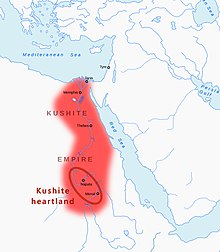
For our second visit tonight, let's head to Africa, more precisely to the region of Nubia in what is now Sudan, and to the ruins of Meroë, the capital of the Kingdom of Kush.
OlympiaHOST
For several centuries, the Kingdom of Kush was a powerful state that developed an advanced civilization.
OlympiaHOST
It traded with other parts of the ancient world and became powerful enough to invade Egypt during the first millennium BC.
OlympiaHOST
Egypt was ruled by Nubian pharaohs for several generations.
OlympiaHOST
Meroë became the capital of Kush in the sixth century BC, and its ruins give us an idea of the wealth and influence of its kings.
OlympiaHOST
The site contains more than two hundred pyramids.
OlympiaHOST
They look familiar because they recall Egyptian architecture while also displaying distinct Nubian characteristics.

RebeccaHOST
There was upright things already in the making.
RebeccaHOST
in the Levant and Nubia that she'd been attempting to handle peacefully, but it hadn't been really working out.
RebeccaHOST
So the Levant is the region to the northeast of Egypt.
RebeccaHOST
So it's pretty fertile.
RebeccaHOST
This was part of what historians call the Canaanite region.
RebeccaHOST
So you probably heard that before.
RebeccaHOST
And then Nubia is the region below Egypt.
RebeccaHOST
that is now part of Sudan.

Dominic PerryHOST
Seti's reign got underway, and at first, things were good.
Dominic PerryHOST
In the opening months, the king sailed upriver, visiting Nubia.
Dominic PerryHOST
Seti shows up at sites like Abu Simbel, where he may have repaired damage caused by an earthquake.
Dominic PerryHOST
He also visited his grandfather, the deified Ramesses II.
Dominic PerryHOST
A modest beginning, but a peaceful one.
Dominic PerryHOST
Unfortunately, when he returned to Piramises, Pharaoh received some troubling news.
Dominic PerryHOST
Despite his tour of Nubia, Seti's authority in the south was not secure.
Dominic PerryHOST
In fact, someone had declared a rebellion.

John GreenHOST
So Amun eventually merged with Ra to form the god Amun-Ra, who was like the best god ever, and all the Middle Kingdom pharaohs made temples for him and devoted all of their surplus to his glory.
John GreenHOST
The Middle Kingdom also developed an interest in conquering, specifically the new pharaoh's homeland of Nubia, and they developed a side interest in getting conquered, specifically by the Semitic peoples from the Levant.
John GreenHOST
They were able to conquer much of Egypt using superior military technology like bronze weapons and compound bows and chariots of fire.
John GreenHOST
What? They're just regular chariots? Stan, why are you always killing my dreams? One group, the Hyksos, were able to conquer all of Egypt, but rather than, like, destroying Egyptian culture, they just relaxed, like the Nile, and assimilated into the Egyptians.

speaker_0NARRATOR
The expedition to Punt commissioned by Hatshepsut around 1470 BCE was recorded in detailed relief carvings at Deir el-Bari that show the ships, the goods, the foreign landscape, and even the Queen of Punt herself, depicted as an extremely heavy woman, which some scholars have interpreted as a clinical illustration of a specific medical condition, and others have read as a straightforward, if undiplomatic, portrait.
speaker_0NARRATOR
Overland, Egyptian trade routes extended south into Nubia, which supplied gold in such quantities that the Egyptians considered it more common than dirt.
speaker_0NARRATOR
The word for Nubia in Egyptian may derive from the word for gold, and west into the Libyan oases, which provided dates, wine, and a gateway to trans-Saharan networks that are still poorly understood.
speaker_0NARRATOR
Egypt was not isolated.
speaker_0NARRATOR
it was a node in a web of exchange routes that stretched from central africa to the aegean and the goods that flowed through it cedar lapis lazuli tin copper obsidian ivory shaped its material culture as much as the Nile shaped its agriculture.

Benjamin BosterHOST
The export of textiles was one of the sources of wealth for Meroe.
Benjamin BosterHOST
Ancient Nubia had a culture of cotton of sorts, evidenced by physical evidence of cotton processing tools and the presence of cattle in certain areas.
Benjamin BosterHOST
Some researchers propose that cotton was important to the Nubian economy for its use in contact with the neighboring Egyptians.
Benjamin BosterHOST
Aksumite king Ezana boasted in his inscription that he destroyed large cotton plantations in Meroe during his conquest of the region.
Benjamin BosterHOST
During the Han dynasty, 207 BC to 220 AD, cotton was grown by Chinese peoples in the southern Chinese province of Yunnan.

speaker_7NARRATOR
Another adult was found at the site, but that body was preserved through natural drying rather than intentional mummification and dates back about 7,5 years.
speaker_7NARRATOR
Nubians During the Neolithic era, the central Sudan was a fertile environment that supported a large population in areas that are now desert.
speaker_7NARRATOR
By 5,000 before the Common Era, the people of Nubia were practicing agriculture and animal domestication.
speaker_7NARRATOR
Rock art from this time shows cattle and herdsmen, suggesting a culture centered on livestock, similar to those found in Sudan today.
11 MINS LATER
speaker_7NARRATOR
Peoples and Languages The inhabitants of the desert come from many different backgrounds.
speaker_7NARRATOR
Major groups include the Amazigh, the Tuareg, and various Arabized groups like the Sahrawis.
speaker_7NARRATOR
Other populations include the Tubu, Nubians, Zagawa, Kanuri, Hausa, Songhai, and Fula.
speaker_7NARRATOR
Evidence shows that groups speaking Nilo-Saharan languages lived in the southern and central desert long before Berber and Arabic speakers arrived, about 1,5 years ago.

Trevor GrassiGUEST
There's a book by Thomas Brophy called The Origin Map where he was analyzing Nabta Playa, the stone circle way south in Egypt, almost Sudan.
Trevor GrassiGUEST
in Nubia, and he was finding that that stone circle was actually pinpointing Orion and not only pinpointing its location, but also pinpointing the two extreme tilts of the sky using Orion.
Trevor GrassiGUEST
So it was showing us this end of the processional cycle and this end.
Trevor GrassiGUEST
13,000 years apart, half these stones align.

Don MastersonHOST
He established a new royal capital in the Eastern Nile Delta, Pyramaces.
Don MastersonHOST
He commissioned temples, pylons, courtyards, statues, and inscriptions from the Delta to Nubia.
Don MastersonHOST
He completed projects begun by his father and inserted his own image into older sacred landscapes.
Don MastersonHOST
His cartouches appeared so widely that later visitors could easily imagine he had built ancient Egypt almost by himself.
Don MastersonHOST
The warrior king became a diplomatic king without surrendering the victorious image he had already placed on temple walls.
Don MastersonHOST
His building program was equally strategic.
Don MastersonHOST
At Abu Simbel in Nubia, four seated figures of Ramesses dominate the facade of the great temple.
Don MastersonHOST
Each is roughly 20 meters high.

Richie MensahHOST
Yes.
Nana KyidomheneGUEST
Then Nubia was into African spirituality and Islam.
Richie MensahHOST
Mm-hmm.
Nana KyidomheneGUEST
Because Islam had already started coming into-
Richie MensahHOST
Okay
Nana KyidomheneGUEST
... yeah, penetrating.
Nana KyidomheneGUEST
And these people were practicing their African spirituality, Abosom Semwona, the Nubians.
Nana KyidomheneGUEST
So then Ezana decided, "Let me go and conquer these people." Ezana went and conquered Nubia.
17 more episodes mention Nubia.
Create an account to see the whole feed, search across every transcript, and follow the entities you care about.