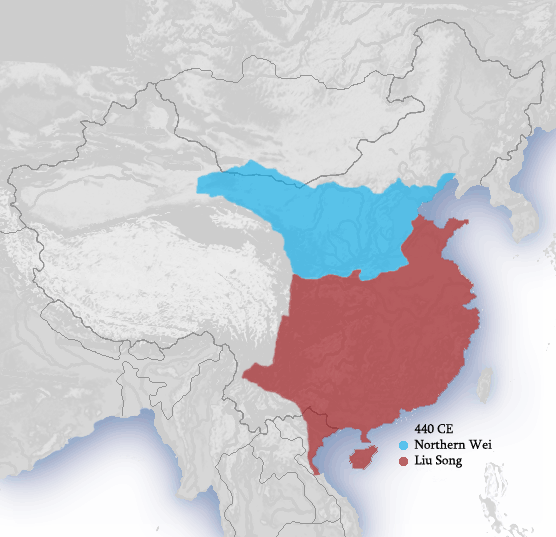
Northern and Southern dynasties
5
MENTIONS
3
EPISODES
3
PODCASTS
Search complete. 5 mentions across 3 episodes found for "Northern and Southern dynasties".
Sep 19, 2026

Xiaofei TianGUEST
So those Northerners I mentioned earlier, they were not ethnically Han.
Xiaofei TianGUEST
Chinese, you know, they were Serbians, you know, they actually would speak at the time, they would speak Serbian, which was a kind of like, you know, Turkish kind of language, you know, they were speaking, you know, so, but they were also, you know, well versed in Chinese, and many young, you know, princes, actually, they were enamored of poetry, you know, and so they were great admirers of these detainees, southern poets, they admired them, they emulated their poetic style, learned from them, you know, one young prince actually even compiled the poetic collection of this poet, Yu Xin, you know, who's featured, you know, prominently in my book, you know, because he was like the most famous, you know, southern poet at the time, you know, and also the northern poets, you know, were often, they were great admirers of his poetry.
Xiaofei TianGUEST
So you would have this group of readers.
Xiaofei TianGUEST
yeah, that's a great question.
Xiaofei TianGUEST
Yeah, you know, it tries to be the same, but it couldn't be the same anymore.
Xiaofei TianGUEST
And it's just, you know, the Sui that's unified the North and the South was very much a Northern society.
Xiaofei TianGUEST
dynasty, right, you know, so it finally, you know, kind of brought North and South together again, unified empire again.
Xiaofei TianGUEST
But, you know, they, after, you know, well over 200 years of division, you know, people from different parts of this, you know, kind of now the, you know, different dynasties, different regimes, different kind of loyalties, you know, different roots and backgrounds, you know.

KeeganHOST
Soto comes from the Caodong strand of Chan, Rinzai from Linji's school.
KeeganHOST
Now, Chan Buddhist tradition holds that their founder came to China from India during the period of the Northern and Southern dynasties, fifth or sixth century AD.
KeeganHOST
This is a period of Chinese history that follows the downfall of the Han and then the Jin dynasty respectively.
KeeganHOST
It's characterized by a collapse of the central government.

Jose MiguelGUEST
so anyway that's what i had written up on that part
David Patrick HarryHOST
well let's play it forward uh we're already two and a half hours in here um and let's get to the 16 kingdoms in the northern and southern dynasties this is a dynamic period in chinese history this is the fall of the jinn dynasty and you're going to see a total fracturing of Roughly between 304 to 589, if I roll it back here, you're going to see all these different northern Chinese... sort of many principalities, if you will, and they're ruled by different groups.
David Patrick HarryHOST
And the old Chinese narrative is that this is essentially the barbarian invasion of China.
David Patrick HarryHOST
But what you see is a unique ethnogenesis and cultural synthesis because these Chinese institutions and Chinese society, generally speaking, are absorbed substantially into this inner Turkish influence, inner Asian Turkish influence.