Normalized difference vegetation index
24
MENTIONS
13
EPISODES
12
PODCASTS
Search complete. 24 mentions across 13 episodes found for "Normalized difference vegetation index".
Oct 25, 2026

Henrik JentschHOST
Yes.
Henrik JentschHOST
They are flying drones equipped with multispectral cameras using NDVI technology to scan the course.
speaker_1HOST
NDVI is one of the most powerful tools in modern agriculture.
Henrik JentschHOST
Right, because it lets you see the invisible.
Henrik JentschHOST
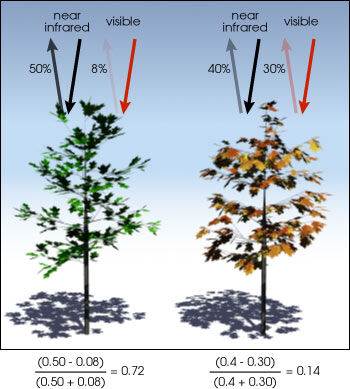
NDVI essentially measures the near-infrared light bouncing off the grass.
speaker_1HOST
Wait, infrared light?
Henrik JentschHOST
Yeah.

Martin MurrayHOST
You know, can we be feeding our...
Martin MurrayHOST
NDVI satellite imagery into chat GPT or whatever the AI is and identifying problems before us as agronomists or farmers can identify them and then target them.
Martin MurrayHOST
Can we then use, say, a drone to go target those areas and inspect them? Maybe they're going to pick up disease.
Martin MurrayHOST
Maybe they're going to pick up nutrient issues.

Michael SouthwoodGUEST
We have so many moisture probe companies in South Africa.
Michael SouthwoodGUEST
Together with drone technology and satellite imagery, one can identify early stress indicators in the plants with NDVI visualization and other tools.
Michael SouthwoodGUEST
There is probes that you can measure not just soil water capacity at different depths, but also the growth response of the plant.
Michael SouthwoodGUEST
For instance, the dendrometer technology that comes from Israel.
6 MINS LATER
Michael SouthwoodGUEST
So every plant counts, every crop counts.
Lisa KanyavenaHOST
How can precision measurements help farmers identify whether they are over-applying water or fertilizer, rather than simply applying the same rate across the entire field?
Michael SouthwoodGUEST
Precision technology, easiest is probably looking at drone and NDVI satellite imaging.
Michael SouthwoodGUEST
And the difference in color will already spot a stress level, which is usually because of lack of water, high ECs or salts.

speaker_1HOST
According to the commodity brief, real-time satellite data is rapidly transforming from a high-tech novelty into an absolutely essential foundational input for institutional risk models.
speaker_1HOST
The brief specifically mentions inputs like NDVI, moisture stress indicators, and forecast adjusted yields.
speaker_2HOST
The integration of NDVI into trading algorithms is nothing short of revolutionary.
speaker_2HOST
NDVI stands for Normalized Difference Vegetation Index.
speaker_1HOST
Let's pop the hood on that.
speaker_1HOST
How exactly does a satellite floating in low Earth orbit tell a hedge fund in Manhattan how much corn is growing in Iowa? What is the actual mechanism?
speaker_2HOST
Photosynthesis slows down so it stops absorbing as much red light.
speaker_2HOST
The cellular structure breaks down so it reflects less near infrared light.

speaker_0HOST
Their strongest equity result is that the same built environment feature did not dominate in both gender labeled surfaces.
speaker_0HOST
Greenness, measured partly through NDVI, which is a satellite-based measure of vegetation, ranked first in the female labeled model, while population count ranked first in the male labeled model.
speaker_0HOST
And distance to transit contributed more to female labeled happiness in eighty-four percent of paired grids.
speaker_1HOST
How do we know this is measuring happiness in the city and not just who posts on Weibo, who geotags, and where they happen to be when they're bored or annoyed?

Bill SchombergHOST
Um, so we had, um, their agronomist, which did an awesome job as well, and Todd, I think you were most jacked about all the AI and drone and other stuff he was working on that he kind of talked to us about.
Bill SchombergHOST
So that was kind of neat to get some other aspects of what goes into picking hybrids, 'cause he's picking them, and he's using NDVI and other things to actually pick their, their varieties.
Bill SchombergHOST
But, um, if you remember, Renk really never had a lot of Corteva genetics in their lineup, and now this year some licensing agreements expired so that they're able to have some PC hybrids.
Bill SchombergHOST
So you're gonna see some of that in their lineup, which I think is gonna help them get to some, some clients.

Randy MartinsonGUEST
Oh, I, I think most definitely.
Randy MartinsonGUEST
And I, and I really don't, at, at this late in the game, you know, I know using the NDVI isn't as accurate because, you know, it's tough to see what the crop's looking like.
Randy MartinsonGUEST
And I know some of it was done off of satellite imagery, and some of it was done off of, uh, you know, different methodology on what crops they were looking at, especially in, in Nebraska.
Randy MartinsonGUEST
So I do think there, there needs to be some, uh, answers to some questions.

John JeffreysGUEST
We're going to have to give them the things that they need to see with our eyes.
John JeffreysGUEST
to incorporate in these things? Because I've seen some early, you know, the NDVI's and all the different metrics that you can look at things.
John JeffreysGUEST
And if you look at those and you look at your greens, you're like, oh my gosh, I got to get out there.
John JeffreysGUEST
They're dying.

James MansonGUEST
Then another way is like a data driven approach.
James MansonGUEST
And so you could run NDVI satellites over a crop get heaps of data, precise soil measurements, all of that.
James MansonGUEST
And that will give you a much better, a different picture from what your eyes can tell you about a crop, but it's still more or less your intuition and your experience that says this is where it should be.
James MansonGUEST
And I guess we're trying to bring a theory driven approach, which was why should it be here and here? Not too little, not too much.
Michael SouthwoodGUEST
So you're spoiled for choice in terms of product selection, but is it working in the area, in the soil type, in the microclimate? And that information we have to get from the older generation, and then mix that and merge that into the new technology that's available for us.
Michael SouthwoodGUEST
We don't have to go out to a land of maize and see, "Oh, the leaves are scorched." We can actually see it by satellite, just looking at NDVI imaging.
Michael SouthwoodGUEST
There's tools that can tell you the heat or the heat stress is on the way.
Michael SouthwoodGUEST
We've got excellent weather stations and software programs scattered across South Africa that can give you early warning signs on diseases.
3 more episodes mention Normalized difference vegetation index.
Create an account to see the whole feed, search across every transcript, and follow the entities you care about.