Normal distribution
21
MENTIONS
7
EPISODES
7
PODCASTS
Search complete. 21 mentions across 7 episodes found for "Normal distribution".
Oct 1, 2026

Alex AndorraHOST
And if those names sound familiar,
Alex AndorraHOST
it's because Bill wrote PyMC's original Gaussian process submodule during a Google Summer of Code years ago.
Alex AndorraHOST
And Jesse is a returning guest who came on to talk state space models and Kalman filters back in episode 124.
Alex AndorraHOST
This time, they are both here to talk about Gaussian processes and specifically about PTGP, a brand new opinionated GP library built on top of PyTensor and PyMC, with a lot of help from Jesse's work on PyTensor's rewrites system.
Alex AndorraHOST
We get into what a kernel actually is, what length scale and amplitude really mean, why GPs are so expensive to fit exactly, and how PyTensors rewrites let PTGP stay fast without hiding the math from you.
Alex AndorraHOST
We also talk about HSGP, inducing points, and when to reach for which approximation.
Alex AndorraHOST
But thanks Bill for saving my feelings.
Alex AndorraHOST
Yeah, actually, let's do your origin story.

Curtis PetersonHOST
Most statistical methods assume that data is what's called normally distributed.
Curtis PetersonHOST
And we'll get to this if you've ever heard of the bell curve.
Curtis PetersonHOST
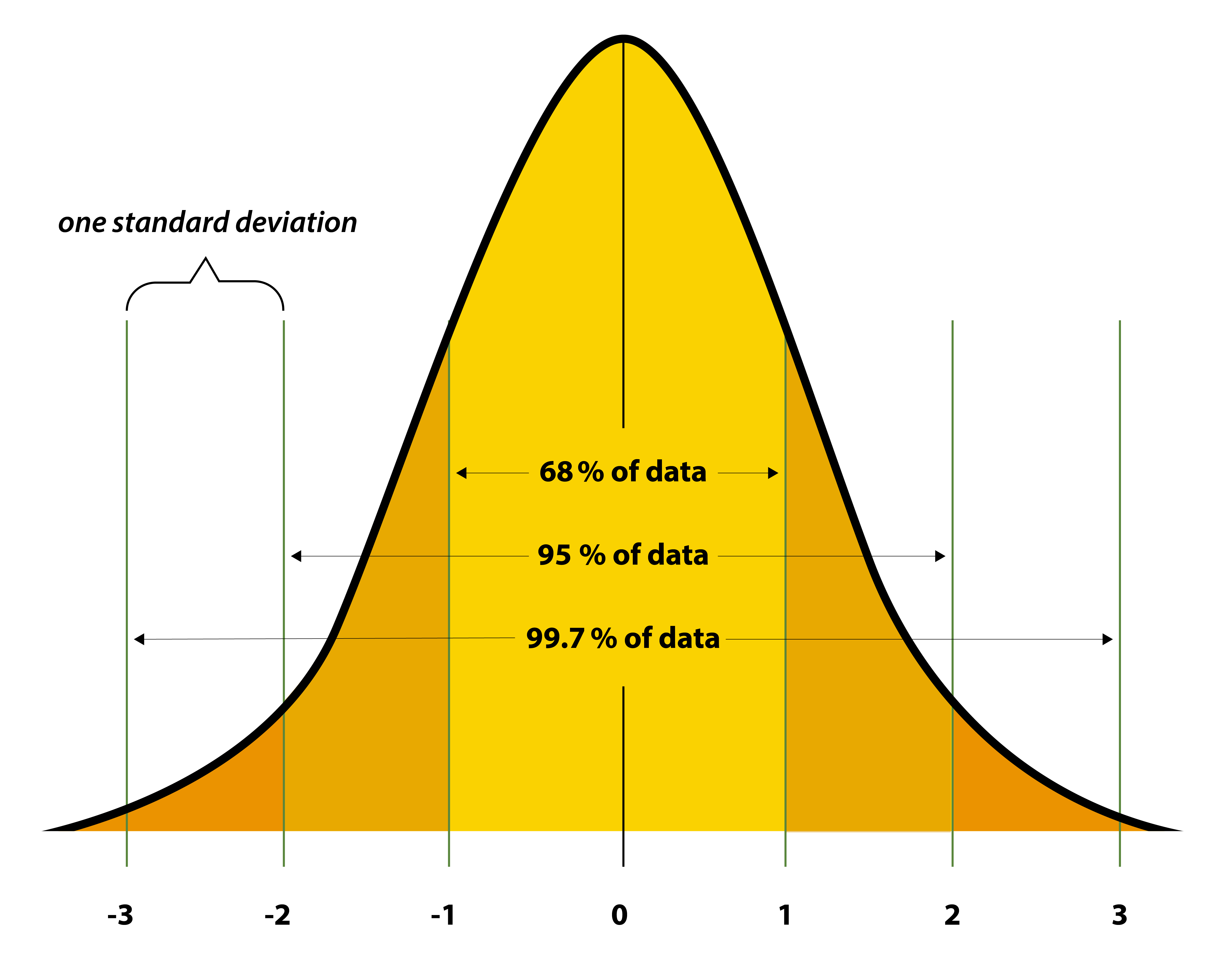
What this is, is when you sample something long enough, It will create what's called a bell curve and the bell curve looks like this, this figure right here.
Curtis PetersonHOST
Where if we draw a line down this middle that's going to represent our mean or average where 50% are on one side and 50% are on the other, but what the bell curve does is it tells us something about the population.
Curtis PetersonHOST
So when we look at the mean, for example, of a normal distribution, 50% lays on one side, 50% lays on the other, but then we have something called a standard deviation, okay? Standard deviation is a measure of what we call variation, the variation between scores, okay? And what the basic definition of a standard deviation is it's the average distance between individual scores and the mean.
Curtis PetersonHOST
So it's telling us what the average differences between individual scores are.
Curtis PetersonHOST
If someone scores below an 85, we'll do further testing to see if they have some type of developmental cognitive issue.
Curtis PetersonHOST
When people score above a 115, then we start looking to see, well, why is it that they are scoring so much higher than the average population? And so this is kind of what's unique about the standard population.

Sean McClureHOST
Now, this doesn't matter what the shape of the distribution is.
Sean McClureHOST
Like you said, well, I'm drawing them as Gaussians, but this could be Pareto.
Sean McClureHOST
This could be like long-tailed, fat-tailed kind of stuff.
Sean McClureHOST
It could be very skewed.

Adrian GoreGUEST
I think 120 or something is a genius, and at 80...
Adrian GoreGUEST
And it's equidistant, right? So we believe systems are Gaussian, they're normal.
Adrian GoreGUEST
You know, that's how we learn.
Adrian GoreGUEST
If you do any statistics, you're taught that in first year.

Dark EnlightenmentGUEST
It's a dangerous shithole." Then why do you go back to Syria on vacation twice a year? Right? Why, why, why are you constantly sending money and, and, and going back to these places? Right? W- why, if it's, if it's so awful, are, you know...
Dark EnlightenmentGUEST
Do you go back to Pakistan to pick a wife and bring her back to England? Why? Well, 'cause you're just-- You're here and, and for the reasons that, you know, are elucidated in Bell Curve and elsewhere and, and that every one of these people knew.
Dark EnlightenmentGUEST
This is the Rothfeld Brockwell report.
Dark EnlightenmentGUEST
Jeff Tucker was there.

AmandaHOST
Okay.
AmandaHOST
This one, I practically sparkled with glee when I read this question all the way through, because I had just this week read a New Yorker article that referenced the Gaussian distribution and pointed out how it was also known as the normal distribution or the bell curve.
AmandaHOST
I forget what context that was in, but I kind of picked up on it just because, like, oh, that kind of gelled together a couple little factoids for me.
AmandaHOST
And so I just...
AmandaHOST
I happen to have very recently read that this was Gauss who sort of created or discovered or however you want to put it, this distribution.
AmandaHOST
And it's also called a Gaussian distribution.
AmandaHOST
So I put down Gauss.
GeorgeHOST
If you'd asked me if the normal distribution was also the Gaussian distribution, I would have said no.