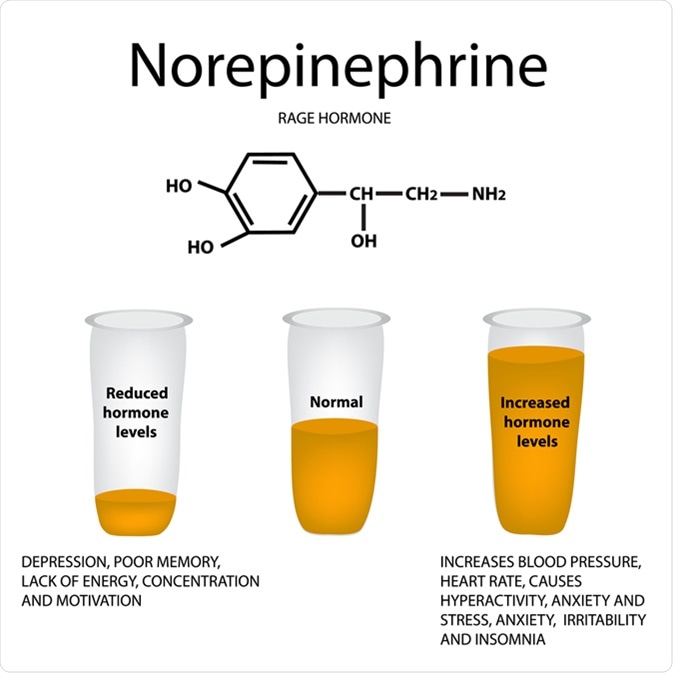
Norepinephrine
HormoneWikipedia
24
MENTIONS
10
EPISODES
7
PODCASTS
Search complete. 24 mentions across 10 episodes found for "Norepinephrine".
Sep 18, 2026

speaker_0HOST
But methylene blue and hydroxycobalamin are non-catecholamine vasopressors.
speaker_0HOST
And they're certainly not considered first-line vasopressors, right? Norepinephrine, first-line vasopressor.
speaker_0HOST
Even epinephrine in some cases.
speaker_0HOST
Phenylephrine, much less commonly used, but something that you could consider.
33 MINS LATER
speaker_0HOST
This is like the inotrope dobutamine epinephrine.
speaker_0HOST
does this as well.
speaker_0HOST
Norepinephrine does this to a small degree, but methylene blue does not affect beta-1.
speaker_0HOST
It is not a catecholaminergic mechanism.
speaker_0HOST
So non-catecholaminergic vasopressors are things like methylene blue and hydroxocobalamin, also vasopressin, um, angiotensin II would be two other ones, all things we've talked about on the channel.
speaker_0HOST
Um, but methylene blue and hydroxocobalamin are non-ca- catecholamine vasopressors, and they're certainly not considered first-line vasopressors, right? Norepinephrine, first-line vasopressor.
speaker_0HOST
Even epinephrine in some cases.
speaker_0HOST
Phenylephrine, much less commonly used, but something that you could consider.

speaker_3NARRATOR
And in REM sleep, the main dreaming stage, one of the most important of these is very low, almost absent.
speaker_3NARRATOR
This particular chemical is called noradrenaline, and it deserves a moment of quiet attention.
speaker_3NARRATOR
Noradrenaline helps us record memories during waking life, sharpening our attention and flagging experiences as significant.
speaker_3NARRATOR
But in REM sleep, its levels drop remarkably low, lower than at almost any other time.
speaker_3NARRATOR
And without it, memories form poorly, weakly, if they form at all.
speaker_3NARRATOR
So dreams, occurring precisely when this memory chemical has retreated, are extraordinarily hard to store.
speaker_3NARRATOR
This low level of noradrenaline is genuinely important to our puzzle, so let us sit with it a little longer.
speaker_3NARRATOR
Noradrenaline is needed to fix memories in place, to give them the durability that lets them survive until morning.
speaker_1HOST
Okay, some advanced clinical applications, which is going to dovetail off some of the stuff we started to talk about.
speaker_1HOST
Norepinephrine is most useful when the main problem is vasodilation with inadequate perfusion pressure, right? Because norepinephrine is primarily alpha-1, and it primarily causes vasoconstriction.
speaker_1HOST
So it's best for the problem of vasodilation because it causes vasoconstriction.
speaker_1HOST
This causes it to work really well in septic shock because that's the dominant hemodynamic problem in septic shock.
speaker_1HOST
So by increasing the diastolic blood pressure, sometimes you'll help improve coronary perfusion of the heart.
speaker_1HOST
And with more blood flow to the heart, that muscle works better.
speaker_1HOST
Norepinephrine does slightly increase contractility through its beta-1 effects.
speaker_1HOST
And the norepinephrine often will increase preload because this is where you get into stressed and unstressed volume.

speaker_1HOST
These are continuous, highly potent IV drips that have to be titrated, meaning the nurse adjusts the dose minute by minute based on real-time blood pressure readings.
speaker_1HOST
Let's start with vasopressors like norepinephrine, commonly known as Levophed, and epinephrine.
speaker_0HOST
The protocols say these are used for pressing the vessels.
speaker_0HOST
They cause massive constriction of the blood vessels to force blood pressure up.
speaker_3NARRATOR
And in REM sleep, the main dreaming stage, one of the most important of these is very low, almost absent.
speaker_3NARRATOR
This particular chemical is called noradrenaline, and it deserves a moment of quiet attention.
speaker_3NARRATOR
Noradrenaline helps us record memories during waking life, sharpening our attention and flagging experiences as significant.
speaker_3NARRATOR
But in REM sleep, its levels drop remarkably low, lower than at almost any other time.
speaker_3NARRATOR
And without it, memories form poorly, weakly, if they form at all.
speaker_3NARRATOR
So dreams, occurring precisely when this memory chemical has retreated, are extraordinarily hard to store.
speaker_3NARRATOR
This low level of noradrenaline is genuinely important to our puzzle, so let us sit with it a little longer.
speaker_3NARRATOR
Noradrenaline is needed to fix memories in place, to give them the durability that lets them survive until morning.

Manreet KanwarGUEST
You know, if your PA pressures take over your blood pressure, cross your blood pressure, you're going to set off a whole different casket of right to left shunting, which then is the death spiral for this patient.
Manreet KanwarGUEST
So when in doubt, use Levophed.
Manreet KanwarGUEST
You're not a preference.
Manreet KanwarGUEST
It's always the drug of choice in all circumstances, period.

Calum DownesHOST
And then the ladder.
Mike CharlesworthHOST
Noradrenaline first, 0.05 to 0.3 micrograms per kilo per minute, then vasopressin, 1 to 4 units an hour, then methylene blue, 100 milligrams intravenously over 30 minutes, and then high-dose hydroxycobalamin, 5 grams over 15 minutes.
Calum DownesHOST
And the warning from the transplant episode still stands.
Mike CharlesworthHOST
It absolutely does.
6 MINS LATER
Mike CharlesworthHOST
Cytokine absorber on the circuit, with honest acknowledgement that the evidence isn't there yet.
Calum DownesHOST
Two arterial lines and climb the vasoplegia ladder.
Calum DownesHOST
Noradrenaline, vasopressin, methylene blue, hydroxycobalamin.
Calum DownesHOST
But be certain it isn't low output first.

Bernd SaugelGUEST
This was a single-center trial in our department with a strong, and I would say almost obsessive, focus on blood pressure management, and keeping the mean arterial pressure above sixty-five is our routine.
Bernd SaugelGUEST
Norepinephrine is the first-line vasopressor, and ninety-eight percent of the patients in the trial were given norepinephrine.
Bernd SaugelGUEST
This reflects our clinical practice.
Bernd SaugelGUEST
The surgeries were also relatively short and low to moderate risk, uh, while it was a trial in patients who wouldn't normally get an arterial catheter.
Jochen Daniel MuehlschlegelGUEST
So the short answer is that there was almost no hypotension left to detect.
Jochen Daniel MuehlschlegelGUEST
Uh, in Bernd's department, in their practice, keeping the MAP above sixty-five is institutional routine.
Jochen Daniel MuehlschlegelGUEST
Norepinephrine, as Bernd outlined, is the first-line vasopressor.
Jochen Daniel MuehlschlegelGUEST
Ninety-eight percent of enrolled patients received it, and the median time-weighted dose was zero point zero five micrograms per kilogram per minute.

Charan RanganathGUEST
And there's chemicals in our brain that are released during these experiences.
Charan RanganathGUEST
Noradrenaline's one.
Charan RanganathGUEST
Um, cortisol is a stress hormone.
Charan RanganathGUEST
There's gobs of hormones that are re-released during stress.