Non-return-to-zero
4
MENTIONS
3
EPISODES
3
PODCASTS
Search complete. 4 mentions across 3 episodes found for "Non-return-to-zero".
Oct 13, 2026

speaker_1HOST
Layer 1 defines the raw voltage levels, the strict timing of the electrical signals, and the physical pinouts of the connectors.
speaker_1HOST
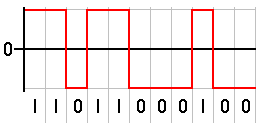
In a standard copper Ethernet cable, we use encoding schemes like NRZ, non-return-to-zero, or more complex modulations like PAM4 to represent 1s and 0s as incredibly rapid fluctuations in electrical voltage.
speaker_0HOST
Just pulsing electricity.
speaker_0HOST
And when you hit the massive internet backbone, it transforms into optical physics, right? Lasers firing into fiber optic cables at the bottom of the ocean.

Thomas BarberGUEST
to try and go to a much lower power solution.
Thomas BarberGUEST
And what they've done is they've gone from trying to maximize the number, the data rate per wavelength to saying, hey, if we back off on the baud rate and go down to 50 gigabits per second, but do multiple wavelengths, what we can do then is the raw bit error rate is native raw bit error rate for NRZ is so much better than PAM4.
Thomas BarberGUEST
We can do away with a lot of the forward error correction, right? We can do away with a lot of the channel equalization.
Thomas BarberGUEST
So even though we're sending four channels instead of one, the overall power consumption still goes down.

John CalvinGUEST
... uh, a 10 gigabit per second.
John CalvinGUEST
It'd have 10 gig by four lanes going into this thing, and it would be 10 gig NRZ, right?
Pat ChowHOST
So a QSFP.
John CalvinGUEST
A QSFP module or-
Pat ChowHOST
Okay
John CalvinGUEST
... or something along those lines.
John CalvinGUEST
And, um, at that time, 10 gigabits per second NRZ was blisteringly fast, right?
Pat ChowHOST
Yeah.