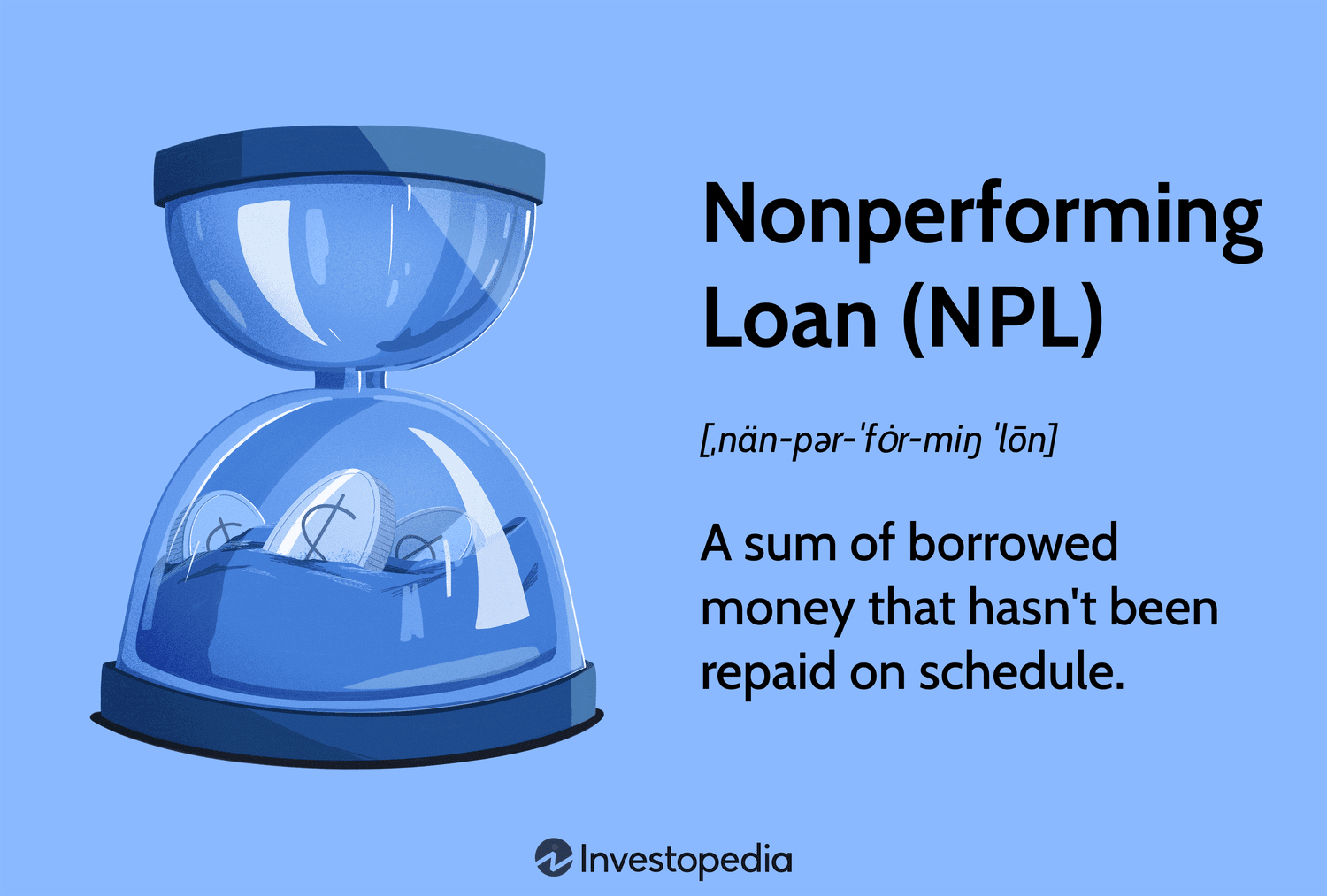
Non-performing loan
72
MENTIONS
29
EPISODES
26
PODCASTS
Search complete. 72 mentions across 29 episodes found for "Non-performing loan".
Oct 31, 2026

NosaHOST
Laulu do you see all those people doing the deep dives and putting comparison of GTB and Opie side by side meanwhile Opie had less like their NPL was lower than GTB's NPL that's what triggered me I was like no I have to actually go and look
LaoluHOST
at meanwhile GTB is carrying their own NPLs for an entire year They are carrying it.
LaoluHOST
They've written it off.
LaoluHOST
Because there's a thing about a general debt provisioning.
NosaHOST
There, because there's Ocash.
LaoluHOST
Right.
LaoluHOST
Because even at four point something percent, five percent NPL, CBN is already going to be asking you how far, like, Baba, what's going on with all these NPLs that you're carrying? Right.
LaoluHOST
So I think that what they will do is that high risk borrowers or first time borrowers that they don't really know what's happening with them will go on another book.

Chris WoodGUEST
Because even at the most extreme sides of the bubble, the loan to value ratio was 50%.
Chris WoodGUEST
So actually where the consumer NPLs are rising in China today is not in mortgages.
Chris WoodGUEST
It's in sort of consumer lending platforms used by younger people.
Edward ChancellorHOST
You in your notes this year have been, I don't know if it's your phrase, the slow bull market.

Richard McGirrGUEST
Wow.
Richard McGirrGUEST
There's a reason why not everybody is out there buying NPL.
Richard McGirrGUEST
These guys are super good at three things and that most funds are only good at one.
Richard McGirrGUEST
They're really good finance guys because the stress loan analysis is like its whole own thing.

Brandon O'BrienPANELIST
We've seen even in going from the institutional investors down to the individual investors, it's a sliding scale.
Brandon O'BrienPANELIST
Some of the things that we're seeing on activity around selling more of these loans and NPLs and RPLs, that's been stagnant really over the last year or two years.
Brandon O'BrienPANELIST
There's been some activity, but not near at the level that we really need to see as an industry and so we're actually starting to see a lot more activity there which i think will definitely end up rippling down uh obviously the gses aren't moving as much on uh exiting the uh npls and rpls so maybe we'll start seeing them participate a little more in that but uh the individual investors right i mean with the the cost of capital And the overall limitation of inventory, as Zach illustrated, that's been the biggest challenge that I think every individual investor that I've talked to and deal with.
Brandon O'BrienPANELIST
So they're having to take more risk out there to try and... to try and make money essentially, but to find more deals.
6 MINS LATER
Brandon O'BrienPANELIST
But again, that cost of goods, the cost of construction, and the overall market resistance is kind of creating more challenges.
Brandon O'BrienPANELIST
But you either need to... do new build in in the beginning or you need to focus high on a higher end into that that range of the neighborhood those properties i've seen consistently move and those in the middle kind of are the ones suffering with condition issues
Bill BaimelPANELIST
oh and just going back to your question about the capital and whatnot and the the volatility of of uh assumptions in your costs um I will say that I have competitors in this business because a portion of what we do is basically a fix and flip trade, but we're buying NPLs from HUD.
Bill BaimelPANELIST
And I've seen three major investors walk away from this strategy in the last 12 months.

Ma JunGUEST
Meaning, out of the 7 trillion outstanding green loans, I would strongly believe that more than 90% are bankable without government subsidies.
Ma JunGUEST
And they are profitable, and they're generating very little NPL ratios.
Ma JunGUEST
In fact, the non-performing loan ratio of the green loans in China is much lower than the overall green loan ratio.
Ma JunGUEST
I think it's less than 1%.

KofiHOST
We were somewhere around 26%, 27% before we started reducing to the 16% and the 18% we are currently seeing.
KofiHOST
It tells you how our banking sector has been grinding through pain in terms of liquidity, in terms of, you know, bad loans and NPLs.
KofiHOST
And for us to even get here, it takes a lot of sacrifice, especially from the banking institution.
KofiHOST
And you can see how all of them have become very strategic in terms of who they lend the money to.
6 MINS LATER
KofiHOST
I mean, the central bank itself has problems.
KofiHOST
And Winston put it right that...
KofiHOST
some people or some people in the space are now calling for a reassessment of the central bank and our banking industry has been through several you know very delicate situation where we had the banking sector crisis we have the ddp and it was through all of this um you know process that we saw how non-performing loan ratios beginning to balloon to 20 26 28 and all of that Now, the aspect that I want us to really focus on is how the central bank will also help, the central government, as you put it, will also help in reducing these NPLs.
KofiHOST
Because we can't have a conversation around the NPL without bringing in the central bank.

Dave Van HornGUEST
And a lot of that is just the environment.
Dave Van HornGUEST
But we're just under a billion in NPLs, which are non-performing first mortgages.
Dave Van HornGUEST
And then we're similar in the commercial real estate side.
Dave Van HornGUEST
We're about a 50-50 portfolio between commercial real estate and the mortgages.
Dave Van HornGUEST
And that fund is more of a debt structure, and it enables investors to avoid UBIT, and it also enables them to be able to compound returns.
Dave Van HornGUEST
So a certain segment of our investor base likes that.
Dave Van HornGUEST
And then we have a fund that just does NPLs, well, primarily NPLs.
Dave Van HornGUEST
It's a closed-end fund that has like a ramp-up period of a year to 18 months.

Aleksandra SimanovskyGUEST
They can for the performing loans.
Aleksandra SimanovskyGUEST
For the non-performing loans, they'll have to either find another vehicle, sell NPLs, or hold onto them and wait for their pay day.
Aleksandra SimanovskyGUEST
But a lot of times, that's exactly what happens.
Aleksandra SimanovskyGUEST
And to be honest, after six months, you're probably left with not 50, but $25 million in pool, in loans.

Mounir NakhlaGUEST
And it's less about the demand side, but more about the supply side and the scoring side.
Patrick WerrHOST
What has happened to your NPLs over the past 12 months?
Mounir NakhlaGUEST
They've increased about 1%, 1.5%.
Mounir NakhlaGUEST
So in check? Totally in check, yeah, totally in check.

Dalumuzi MhlangaGUEST
So something called area under the curve, which is sort of like a key metric, build comfort with that.
Dalumuzi MhlangaGUEST
And then when we start off with the small governed pilot, and then with that, we track default rates, NPLs and various software quality metrics.
Dalumuzi MhlangaGUEST
And when we move from a process that they're comfortable with, then we can then figure out how to scale and roll this out and go to market in an aggressive way.
Dalumuzi MhlangaGUEST
So it's really working very closely hand in hand with the lenders, the trade risk teams, and then being able to get in under the hood and have, you know, models that we can explain, that a regulator can audit.
9 MINS LATER
Dalumuzi MhlangaGUEST
Now, we're not licensed every market, but because of the rigor with which we have built our platform initially in South Africa, That means every other market in which we partner or enter or, you know, have customers, we bring that same level of rigor and, you know, the highest levels of compliance standards.
Dalumuzi MhlangaGUEST
Even when we don't have a regulatory body looking out for us in the markets where we're not licensed, but it's just in our DNA to be compliant and to hold those high standards.
Dalumuzi MhlangaGUEST
And all of that flows into the performance of our models and, you know, Ultimately, what really matters is NPLs.
Dalumuzi MhlangaGUEST
Not ultimately, but like a big part of what matters is NPLs.
19 more episodes mention Non-performing loan.
Create an account to see the whole feed, search across every transcript, and follow the entities you care about.