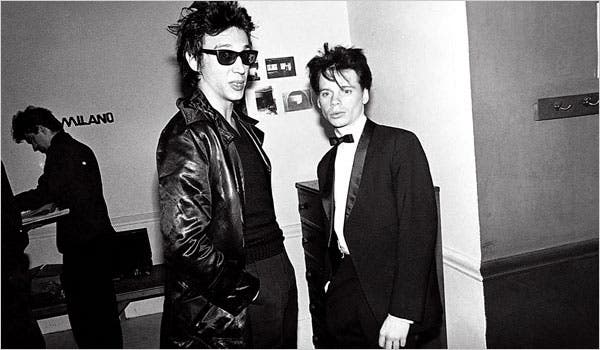
No wave
Music genreWikipedia
30
MENTIONS
15
EPISODES
10
PODCASTS
Search complete. 30 mentions across 15 episodes found for "No wave".
Sep 8, 2026

Mark MastersHOST
I'm Mark Masters.
Mark MastersHOST
Written two books about music, No Wave, published in 2008, and High Bias, The Distorted History of the Cassette Tape, published in 2023.
Mark MastersHOST
On this podcast, I talk to music book authors about how they get from their first idea to a finished book and all the decisions they make along the way.
Mark MastersHOST
So this time around, I was psyched to talk with Kip Lornell and Tom Minty.

Tyler SorensenHOST
Hello and welcome to Different Head.
Tyler SorensenHOST
Broadcasting live from my apartment, this is an annotated mixtape of New Wave, No Wave, and Neither Wave.
Tyler SorensenHOST
Once again, my name is Tyler Sorensen.
Tyler SorensenHOST
On today's show, every song on this playlist is inspired by my recent road trip to Cream City, Milwaukee, Wisconsin.

speaker_0HOST
And he just drops right into that scene, leading to this complete deconstruction of traditional rock music.
speaker_1HOST
You get the emergence of this movement called No Wave in New York's downtown scene.
speaker_0HOST
Right, because punk had already happened.
speaker_0HOST
And to these downtown artists, punk had already become too commercialized.
speaker_1HOST
Basically a uniform at that point.
speaker_0HOST
Yeah, a uniform.
speaker_0HOST
So No Wave was a total violent rejection of traditional musical structures.
speaker_0HOST
Lindsay forms a band called DNA and they famously get included on this legendary 1978 compilation album called No New York.

EricHOST
It's more New Wave... than probably punk uh speaking of which the punk band we see at the start which i assume is that the roosters as well because they have their faces painted white and they've got red lipstick on which is not very punk either i don't think
JustinHOST
well i think this was probably the emergence of new wave wasn't it or no wave kind of around this time with like um suburban lawns and those kind of bands so i think there was kind of a fight back and like um television and uh the kind of cbgb's but their sound is very punk though Well, it kind of is, but there was a lot when we've watched film like New Year's Evil, even that was 1981 or 1980, it was a lot of that punk sort of LA and New York punk still had that punk, sorry, new wave had that punky sound.
JustinHOST
So I think there was kind of this is good.
JustinHOST
That was before obviously synthesizers and stuff came in.
JustinHOST
So I think there was kind of that crossover period, but there was definitely that kind of seems to be that move into kind of the new wave or the no wave kind of movement around this time.
EricHOST
What I did like about the Roosters was that they actually do sound like a garage band.
EricHOST
So often in films, you find that they've dubbed a studio, a polished studio kind of soundtrack over them as they're rehearsing.
22 MINS LATER
JustinHOST
But whether or not um i mean i guess you had other new york filmmakers the guy who made splatter university was kind of a relative that was kind of but that that's somebody who i mean there's a lot of films from around the time like maniac and nightmares and undamaged brain the howlings another one that captures which is a bigger budget movie it captures that 42nd street kind of griminess doesn't it um Whereas actually, funnily enough, in this film, they don't actually feature any kind of 42nd Street style stuff, do they? Which is kind of almost a bit of a cliche, isn't it? And a lot of those films like The Howling, Nightmares and Damaged Brain, they've all got those kind of scenes showing the 42nd Street kind of being quite self-reflexive in some ways, reflecting themselves back on each other, you know, that kind of the grindhouse aesthetic.

Martin BisiGUEST
I thought it was just a little like open secret amongst people in the East Village and Gowanus and Soho that, oh yeah, I also do jazz, jazz sessions.
Martin BisiGUEST
They're recording a couple of jazz records and also, oh yeah, some hardcore comes in, but that doesn't really resemble No Wave, you know, but I don't really talk about it.
Martin BisiGUEST
But it's also like an open secret thing, but not something that I felt was worth trumpeting.
Martin BisiGUEST
It took someone else trumpeting that like, hey, take a look at this.
Mark MastersHOST
I'm Mark Masters.
Mark MastersHOST
I've written two books about music, No Wave, published in 2008, and High Bias: The Distorted History of the Cassette Tape, published in 2023.
Mark MastersHOST
On this podcast, I talk to music book authors about how they get from their first idea to a finished book, and all the decisions they make along the way.
Mark MastersHOST
So for this episode, I was psyched to talk with Ashley Kahn.
5 more episodes mention No wave.
Create an account to see the whole feed, search across every transcript, and follow the entities you care about.