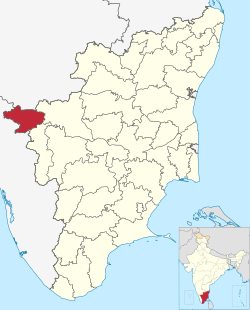
Nilgiris district
District in Tamil NaduWikipedia
13
MENTIONS
5
EPISODES
5
PODCASTS
Search complete. 13 mentions across 5 episodes found for "Nilgiris district".
Sep 27, 2026

Will ShakespeareNARRATOR
At an early period, the British East India Company, as the principal trade intermediary between China and Europe, became deeply interested in the question of tea cultivation in their eastern possessions, but without much success until in eighteen forty when the Assam Tea Company was formed, from which year the successful cultivation of tea in India has been carried on.
Will ShakespeareNARRATOR
The tea districts of that country, including at the present time, in order of their priority, Assam, Dehradun, Kumaon, Darjeeling, Cachar, Kangra, Hazarila, Chitigong, Burma, Nilgiri, and Travancore.
Will ShakespeareNARRATOR
Various efforts were made to introduce tea culture into Ceylon under both Dutch and British rule.
Will ShakespeareNARRATOR
No permanent success being attained until about eighteen seventy-six when the disastrous effects of the coffee leaf disease induced the planters to give more serious attention to tea.
2 HRS 12 MINS LATER
ClaireNARRATOR
Many of the plantations were finally composed of hybrids or crosses between the China and India species, which is now claimed to have been an error as the nearer each variety approaches to the indigenous, the higher its excellence.
ClaireNARRATOR
The tea-producing districts of India are widely scattered, the largest, Assam, being situated in the extreme northeast of the country bordering on the Burmese Empire, the others being located on the northwestern boundary of Nepal and the Punjab, while central India appears to be entirely devoid of tea gardens up to the present.
ClaireNARRATOR
There are numerous plantations, however, scattered over the southwestern provinces of the peninsula, most notably in Wanad, Nilgiri, and Travancore.
ClaireNARRATOR
In India, tea is grown on extensive estates often comprising thousands of acres situated principally in the alluvial valleys of large rivers or formed on land reclaimed from primeval jungle, possessing all the richness of virgin soil and cultivated either by the individual owners or the agents of companies commanding considerable capital.

Will ShakespeareNARRATOR
At an early period, the British East India Company, as the principal trade intermediary between China and Europe, became deeply interested in the question of tea cultivation in their eastern possessions, but without much success until in eighteen forty when the Assam Tea Company was formed, from which year the successful cultivation of tea in India has been carried on.
Will ShakespeareNARRATOR
The tea districts of that country, including at the present time, in order of their priority, Assam, Dehra Dun, Kumaon, Darjeeling, Cachar, Kangra, Hazarila, Chittagong, Burma, Nilgiris, and Travancore.
Will ShakespeareNARRATOR
Various efforts were made to introduce tea culture into Ceylon under both Dutch and British rule.
Will ShakespeareNARRATOR
No permanent success being attained until about eighteen seventy-six when the disastrous effects of the coffee leaf disease induced the planters to give more serious attention to tea.
2 HRS 25 MINS LATER
ClaireNARRATOR
But labor and fuel-saving machinery are affecting such economy in the cultivation and preparation of tea in India as to yearly reduce the cost of its production.
ClaireNARRATOR
So many improvements for drying, rolling, firing and sorting are annually being recorded that it is difficult even to estimate at what figure it may be produced there in the future.
ClaireNARRATOR
India teas comprise Assams, Kachars, Darjeelings, Dehraduns, Kumauns, Duars, Chittagongs, Julaguris, Rangwars and Nilgiris.
ClaireNARRATOR
District terms ranking in the order named and are converted into picots.

Harish YarlagaddaGUEST
...
Harish YarlagaddaGUEST
Nilgiris, all these are taken care of, other sensitive areas, but not the Eastern Ghats and Deccan.
Harish YarlagaddaGUEST
So I liked what he was doing, and I also found that he's very similar to me.
Govindraj EthirajHOST
Hmm.
5 MINS LATER
Harish YarlagaddaGUEST
You know, I'll tell you one small example.
Shloka NathGUEST
Uh.
Harish YarlagaddaGUEST
There is a r- Indian rubber plant, right? It is in Nilgiris, it is in Andamans-
Shloka NathGUEST
Hmm

JunHOST
I also call her a chiropractor and many other things.
JunHOST
She did a bachelor's at Rajiv Gandhi University for Health Sciences, did a master's in sports medicine from Mumbai, and she has her own practice in the Nilgiri.
JunHOST
Dr. Srinivas Rao graduated from the Seth GS Medical College and King Edward VII Memorial KEM Hospital in Mumbai.
JunHOST
He specialized in ophthalmology in Bombay University and he was an ophthalmic surgeon with a very successful practice in Bangalore.