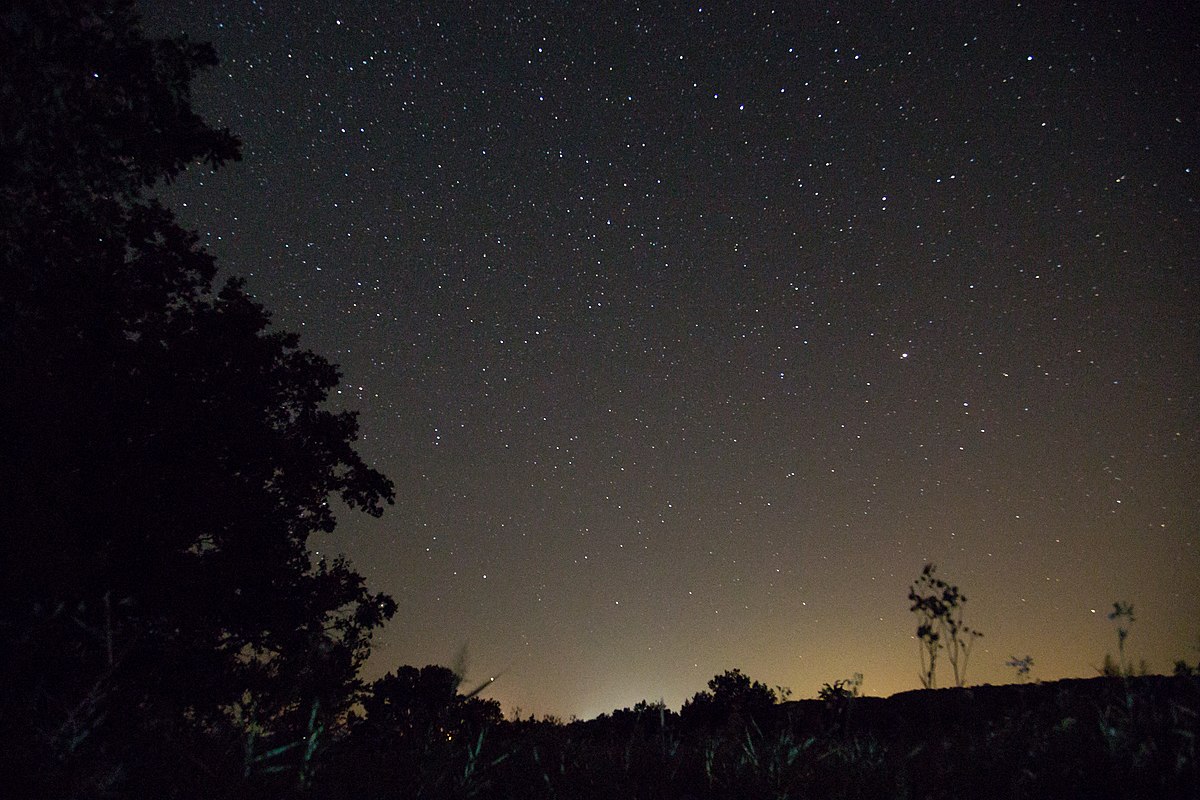
Night sky
50
MENTIONS
6
EPISODES
6
PODCASTS
Search complete. 50 mentions across 6 episodes found for "Night sky".
Sep 24, 2026

Sabine WintersGUEST
It's not about harvesting sunlight.
Sabine WintersGUEST
It's about having access and... capitalizing and commodifying not just light but the night sky so who is paying the price that's the ecologies that's our day and night rhythm that are we we because they're these are light beams of around six kilometers that are being on the ground for harvesting, for example, harvesting sun.
Sabine WintersGUEST
But there are also the U.S. Army has invested in it.
Sabine WintersGUEST
There are big investors of technological capital who are investing in it, Sequoia, among other.
Sabine WintersGUEST
It's not about making profit out of a product.
Sabine WintersGUEST
It's about access, right? It's about having, being able to, it's about rent, about getting rent out of this system.
Sabine WintersGUEST
And the same is going on with the night sky at this moment, because Reflect Orbital wants to launch 15,000 satellites into the night sky, which means if they are really able to, it will brighten the sky four times than it is now.
Sabine WintersGUEST
It means that we have a permanent full moon every night.

Mark BreenHOST
I'm Mark Breen.
Mark BreenHOST
Welcome to Night Sky for Wednesday, September 23rd.
Mark BreenHOST
Our first full day of calendar fall includes an interesting constellation emerging from the twilight hugging the southwest horizon near 730 this evening.
Mark BreenHOST
As you look to the southwest on the next clear evening this week, The reddish beacon Antares shines as the most obvious star, known to stargazers and astronomers as the heart of the scorpion.
Mark BreenHOST
This balance scale lies sideways, so the chains holding the weighing dishes dangle to the left.
Mark BreenHOST
The traditional dates of Libra the Scales start on the fall equinox, representing the balance of days and nights, marking the position of the sun 5,000 years ago.
Mark BreenHOST
The scale's other identity Thursday on Night Sky.
Mark BreenHOST
Night Sky is a production of Vermont Public and the Fairbanks Museum and Planetarium.

speaker_0HOST
For now, we can simply begin with the first quiet fact.
speaker_0HOST
A star is a point of light in the night sky.
speaker_0HOST
That is the simplest possible way to put it.
speaker_0HOST
Step outside after the sun has gone down, wait for your eyes to adjust, and there they are, tiny pinpricks scattered overhead.
speaker_0HOST
Distance shrinks them to dots.
speaker_0HOST
Put anything far enough away and it looks tiny, no matter how large it actually is.
speaker_0HOST
So the tiny points you see in the night sky are really giants, each one a colossal sphere of super-hot material burning away in the dark.
speaker_0HOST
Stars give off light and heat.

speaker_2NARRATOR
You yourself are a product of these partnerships, shaped by relationships extending back to the beginning of life on Earth.
speaker_2NARRATOR
The night sky, when viewed far from city lights, reveals the Milky Way, a river of light stretching across the darkness.
speaker_2NARRATOR
This river is not just beautiful, it is a map of our galaxy.
speaker_2NARRATOR
Billions of stars arranged in a spiral structure rotating around a massive black hole.
speaker_2NARRATOR
Most stars in the Milky Way are too distant to see as individual points of light, but together they create this luminous river.
speaker_2NARRATOR
For most of human history, people looked up at this sight and felt wonder and humility.
speaker_2NARRATOR
The night sky connected people to something vast and unknowable.
speaker_2NARRATOR
The stars taught ancient peoples to navigate, to tell time, to understand seasons.

Alya Al NuaimiHOST
After that, of course, things get a little more serious and honestly a little personal, I'd say.
Alya Al NuaimiHOST
that beautiful night sky you love, the one full of stars.
Alya Al NuaimiHOST
Well, private companies might be about to ruin it, to be honest, for every single one of us, everywhere on the Earth.
Alya Al NuaimiHOST
And here's the kicker, international law might not be able to stop them.
Alya Al NuaimiHOST
Hundreds of erupting volcanoes, oceans of fire, and NASA's Juno probe just took a peek beneath the surface to crack the big mystery.
Alya Al NuaimiHOST
What is powering all of this up? What lurks down there in the dark? Stick around and find out.
Alya Al NuaimiHOST
So we've got volcanoes, black holes, a wounded little rover and a battle for the night sky itself.
Alya Al NuaimiHOST
I told you it was a big one.

DrewHOST
Howdy stargazers and welcome to this episode of Star Trails.
DrewHOST
My name is Drew and I'll be your guide to the night sky for the week of September the 6th to the 12th.
DrewHOST
Over the past few episodes, we've followed galaxies through some almost unimaginably slow transformations.
DrewHOST
We looked at distant little red dots and asked what galaxies were like during their mysterious adolescence.
DrewHOST
And we explored how repeated collisions may have gradually shifted the Milky Way's orientation in space.
DrewHOST
This week, we'll complete a loose trilogy by examining the stellar wreckage left behind by those encounters, and how ghostly streams of stars can preserve a galaxy's history while tracing the invisible dark matter surrounding it.
DrewHOST
Later in the show, we'll take a look at this week's night sky during what will be a nice dark observation period.
DrewHOST
Whether you're tuning in from the backyard or the balcony, I'm glad you're here.