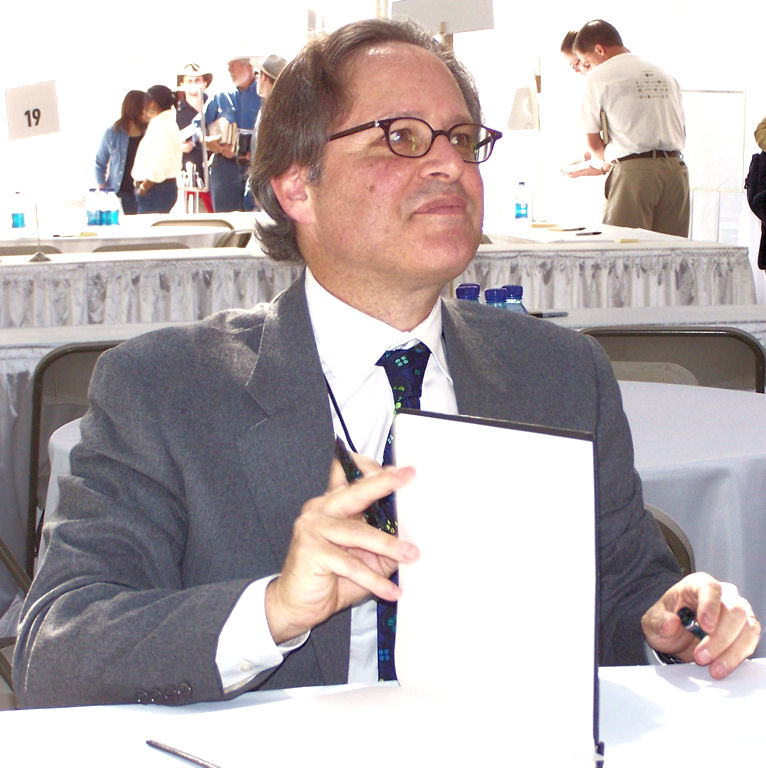
Nicholas Lemann
American writer and academic
10
APPEARANCES
10
PODCASTS
Sep 1, 2026


Rund AbdelfatahHOST
Middle class, the son of a small business owner, and as he looks over the student body from his wire-rimmed glasses, he doesn't like what he sees.

Nicholas LemannGUEST
He had this very strong feeling that the wrong kind of people were going to Harvard and that that had to change.
Nicholas LemannGUEST
America's elite universities, particularly the private ones, were completely dominated by preppies.
Nicholas LemannGUEST
White Anglo-Saxon Protestant tended to be from the big cities, especially of the East Coast, and they were sort of culturally dominant in these schools.
Nicholas LemannGUEST
He was very worried about this sort of preppy aristocracy that wasn't very competent running America.
Nicholas LemannGUEST
He thought the urgent situation of the Depression, um, demanded a, a sort of better class of leaders, and he thought this was a real sort of crisis.
9 MINS LATER
Rund AbdelfatahHOST
It's a huge feat, and it's at this point that the College Board sees the full potential of the test.
Nicholas LemannGUEST
The College Board dropped its own essay-based college boards and said, "Well, now we're just gonna use the SAT." And that's how the SAT goes from, you know, 10,000 or something administrations before the war, to over a million administrations in the '50s.

Nicholas LemannGUEST
So, you know, we're at year 5800-something or 5700-something on the Jewish calendar.
Nicholas LemannGUEST
The history of Jews believing it would even be possible or desirable to live as regular citizens in the outside world is very, very short in the larger context.
Nicholas LemannGUEST
So we should keep in mind, through most of Jewish history, for better, for worse, with a lot of better and a lot of worse, Jews lived as a completely separate tribe, self-governing, speaking a different language, wearing different clothing, following different rules, et cetera.
25 MINS LATER

Greg LeBlancHOST
But it seems like almost every criteria that's used to evaluate students is going to correlate with socioeconomic status.


Nicholas LemannGUEST
I, I think the plan was we'll just move to New York and join the sort of German Jewish world in New York, um, and all of the things you just said would happen.
Nicholas LemannGUEST
And they would be kind of, um, running the business in Louisiana from afar and maybe transitioning out.
35 MINS LATER


Nicholas LemannGUEST
In my family, there was a mythology that, you know, this was our story, a very weird Jewish story.
Nicholas LemannGUEST
Although, as one of my friends said, "Oh, Shimon Legree." [laughs] Um, so our family acquired plantations after emancipation because they had roots in this sugar planting town in rural Louisiana and saw a business opportunity.
Nicholas LemannGUEST
So the family preferred mythology was we only became involved in plantation owning after emancipation.
Nicholas LemannGUEST
Now-That itself is somewhat problematic because, you know, this is an overwhelming white supremacy atmosphere, but we weren't literally plantation slaveholders.
Nicholas LemannGUEST
So I went to the parish, you know, we have parishes instead of counties in Louisiana, the parish courthouse, and there's a guy there who knows everything and is the master of this very elaborate set of records going way, way back, many of which are handwritten, many of which are written in French.

David PuderHOST
Let's start with, uh, talk to me a little bit about the early research in this, and then kind of like take me through the history of how you guys got into this and, um, how it started.
Nicholas BerthelotGUEST
You, uh, I think you already introduced it, uh, quite well since, uh, the study you've been talking about where we document that trauma-specific reflective functioning was, uh, important for mother-child attachment was the very first study on, uh, that concept of, uh, trauma-specific mentalizing.
Nicholas BerthelotGUEST
So that's, uh, a work I've been doing, uh, at, uh, Université Laval in Quebec, Canada, with, uh, Professor Carolyn Cinqué in the course of my, uh, PhD dissertation, where we, uh, were working with a quite large sample of, uh, pregnant women who have experienced childhood maltreatment or childhood abuse or, or neglect.
Nicholas BerthelotGUEST
We were looking at their adaptation to, uh, motherhood, uh, were they doing, um, how the relationship with their infant eventually unfold.
Nicholas BerthelotGUEST
And we had access in the course of that research to a narrative about their experiences with their attachment figures, so generally their, their two parents.
David PuderHOST
You have this two twenty-- two thousand twenty-five article called "Characterizing the Heterogeneity of Disruptions in the Resolution of Trauma Among Women Exposed to Childhood Maltreatment." You wanna describe this study maybe, uh, in general, and then we can get into the specifics on the different types of profiles that came through in the trauma narratives.


Nick LemannGUEST
the big issue in the South is always race, Jews on average are more liberal on race.
Nick LemannGUEST
So this, these were things I didn't really know before I did research for the book.
Nick LemannGUEST
Um, great-grand- great-great-grandfather settled in New Orleans, I mean, in, in Donaldsonville.
23 MINS LATER


Nicholas LemannGUEST
So just to sketch it out, my grandfather, um, was lucky enough to have been a classmate at Harvard Law School, class of 1906, with Felix Frankfurter, the future Supreme Court justice, and they were intimate friends for half a century and more after that, living in different cities, so they have this huge correspondence going back and forth.
Nicholas LemannGUEST
So if listeners don't know, um, FDR was very frustrated when he was president that the conservative Supreme Court kept batting down his legislation and declaring it unconstitutional.
Nicholas LemannGUEST
So he said, "Look, the Constitution doesn't specify how many members the Court should have, so let's just expand it.
Nicholas LemannGUEST
I'll throw three or four more justices on there, and then w- I won't keep having my laws s- slap down." So this was the plan that he proposed.
14 MINS LATER

15:55

So I wonder how you connected, or did you connect at all, those experiences of antisemitism and race, or how you made sense of that as a kid.
Nicholas LemannGUEST
It's the same story where many things about my childhood just, people I know now on the Upper West Side just, it mystifies them.
Nicholas LemannGUEST
So I grew up in a world where my school was, uh, by charter for whites only.
Nicholas LemannGUEST
That didn't change until I had almost graduated from high school, and it only changed because the federal government said it would take away the tax deduction of nonprofit institutions if they were white only.
Nicholas LemannGUEST
Everybody I knew lived in an intensely racialized world that was a caste system.
12 MINS LATER


Alana SchreiberHOST
Can you tell us a little bit about the family background that you explored? When did your ancestors arrive in New Orleans and why, by the time that you came around, do you think that your family was so assimilated? And in what ways were they really part of this larger, more Catholic culture in New Orleans? And in what ways were they always just going to stand out?
Nicholas LemannGUEST
We were part of a very distinct subculture that has an interesting history and it no longer exists.
Nicholas LemannGUEST
So it's a little bit like describing a vanished civilization, but I'll just describe it.
Nicholas LemannGUEST
So I'm talking about using Temple Sinai as a sort of shorthand for the community.
Nicholas LemannGUEST
So in the early 19th century, there was a migration of Jews from basically either side of the Rhine River in Germany and Alsace to America.
Nicholas LemannGUEST
It wasn't like a mass migration, but it was different from the picture you have of the heyday of Ellis Island, including that people didn't go to Ellis Island.
Alana SchreiberHOST
You know, in what ways was your family, you know, by the time that you came around, blending with this larger, more Catholic community that exists in Louisiana? And in what ways were they kind of always standing out? And also, why? Why did they want to assimilate?


Walter IsaacsonGUEST
What are the lessons about desiring to assimilate that seem sometimes, uh, lead to great tragedies, especially in Germany in the 1930s? What do those lessons about the desire to assimilate, uh, have for today when there's been a rise of anti-Semitism both in Europe and the United States?
Nicholas LemannGUEST
So there was this long-running process in Germany of what's called German- Jewish emancipation, which was not completed until 1871.
Nicholas LemannGUEST
That was when Jews became completely, you know, full citizens with full rights of the German nation.
Nicholas LemannGUEST
And then by 10 years later, there was a very active anti-Semitic movement in Germany that sort of built and built and built until you got the Nazis.
Nicholas LemannGUEST
So in America today, you know, you have a half, roughly, of the Jews in the world, there aren't that many, living in Israel, and you have a tremendous amount of anti-Israel sentiment both on the left and the right.
Nicholas LemannGUEST
And so, you know, most American Jews were raised to think that, you know, Israel is our homeland, and even if we don't live there, it's part of our identity.
Nicholas LemannGUEST
But especially if you're younger, you really get challenged on that a-and kind of asked, uh, are you a Zionist? Um, and, and so people like my kids really struggle with that.
Walter IsaacsonGUEST
What in your research and in your book helped inform you, uh, for that work on anti-Semitism?