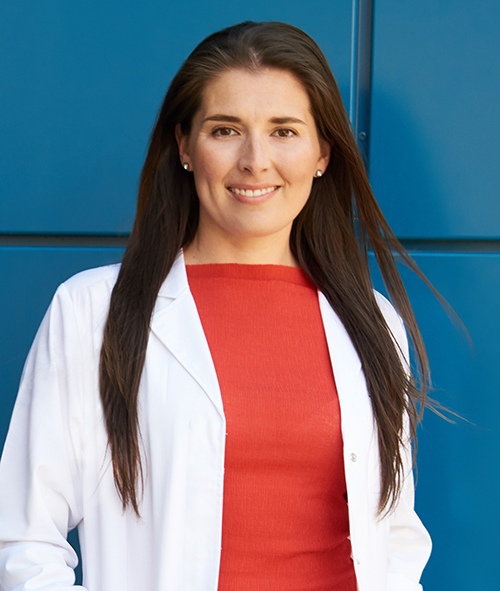
Nichola Conlon
11
APPEARANCES
2
PODCASTS
Oct 1, 2026
Jimmy CarrSOUNDBITE_SPEAKER
Dr. Nichola's Second Opinion.

Nichola ConlonGUEST
I'm Dr. Nichola Conlon, and today we are gonna talk about something that I think nearly all of us have experienced at some point, and that is brain fog.
Nichola ConlonGUEST
You know, that kind of feeling where you maybe walk into a room or you go to the supermarket and you completely forget why you're there.
Nichola ConlonGUEST
Or maybe you might feel like sometimes you lose your train of thought halfway through a sentence.
Nichola ConlonGUEST
Or that time when you kind of know the word that you wanna say, but your brain just refuses to give it to you.
7 MINS LATER

Katherine RyanHOST
Could this be linked to blood sugar, hormones, inflammation, or am I just in need of a holiday and a very large coffee?"


Louis TherouxGUEST
Um, Which you could characterize as immature and avoidant, but it turns out it's a great longevity strategy.
Nichola ConlonGUEST
So like, you know, the same person can be in a stressful or different people can be in a stressful situation, but then have completely different experiences.
Nichola ConlonGUEST
experiences of it and there's a really interesting thing where you might have heard of people talking about like excitement or being nervous and actually the physiological response by the body is the same but it's how the person interprets that situation so would you say that Like when you're in a stressful situation that I might think, oh my goodness, I'm panicking because I'm with someone dangerous.
Nichola ConlonGUEST
Maybe you almost perceive that as curiosity rather than and just sort of interpret that bodily signal differently.
speaker_0ADVERTISER
But,
Nichola ConlonGUEST
you know, there's nothing where you're taking it to extreme, but you somehow counteract in a really hectic lifestyle, a lifestyle that actually has got quite a lot of stress in it.
Katherine RyanHOST
This week, we're jetting off to discover blue zones and what we can learn from these magic kingdoms of eternal life.
Nichola ConlonGUEST
And yes, today we are talking about blue zones, those places in the world that are often held up as the gold standard for longevity, and you'll have probably heard of them, places like Sardinia in Italy, Okinawa in Japan.
Nichola ConlonGUEST
These are places where people are said to live longer, healthier lives, often well into their 90s and beyond.
Nichola ConlonGUEST
And when we look at them from the outside, they can feel like quite romantic ways of life, sort of long lunches in the sun and fresh food, a slower pace of life.
7 MINS LATER
OliviaAUDIENCE
How much does community connection really impact aging?
speaker_0ADVERTISER
[upbeat music]
1 HR 5 MINS LATER

Nichola ConlonGUEST
know-Uh, I remember wearing a rucksack and thinking, oh, that's good in case somebody comes and tries to stab me in the back.
Nichola ConlonGUEST
You know, it's that kind of, um, uh, rational that's irrational at the same time.
Nichola ConlonGUEST
And most normal people wouldn't be having those thoughts because they've never been through that.
speaker_4ADVERTISER
Science word of the week
Nichola ConlonGUEST
And you don't need to remember that, but just think of it as a master clock, and this clock responds directly to light entering your cells.
Nichola ConlonGUEST
So when morning light goes in and it hits your retina, it basically signals to your brain that the day has begun, and that signal is very important because it sets off a cascade in your body to prepare your body and your biology for the day.
Nichola ConlonGUEST
So melatonin, which is the sleep hormone, will be switched off, our body temperature will shift, our digestion will prepare, and our focus will sharpen.
Nichola ConlonGUEST
And the amazing thing is that this master clock then syncs clocks in almost every other cell of the body because every cell also has its own clock.
Nichola ConlonGUEST
Your liver cells have clocks, your gut has a clock, your skin has a clock, and even your immune cells all have clocks.
Nichola ConlonGUEST
Now, these cellular clocks then switch thousands of genes on and off across a 24-hour cycle, and this cycle is known as our circadian rhythm.
Katherine RyanHOST
Could you explain how light exposure and vitamin D influence aging and whether light therapy lamps genuinely help?"

Nichola ConlonGUEST
But it seems that you have definitely have this way and, you know, just hearing you talk about how in your head you process situations that are stressful-
12 MINS LATER
Nichola ConlonGUEST
That was Tim Campbell, revitalizing my life with knowledge of AI once I listen to his podcast, and mentoring so many future entrepreneurs and business people on The Apprentice.
Nichola ConlonGUEST
I hope that you enjoyed that episode of What's My Age Again? You too could have a biological age of 23 if you do jujitsu probably.
Nichola ConlonGUEST
So the first thing to say is that your biological age, unlike your chronological age, is absolutely reversible, and it can reverse very quickly.
Nichola ConlonGUEST
And just as it can reverse very quickly, things can make it go up just as well, like a stressful period of life.
Nichola ConlonGUEST
Sleep's something I, I'd definitely like to ask you about after going through many, many years of, you know, hosting the show early in the morning.
Nichola ConlonGUEST
Um, but I think the key thing here is that it is absolutely reversible, so it's definitely nothing to panic about.
Nichola ConlonGUEST
Today, we are talking about something incredibly simple and yet surprisingly powerful when it comes to how we feel, and that is water.
Nichola ConlonGUEST
It's often referred to as the elixir of life, and while that might sound a little dramatic, there's actually some truth in it, because drinking enough water is consistently one of the most basic and most overlooked ways that we can support our health, because we often focus on things like supplements and routines and complex interventions, but sometimes it's really the simplest habits that have the biggest impact.
Nichola ConlonGUEST
So let's take a closer look at what water is actually doing inside the body and why it matters so much for our health and also for healthy aging.
Nichola ConlonGUEST
So an important place to start is that our bodies are actually made up of 60% water, and water isn't just sitting there.
Nichola ConlonGUEST
In every cell, in every tissue, every organ relies on adequate hydration to function properly, and when we're well-hydrated, cells maintain their structure, nutrients are transported around our bodies efficiently, waste is removed, and biochemical reactions in our cells happen as they should.
7 MINS LATER
speaker_4ADVERTISER
This podcast is supported by GoFundMe.

Nichola ConlonGUEST
So I think that's something important because for people, a lot of people, when they see results like this, they think, "Oh, it must be something totally unachievable.
Nichola ConlonGUEST
They're, you know, not doing anything, um, fun." But you can do everything, have kids-
Nichola ConlonGUEST
We do know that there's, there's been a study that showed there was a couple of different points in life where aging seems to suddenly speed up or biological age can suddenly jump, and 42 is one of them.
Nichola ConlonGUEST
And you've, you know, you, you described excellently earlier about what it is.
Nichola ConlonGUEST
It's basically involved in your metabolism, so it's, it's gonna have an impact on all of your body, and what it really has an impact on is energy production, so how your body, how efficient your body is at actually turning the food that you eat into the energy that all of your body actually needs to work and all of your cells need to work.
Nichola ConlonGUEST
So when you have an underactive thyroid, it means that your cells, if you imagine them trying to produce energy, they're just not quite doing it as effectively.
Nichola ConlonGUEST
Yeah, so we know that childbirth is, it's traumatic, and especially C-sections.
Nichola ConlonGUEST
That's surgery, and we do know there's studies that have shown that actual surgery, the trauma that it causes to the body will increase biological age.


Nichola ConlonGUEST
So yeah, so when I started getting into the NAD space and, and looking at all this research and, and seeing that the ways people were boosting NAD just didn't really make sense based on what the data was showing us about why NAD declines, basically I started doing a lot of research on how we could develop a formulation that's actually fixing all of these root causes of decline.
Nichola ConlonGUEST
So something that is not only giving the body the raw material, but it's also switching back on that salvage pathway by activating NAMPT.
Nichola ConlonGUEST
It's also inhibiting CD38 to prevent wastage of NAD, because it's those two things combined that really cause its mega depletion.
Nichola ConlonGUEST
You know, you've got, as people are getting older, not only is their production going down, but also their usage, usage is going up because inflammation's increasing, damage is increasing, the body's using more.
Nichola ConlonGUEST
So you've got these two compounding factors that are making the whole situation worse.
10 MINS LATER