NF-κB
101
MENTIONS
66
EPISODES
48
PODCASTS
Search complete. 101 mentions across 66 episodes found for "NF-κB".
Nov 13, 2026

Daniel J. GuerraHOST
Okay.
Daniel J. GuerraHOST
Now, not only that, but the Epstein-Barr virus oncoprotein, And it does so by the activation of NF-kappa-B, phosphatidylinostol-3 kinase, mitogen-activated protein kinase, and the C-Jun-N-terminal kinase.
Daniel J. GuerraHOST
These are all very commonly expressed proteins in cancers.
Daniel J. GuerraHOST
And the Epstein-Barr virus oncoprotein was first analyzed in that particular setting.

Jim LaValleGUEST
But lipopolysaccharide gets into the bloodstream.
Jim LaValleGUEST
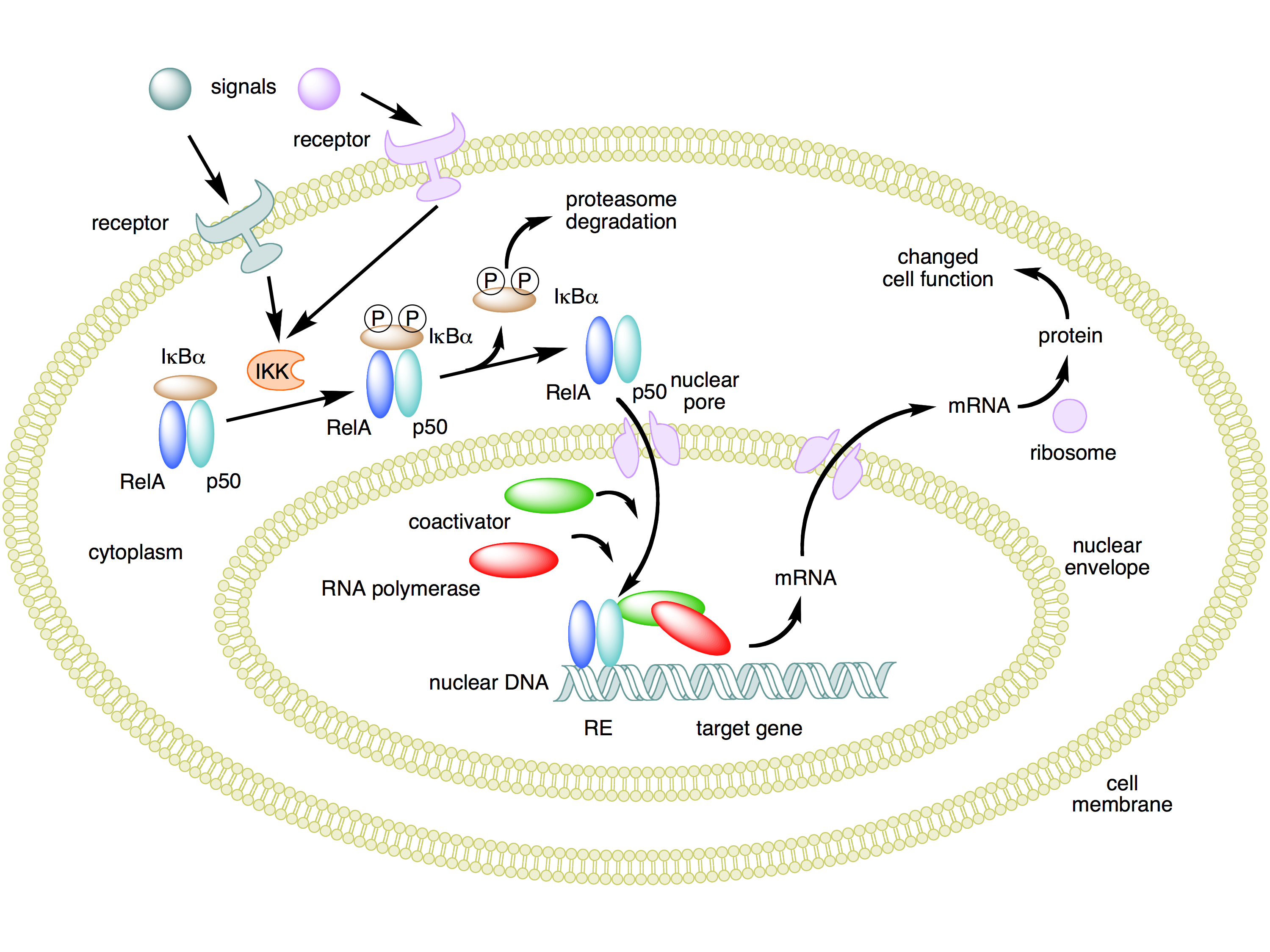
And if it's not all getting filtered out, it attaches to tissues and organs and triggers NF Kappa B, which is like your master switch for triggering excessive immune response.
Jim LaValleGUEST
So basically, you have things that don't belong in your bloodstream that get in your bloodstream, now your immune system reacts, and now you're at risk for organs and tissues getting damaged because the immune system now is attacking tissues and organs.
Jamie MartinHOST
Right.

Peter OsborneHOST
Some of those are listed here.
Peter OsborneHOST
Turmeric interferes with NF-kappa-B and COX-2 and other cytokines.
Peter OsborneHOST
It's an anti-inflammatory, so it helps with oxidative stress and pain signaling.
Peter OsborneHOST
And then the third on the list is tried and true glucosamine and chondroitin.
Peter OsborneHOST
you know, I have the top five because they're usually, we have to use them in some degree of combination.
Peter OsborneHOST
And it's because there's different mechanisms behind why inflammatory pain happens.
Peter OsborneHOST
And as I showed you earlier, NF-kappa-B is one of those mechanisms by which inflammation is caused.
Peter OsborneHOST
And so we want something, if we're trying to stop that inflammation, we want something that's gonna impact NF-kappa-B.
Peter OsborneHOST
So if you're in a lot of pain and you are looking for something that might help you quickly, this is what I recommend.
Peter OsborneHOST
This is an NF-kappa-B blocker.
Peter OsborneHOST
It also inhibits COX-2.
Peter OsborneHOST
This is the same enzyme.

Sachi LordHOST
Toll-like receptor 4 on the immune cell recognizes it.
Sachi LordHOST
So what does that switch on? NF-kappa-B, which turns on inflammatory genes.
Sachi LordHOST
Then cytokines like tumor necrosis factor and the interleukins carry this signal through the whole body.
Sachi LordHOST
So an infection in one spot ends up affecting vessels everywhere.

speaker_0HOST
How so?
speaker_1HOST
When you have a high-fat and high-sugar diet, it triggers systemic inflammation via the NF-kappa B pathway.
speaker_0HOST
Whoa, slow down.
speaker_0HOST
NF-kappa B.
speaker_1HOST
Sorry, let's unmask that one.
speaker_1HOST
Think of NF-kappa B as the master switch for inflammation in your body.
speaker_1HOST
When you eat a diet loaded with processed sugar, you are constantly flipping that switch to on-in.
speaker_0HOST
Okay, so the inflammation alarm is ringing constantly.

David RobertsGUEST
So sulforaphane doesn't have the adsorption problem.
David RobertsGUEST
NFKB is sort of the holy grail that the pharmaceutical companies who create anti-inflammatories are going after, that pathway to reduce it.
David RobertsGUEST
So sulforaphane and brocolite naturally does it.
David RobertsGUEST
And so we showed, actually we did a preclinical study of some of our coworkers, our family members, ourselves, and looked at like how quickly is it working? And so two capsules of broccoli, so 10 milligrams of sulforaphane reduced the pro-inflammatory pathway at 30% or I think 20% in 24 hours.

Richard HorowitzGUEST
One of them is called NF-kappa-B.
Richard HorowitzGUEST
So in the protocol, we give N-acetylcysteine, alpha lipoic acid, and glutathione to block NF-kappa B to help shut down that inflammatory response.
Richard HorowitzGUEST
And glutathione, at the same time, is pulling out those lipid-soluble biotoxins.
Richard HorowitzGUEST
They're all exposed to mold now.
Peter OsborneHOST
Some of those are listed here.
Peter OsborneHOST
Turmeric interferes with NF-kappa-B and COX-2 and other cytokines.
Peter OsborneHOST
It's an anti-inflammatory, so it helps with oxidative stress and pain signaling.
Peter OsborneHOST
And then the third on the list is tried and true glucosamine and chondroitin.
Peter OsborneHOST
You know, I have the top five because they're usually, we have to use them in some degree of combination.
Peter OsborneHOST
And it's because there's different mechanisms behind why inflammatory pain happens.
Peter OsborneHOST
And as I showed you earlier, NF-kappa-B is one of those mechanisms by which inflammation is caused.
Peter OsborneHOST
And so we want something, if we're trying to stop that inflammation, we want something that's gonna impact NF-kappa-B.

William SeedsHOST
When you see the plausibilities.
William SeedsHOST
I don't need a study to exist because I have the information of if I know what – what the molecular pathway is, well, then I use that, I use that information to help me in understanding where is the cell as far as what its demands are and what's gone wrong, and then look at these molecular pathway nodes like AMPK and mTOR, NRF2 antioxidant versus the inflammatory NRF2, or the inflammatory NFKB, looking at mitochondrial fission, fusion, mitophagy, looking at SIRT protein activation, looking at, you know, how we're in Where do these lie in how they influence those potential pathways where it can be beneficial in assisting to get the cell's ability to utilize that pathway to better itself, which it's always trying to do in adapting to a problem.
William SeedsHOST
And so when you have...
William SeedsHOST
When GLP-1s came along and the initial data that was before it was even, before GLP-1s even got into the human population and being utilized for diabetes, I was fascinated by the mechanistic effects from the mouse studies of how these GLP-1s work.
9 MINS LATER
William SeedsHOST
And you use that reasoning within the cell logic.
William SeedsHOST
I look at the cell logic as all these molecular pathways.
William SeedsHOST
It's what's failing – So when you're getting this signaling, is this signaling how, when the cell has to make a decision, is it because AMPK is under-sensing? Is it because mTOR is working too hard? Is it because the cell can't respond with enough transcription of NRF2, which is the antioxidant process? Or is it already in an, the redox is bad enough that it's in an inflammatory state of where it's constantly in a chronic, inflaming state with NFKB, you know, producing those cytokines, chemokines, and proteases? Or is it that the mitochondrial capacity is just not there anymore, or the mitochondrial, the fission, fusion, mitophagy, has that gone wrong? Is that control center off? Or is it redox? And then I could keep going down these different nodes, but if you...
William SeedsHOST
If you have a process like that, boy, it opens incredible doors for your ability to think through problems, come up with solutions, and be able to go back to the drawing board when you're wrong.
56 more episodes mention NF-κB.
Create an account to see the whole feed, search across every transcript, and follow the entities you care about.