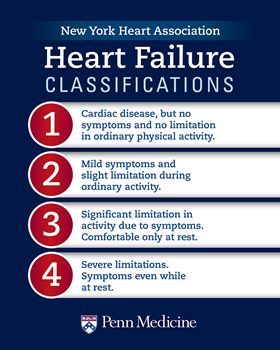
New York Heart Association Functional Classification
36
MENTIONS
22
EPISODES
18
PODCASTS
Search complete. 36 mentions across 22 episodes found for "New York Heart Association Functional Classification".
Oct 28, 2026

Shikha JhaGUEST
The MANITOU trial as a multicenter automatic defibrillator implantation trial demonstrated a 31% reduction in all-cause mortality, hazard ratio of 0.69, 95% confidence interval, 0.51 to 0.93 for prophylactic implantation of a cardiac defibrillator in patients with an LVEF of less than or equal to 30% who were at least 30 days after MI or three months after revascularization for MI and had an anticipated life expectancy longer than one year.
Shikha JhaGUEST
A mortality benefit for prophylactic ICD implantation has also been shown in patients with an LVEF less than or equal to 35% and New York Heart Association Class 2 or 3 heart failure symptoms.
Shikha JhaGUEST
as well as in patients with inducible ventricular tachycardia or ventricular fibrillation and an LVEF of less than or equal to 40%.
Shikha JhaGUEST
This patient has an LVEF of less than 30% with at least NYHA class 2 symptoms.
6 MINS LATER
Venu MenonGUEST
So the lesson to be taken there is in your patient, with acute myocardial infarction, remember to re-look at the ejection fraction remotely after revascularization has taken place in the most stable phase because you really want to recognize these high-risk patients who benefit from ICD therapy.
Venu MenonGUEST
Now, there were two other trials done which are somewhat similar.
Venu MenonGUEST
You know, like in the SCUD heft trial, patients with an ejection fraction less than 40%, New York Heart Association Class 2, Class 3 benefited from an ICD in that time period.
Venu MenonGUEST
as well as in MADIT1, if you had non-sustained VT more than three to ten days after an acute myocardial infarction, and those people went on to have an EP study, which we don't do now, and if they had sustained VT in that study, not suppressed by procainamide, there was a dramatic mortality benefit.

Michelle KittlesonGUEST
of the trials of defamitis, acrimonitis, vitreous run, all placebo controlled.
Michelle KittlesonGUEST
And what do you see if you look at NYHA class, for example? Huh, there's a lot more class one and class two as the trials move forward into the current era.
Michelle KittlesonGUEST
AT-TIRAC was the first, enrolled about 15 years ago.
Michelle KittlesonGUEST
ATTRIBUTE-CM enrolled about 13 years ago.
Michelle KittlesonGUEST
Helios B enrolled about seven years ago.
Michelle KittlesonGUEST
And as we get the clinical trial populations are getting healthier.
Michelle KittlesonGUEST
Lower NYHA class, meaning less symptoms.
Michelle KittlesonGUEST
Lower NT-proBNP.

Michelle KittlesonGUEST
of the trials of defamitis, acramidus, vitreous run, all placebo-controlled.
Michelle KittlesonGUEST
And what do you see if you look at NYHA class, for example? Huh, there's a lot more class one and class two as the trials move forward into the current era.
Michelle KittlesonGUEST
AT-TRAC was the first, enrolled about 15 years ago.
Michelle KittlesonGUEST
Attribute-CM enrolled about 13 years ago.
Michelle KittlesonGUEST
Helios-B enrolled about seven years ago.
Michelle KittlesonGUEST
And as we get the clinical trial populations are getting healthier, Lower NYHA class, meaning less symptoms.
Michelle KittlesonGUEST
Lower NT-proBNP.
Michelle KittlesonGUEST
Lower NAC stage was the stage of how severe your disease is.

Michelle KittlesonHOST
of the trials of defamitis, acrimonitis, vitreous run, all placebo controlled.
Michelle KittlesonHOST
And what do you see if you look at NYHA class, for example? Huh, there's a lot more class one and class two as the trials move forward into the current era.
Michelle KittlesonHOST
AT-TIRAC was the first, enrolled about 15 years ago.
Michelle KittlesonHOST
ATTRIBUTE-CM enrolled about 13 years ago.
Michelle KittlesonHOST
Helios B enrolled about seven years ago.
Michelle KittlesonHOST
And as we get the clinical trial populations are getting healthier.
Michelle KittlesonHOST
Lower NYHA class, meaning less symptoms.
Michelle KittlesonHOST
Lower NT-proBNP.

Michelle KittlesonHOST
of the trials of defamitis, acramidus, vitreous run, all placebo-controlled.
Michelle KittlesonHOST
And what do you see if you look at NYHA class, for example? Huh, there's a lot more class one and class two as the trials move forward into the current era.
Michelle KittlesonHOST
AT-TRAC was the first, enrolled about 15 years ago.
Michelle KittlesonHOST
Attribute-CM enrolled about 13 years ago.
Michelle KittlesonHOST
Helios-B enrolled about seven years ago.
Michelle KittlesonHOST
And as we get the clinical trial populations are getting healthier, Lower NYHA class, meaning less symptoms.
Michelle KittlesonHOST
Lower NT-proBNP.
Michelle KittlesonHOST
Lower NAC stage was the stage of how severe your disease is.

Heather IrvineNARRATOR
This is stated in principles and practices of phytotherapy, as well as other sources, and basically tells us that the herb and the drugs may have an additive effect, which is to say they're achieving close to the same outcome.
Heather IrvineNARRATOR
A little sampling from the research, three human studies involving patients with class 2 chronic heart failure according to the New York Heart Association's criteria.
Heather IrvineNARRATOR
In the first, patients taking Hawthorne in the study had significantly less fatigue, stress, and heart palpitations, whether they were using Hawthorne leaf and flower extract only or the extract in addition to cardiac glycosides.
Heather IrvineNARRATOR
Of course, compared to the analogous control.

John MandrolaHOST
But even in obstructive HCM, clinical response to cardiac myosin inhibitors is very heterogeneous.
John MandrolaHOST
In our prospective Germany-wide multicenter TORCH Plus registry, approximately two-thirds have improved at least one New York Heart Association functional class.
John MandrolaHOST
However, that leaves...
John MandrolaHOST
That leaves a lot of patients in our cohort without improvement of New York Heart Association functional class at 12 months.
John MandrolaHOST
He cited this data from a poster at ESC that's not yet published.
John MandrolaHOST
He asked another question that was bothering him.

Shikha JhaGUEST
The MANITOU Trial, as in Multicenter Automatic Defibrillator Implantation Trial, demonstrated a thirty-one percent reduction in all-cause mortality, hazard ratio of point six nine, ninety-five percent confidence interval, point five one to point nine three, for prophylactic implantation of a cardiac defibrillator in patients with an LVEF of less than or equal to thirty percent who were at least thirty days after MI or three months after revascularization for MI and had an anticipated life expectancy longer than one year.
Shikha JhaGUEST
A mortality benefit for prophylactic ICD implantation has also been shown in patients with an LVEF less than or equal to thirty-five percent and New York Heart Association Class II or III heart failure symptoms, as well as in patients with inducible ventricular tachycardia or ventricular fibrillation and an LVEF of less than or equal to forty percent.
Shikha JhaGUEST
This patient has an LVEF of less than thirty percent with at least NYHA Class II symptoms.
Shikha JhaGUEST
Now, ninety days post-revascularization for MI, which means he is a candidate for ICD placement for primary prevention of sudden cardiac death.
6 MINS LATER
Venu MenonGUEST
So the lesson to be taken there is in your patient with acute myocardial infarction, remember to re-look at the ejection fraction remotely after revascularization has taken place in the more stable phase because you really want to recognize these high-risk patients who benefit from ICD therapy.
Venu MenonGUEST
Now, there were two other trials done which are somewhat similar.
Venu MenonGUEST
You know, like in the SCOUT-HF trial, patients with an ejection fraction less than forty percent, New York Heart Association Class II, Class III benefited from an ICD in that time period, as well as in MEDIT-1, if you had non-sustained VT more than three to da-- ten days after an acute myocardial infarction, and those people went on to have an EP study, which we don't do now, and if they had sustained VT in that study not suppressed by procainamide, there was a dramatic mortality benefit.
Venu MenonGUEST
So all of these are groups in which there is definite benefit for an ICD.

Julian GilmoreGUEST
And he was actually referred to us by the cardiologist with a suspicion of cardiac amyloidosis.
Julian GilmoreGUEST
And When we saw him at the National Amyloidosis Center in the UK, we found him to have NYHA class II heart failure.
Julian GilmoreGUEST
He had elevated biomarkers, both his NT-proBNP and his high sensitivity troponin T.
Julian GilmoreGUEST
His GFR was relatively preserved.
Antoine BonduHOST
I think it's a very nice case because it's typically the case we can see in our daily practice.
Antoine BonduHOST
Every cardiologist should see such case in his practice.
Antoine BonduHOST
It's a heart failure patient, NYHA class 2, with anti-braving P around 1,000.
Antoine BonduHOST
The troponin is slightly elevated, so I'm happy that it didn't jump on a coronary angiogram like many allergists would maybe have done.

Martin MaronGUEST
And we did that, this response analysis across, you know, multiple, these multiple outcome measures, which included clinical measures of how patients feel.
Martin MaronGUEST
So improvement in symptom burden, and we define that as an improvement in NYHA class, as well as an improved categorical improvement in PGIC, as well as an improvement in functional capacity, making it with peak VO2 by cardiopulmonary exercise testing, as well as indices of of diastolic function, which included cardiac biomarkers of probe BMP, left atrial volume index, and septal E-prime tissue Doppler indices by echocardiography.
Martin MaronGUEST
So those were our five outcome measures that we defined clinically important thresholds in each of those outcome measures to define a responder analysis to Afikampton treatment in this study.
Mercedes CarnethonHOST
Thank you so much, Marty.
12 more episodes mention New York Heart Association Functional Classification.
Create an account to see the whole feed, search across every transcript, and follow the entities you care about.