New Spain
TerritoryWikipedia
218
MENTIONS
35
EPISODES
34
PODCASTS
Search complete. 218 mentions across 35 episodes found for "New Spain".
Sep 19, 2026

Sue AndersonNARRATOR
First part, chapter one, treats of the way we first came to know about the seven cities, and of how Nuno de Guzman made an expedition to discover them.
Sue AndersonNARRATOR
In the year 1530, Nuno de Guzman, who was president of New Spain, had in his possession an Indian, a native of the valley or valleys of Oshiti Par, who was called Tejo by the Spaniards.
Sue AndersonNARRATOR
This Indian said he was the son of a trader who was dead, but that when he was a little boy, his father had gone into the backcountry with fine feathers to trade for ornaments, and that when he came back, he brought a large amount of gold and silver, of which there is a good deal in the country.
Sue AndersonNARRATOR
He went with him once or twice and saw some very large villages, which he compared to Mexico and its environs.
Sue AndersonNARRATOR
It took 40 days to go there from his country through a wilderness in which nothing grew, except some very small plants about a span high.
Sue AndersonNARRATOR
The way they went was up through the country between the two seas, following the northern direction.
Sue AndersonNARRATOR
Acting on this information, Nuno de Guzman got together nearly 400 Spaniards and 20,000 friendly Indians of New Spain, and as he happened to be in Mexico, he crossed Tarasca, which is in the province of Michoacan, so as to get into the region which the Indians said was to be crossed toward the North Sea, in this way getting to the country which they were looking for, which was already named the Seven Cities.
Sue AndersonNARRATOR
He thought, from the 40 days of which the Tejo had spoken, that it would be found to be about 200 leagues, and that they would easily be able to cross the country.

Mark VinetteHOST
Join me as we explore the fascinating period of colonial Mexico at the turn of the 17th century.
Mark VinetteHOST
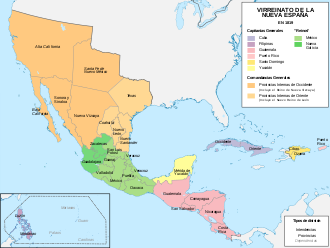
The capture of Tenochtitlan in 1521 by Spanish conquistador Hernan Cortes marked the beginning of a 300-year colonial period, during which Mexico was known as New Spain, ruled by a viceroy in the name of the Spanish monarch.
Mark VinetteHOST
Spanish conquerors did not bring all areas of the Aztec Empire under its control for it took decades of sporadic warfare to subdue the rest of Mesoamerica, particularly the Maya regions of southern New Spain.
Mark VinetteHOST
Cortes wanted to rebuild the Aztec island site of Tenochtitlan into his colonial capital.
Mark VinetteHOST
Most of the other conquistadors wanted the new city to be closer to the mountains, pastures, and groves they would need for supplies.
Mark VinetteHOST
Established as a colonial city of Spaniards on the remnants of the seat of Aztec power, it maintained a significant indigenous population.
Mark VinetteHOST
Colonial Mexico had key elements to attract Spanish immigrants, including dense and politically complex indigenous populations, especially in the central part, that could be compelled to work, and huge mineral wealth, especially major silver deposits in the northern regions.
Mark VinetteHOST
New Spain was a major seat of Spanish power and the source of its wealth.

Cy KellettHOST
Did the Virgin Mary invent chili? I first heard of this on an episode of Tasting History with Max Miller.
Cy KellettHOST
He talked about Sister Mary of Agreda, who was reported to be bilocating from her convent in Spain to the Jumanos Indians in New Spain.
Cy KellettHOST
All I've been able to learn about her is from Wikipedia, where it says she is a venerable of the church from the 1600s.
Cy KellettHOST
Apparently, the Jumanos Indians reached out to friars in the area that they had been visited by a lady in blue to seek help.

Arnie HortonNARRATOR
CHAPTER XII OF THE KINGDOM OF JUKATAN
Arnie HortonNARRATOR
an impious wretch by his fabulous stories and relations to the king of Spain was made prefect of the kingdom of Yucatan in the year of our Lord 1526 and the other tyrants to this very day have taken the same indirect measures to obtain offices and screw or wheedle themselves into public charges or employments for this pretext and authority they had the greater opportunity to commit theft and rapine this kingdom was very well peopled and both for temperature of air and the plenty of food and fruits in which respect it is more fertile than mexico but chiefly for honey and wax it exceeds all the indian countries that hath hitherto been discovered it is three hundred miles in compass the inhabitants of this place do much excel all other indians either in polity or prudence or in leading a regular life and morality truly deserving to be instructed in the knowledge of the true God.
Arnie HortonNARRATOR
Here the Spaniards might have erected many fair cities, and lived as it were in a garden of delights, if they had not, through covetousness, stupidity, and the weight of enormous crimes, rendered themselves unworthy of so great a benefit.
Arnie HortonNARRATOR
This tyrant, with three hundred men, began to make war with these innocent peoples.
Arnie HortonNARRATOR
The Spaniards used to trace the steps of the Indians both men and women with cursed curs furious dogs.
Arnie HortonNARRATOR
An Indian woman that was sick happened to be in the way in sight who perceiving that she was not able to avoid being torn in pieces by the dogs takes a cord that she had and hangs herself upon a beam tying her child which she unfortunately had with her to her foot and no sooner had she done yet the dogs were at her tearing the child but a priest coming that way baptized it before quite dead when the spaniards left this kingdom one of them invited the son of some indian governor of a city or province to go along with him who told him he would not leave or desert his native country whereupon he threatened to cut off his ears if he refused to follow him but the youth persisting resolutely that he would continue in the place of his nativity he drawing his sword cut off each ear notwithstanding which he persevered in his first opinion and then as if he had only pinched him smilingly cut off his nose and lips this rogue did lasciviously boast before a priest and as if he had merited the greatest applause commended himself to the very heaven saying He had made it his chief trade or business to impregnate Indian women, that when they were sold afterward he might gain the more money by them.
Arnie HortonNARRATOR
In this kingdom, or, I'm certain, in some province of New Spain, a Spaniard hunting and intent on his game fancied that his beagles wanted food, and to supply their hunger snatched a young little babe from the mother's breast cutting off his arms and legs cast a part of them to every dog which they having devoured he threw the remainder of the body to them thus it is plainly manifest how they value these poor creatures created after the image of god to cast them to their cannibal curs but that which follows is if possible a sin of a deeper dye I pretermit their unparalleled impieties, etc., and only close all with this one story that follows.
Arnie HortonNARRATOR
Those haughty, obdurate, and execrable tyrants who departed from this country to fish for riches in Perusia, and four monks of the order of St. Francis with Father James, who travelled thither also to keep the country in peace and attract or mildly persuade by their preaching the remnant of inhabitants that had outlived a septennial tyranny to embrace the knowledge of christ i conceive these are the persons who in the year 1534 traveling by mexico were solicited by several messengers from the indians to come into their country and informed them in the knowledge of one god the true god and lord of the whole world to this end they appointed assemblies and councils to examine and understand what men they were who called themselves fathers and friars what they intended and what difference there was between them and the spaniards by whom they had been so molested and tormented but they received them at length upon this condition that they should be admitted alone without any spaniards which the fathers promised for they had permission nay an express mandate from the president of new spain to make that promise and that the spaniards should not do them the least detriment or injury then they began to preach the gospel of christ and to explicate and declare the pious intention of the king of castile of all which they had noticed by the spaniards for seven years together that they had no king nor other but him who oppressed them with so much tyranny the priest continued there for forty days but behold they bring forth all their idols to be committed to the flames and then their children which they tendered as the apple of the eye that they might be instructed they also erected temples and houses for them and they were desired to come to other provinces and preach the gospel and introduce them into the knowledge of god and the great as they styled him king of castile and the priests persuasions wrought so effectually on them that they condescended to that which was never done in india before for whatsoever those tyrants who wasted and consumed these large kingdoms and provinces did misrepresent and falsify was only done to bring an odium and disgrace upon the indians for twelve or fifteen princes of spacious and well-peopled regions assembled every one distinct and separate from the rest with his own subjects and by their unanimous consent upon counsel and advice of their own accord, submitted themselves to the government of the Castilian kings, and accepted of them as their prince and protector, obliging themselves to obey and serve them as subjects to their lawful liege lord.

TJ TroutHOST
Okay.
Rob MartinezGUEST
You know, the Spanish would name parts of Mexico, uh, New Spain back then-
TJ TroutHOST
Sure
Rob MartinezGUEST
...
TJ TroutHOST
Well, what-
Rob MartinezGUEST
Nueva Galicia, Nueva Vizcaya
TJ TroutHOST
... was the whole, was the whole thing New Spain for a while? I mean, stretching all the way-
Rob MartinezGUEST
Well-

Matty RyanHOST
right away there's like cool names of the cities of gold and shit you know uh called for a rebellion against the spanish empire he was a priest by the way um and it was given status as national holiday Ratified by conventions, blah, blah.
Matty RyanHOST
Okay, so in the 1810s, what would become Mexico was still New Spain, part of the Spanish crown.
Matty RyanHOST
And then after Napoleon overthrew the Spanish branch of the Bourbon monarchy in 1808, Spain's American possessions...
Matty RyanHOST
Went to France.
Chris HigginsHOST
Joseph Bonaparte.
Chris HigginsHOST
that's so funny okay okay so then
Matty RyanHOST
so that was yeah that's his little side okay then in new spain uh which is what was mexico was still called the creole leadership attempted to set a course for autonomy and supported their legitimate heir to the throne fernandez vii uh who also sucked so he ran he reigned for a one year in 1808 and then from 1813 to his death in 1833 Before 1813, he was known as El Desadro, the Desired, and after as El Rey Felon, the Criminal King.
Chris HigginsHOST
Oh, shit.

Simon WhistlerHOST
The Spanish missionaries very much desired to be self-sufficient.
Simon WhistlerHOST
Although they didn't quite achieve this, with some financial support coming from the Pious Fund of Californias, established in 1697 by Spain, later this would become the subject of litigation between the US and Mexico.
Simon WhistlerHOST
They did bring supplies, foodstuffs, seeds, and livestock into California that were never before seen in the Americas.
Simon WhistlerHOST
For example, grapes, apples, and figs were grown for the first time in this part of the world at this time.
Simon WhistlerHOST
In Monterey, the cheese they made was soft, creamy, and light, and it became a part of the Spanish missionaries' regular diet.
Simon WhistlerHOST
They called it queso blanco pais, or the country peasant white cheese.
Simon WhistlerHOST
Hence, the Monterey part of the name Monterey Jack, with the town itself named after the Viceroy of New Spain, the fifth Count of Monterey.
Simon WhistlerHOST
The latter, Monterey, ultimately derives from the Galician monterrei, essentially meaning mountain king.

KathleenHOST
Um, okay, one of the stories that I found was about King Philip II of Spain.
KathleenHOST
In 1577, wanted to know what was going on in New Spain, so he sent people out on a royal decree with, like, 50 detailed questions for locals, and I'm just picturing, like, they probably didn't speak the same language.
KathleenHOST
So question 10 asked each pueblo to draw a map, and only a minority of the respondents, like, sent back maps, but apparently they ranged from, like, very elaborate to just crude and unlabeled, and they were just like... [laughs] Some people used, like, dye from bugs and stuff like that.
KathleenHOST
Like, just thinking about in the 1500s, showing up, speaking another language, like, "I have 50 questions for you.

William TomkoNARRATOR
He realized, however, the necessity of permanently connecting these settlements, many hundreds miles apart, and of facilitating intercommunication through the establishment of intermediate posts.
William TomkoNARRATOR
Iberville contemplated an exploration of the Red River, thinking it might afford access to the gold and silver mines of New Spain, but abandoned the project owing to the representations of the Indians that the river was unnavigable from the interlaced driftwood, later known as rafts.
William TomkoNARRATOR
He turned his attention to the main river, the Mississippi, and visited the Natchez, a brave and powerful tribe of Indians, whose country delighted his heart as resembling France, and where he planned a city to be called Rosalie, now Natchez, which, however, it was not his fate to ever see take definite form, as it was only built long after his death, in 1714, by his brother Bienville.
William TomkoNARRATOR
It was at this time that Le Seur went up the Mississippi by Iberville, discovered the St. Peter River in Minnesota, and, attempting mining operations, later brought back a worthless cargo of green earth.
2 HRS 36 MINS LATER
Dave PortnoyADVERTISER
Terms at dkn.co slash offer.
William TomkoNARRATOR
End of Chapter 5, Part 4 Recording by William Tomko Chapter 6, Part 1 of Explorers and Travelers by Adolphus W. Greeley This LibriVox recording is in the public domain Recording by William Tomko Chapter 6, Zebulon Montgomery Pike Explorer of the Sources of the Mississippi and Arkansas Rivers Part 1 The transcontinental expedition of Captain Lewis and Lieutenant Clark was only a part of the comprehensive plan of Jefferson, which looked to the acquiring of definite and precise information concerning not only the extreme Northwest Territory, but also of the entire trans-Mississippi regions, whereupon might be based intelligent action so as to ensure to the citizens of the United States the greatest benefits of internal trade and commerce.
William TomkoNARRATOR
It was surmised that the adventurous and enterprising traders of the Hudson Bay or Northwest Company had encroached on the valuable hunting grounds near the sources of the Missouri and Mississippi Rivers, while to the southwest the secretive and jealous policy of Spain had so well guarded its limited geographical knowledge that the United States was in such utter ignorance of its newly acquired territory that it was impossible to even outline a definite proposition for the determination of exact boundary lines between Louisiana and the province of New Spain.
William TomkoNARRATOR
The obtaining of information for the solution of these problems was entrusted in the order named to a young and promising officer of the regular army.

Barry KesslerHOST
Uh, it was the act that marked the beginning of the Mexican War of Independence, uh, in the early morning of September 16th, uh, 1810.
Barry KesslerHOST
According to tradition, it consisted of the call that Father Miguel Hidalgo y Costilla, accompanied by Ignacio Allende and Juan Aldama, uh, made to his parishioners so that they would rise up in arms against New Spain in the early morning of September the 16th, 1810, for which he rang one of the bells of the parish of the town of Dolores, today named after him, Dolores Hidalgo, in the state of Guanajuato.
Barry KesslerHOST
And, uh, in Puerto Vallarta, the Grito is celebrated on the night of the 15th, uh, with civic cer- civic ceremonies, I'd like to say.
Barry KesslerHOST
Uh, they've got live music, and, uh, they reenact the, uh, the Cry of Miguel Hidalgo, this historic call for independence in 1810, and it will be given by the mayor of the city from the balcony on the second floor of City Hall.
Barry KesslerHOST
Uh, the next day is September 16th, of course.
Barry KesslerHOST
That marks Independence Day, Día de la Independencia.
Barry KesslerHOST
Uh, it's the official national holiday commemorating the start of the War of Independence from New Spain, which lasted from September 16th, uh, 1810 until August 24th, 1821, when the Treaty of Córdoba was signed by Spanish Viceroy Juan O'Donojú.
Barry KesslerHOST
Really? Juan O'Donojú.
25 more episodes mention New Spain.
Create an account to see the whole feed, search across every transcript, and follow the entities you care about.