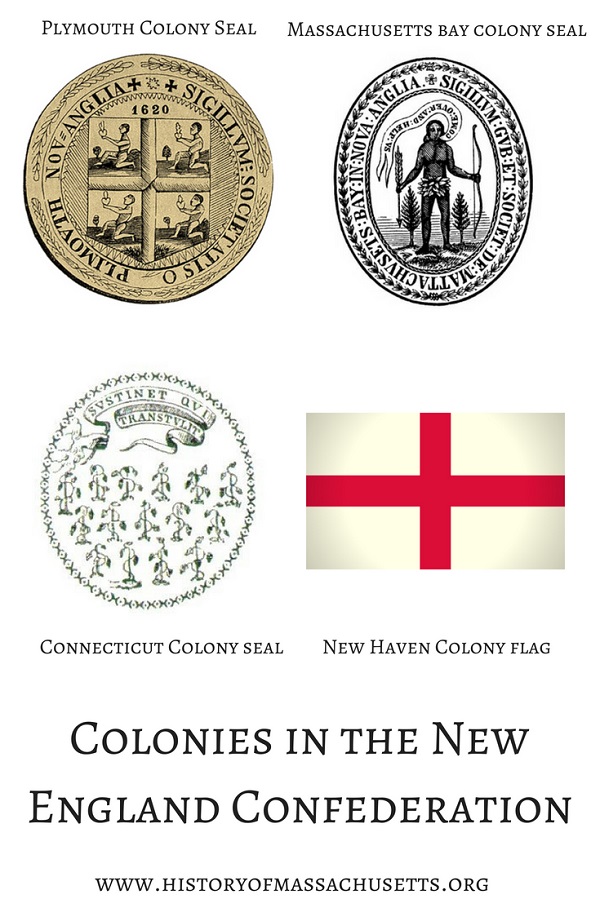
New England Confederation
12
MENTIONS
6
EPISODES
6
PODCASTS
Search complete. 12 mentions across 6 episodes found for "New England Confederation".
Oct 8, 2026
History of the United States, Vol. I-Charles Austin Beard, Mary Ritter Beard
K
133:11Kara ShallenbergNARRATOR
These forces, all cumulative, drove the colonists, so tenaciously provincial in their habits, in the direction of nationalism.
K
133:21Kara ShallenbergNARRATOR
The New England Confederation It was in their efforts to deal with the problems presented by the Indian and French menace that the Americans took the first steps toward union.
K
133:33Kara ShallenbergNARRATOR
Though there were many common ties among the settlers of New England, it required a deadly fear of the Indians to produce, in 1643, the New England Confederation, composed of Massachusetts, Plymouth, Connecticut, and New Haven.
K
133:49Kara ShallenbergNARRATOR
The colonies so united were bound together in a firm and perpetual league of friendship and amity for offense and defense, mutual service and succor, upon all just occasions.
K
134:04Kara ShallenbergNARRATOR
They made provision for distributing the burdens of wars among the members and provided for a congress of commissioners from each colony to determine upon common policies.
33 MINS LATER
M
167:27M.L. CohenNARRATOR
Four, British Colonial Policy.
M
167:30M.L. CohenNARRATOR
Callender, Economic History of the United States, pages one oh two to one oh eight.
M
167:35M.L. CohenNARRATOR
Five, the New England Confederation.
P
Unknown podcast
Chronicles of America Volume 06 - The Fathers of New England-Charles Morris
Sep 30 · 3 Mentions
S
150:13speaker_2UNKNOWN
crowncoins.com that's c-r-o-w-n coins.com no purchase needed code valid for new users only void were prohibited by law 18 plus terms and conditions apply crown
S
150:24speaker_6UNKNOWN
the new england confederation performed the most important part of its work during the first twenty years of its existence for although it lasted nominally till sixteen eighty four it ceased to be effective after sixteen sixty four and was of little weight in new england history after the restoration of the stuarts owing to the fact that it had been formed without any authority from england the confederation was never recognized by the government there and with the return of the monarchy it survived chiefly as an occasional committee meeting for debate and advice chapter five chapter six of the fathers of new england by charles andrews winning the charters The accession of Charles II to the throne of England provoked a crisis in the affairs of the Puritans and gave rise to many problems that the New Englanders had not anticipated and did not know how to solve.
S
151:41speaker_6UNKNOWN
With a steward again in control, there were many questions that might be easily asked but less easily answered.
S
151:51speaker_6UNKNOWN
except for massachusetts and plymouth not a settlement had a legal title to its soil and except for massachusetts not one had ever received a sufficient warrant for the government which it had set up naturally therefore there was disquietude in rhode island connecticut and new haven and even massachusetts buttressed as she was feared lest the king might object to many of the things she had done entrenched behind her charter and aware of her superiority in wealth territory and population she had taken the leadership in new england and had used her opportunity to intimidate her neighbors except for new haven not a colony or group of settlements but had felt the weight of her claims plymouth and connecticut had protested against her demands the narragansett towns with difficulty had evaded her attempt to absorb them and the settlements at piscataqua and on the main coast had finally yielded to her jurisdiction as long as cromwell lived and the government of england was under puritan direction massachusetts had little to fear from protests against her but with the cromwellian regime at an end she could not expect from the restored monarchy a favoring or friendly attitude the change in england was not merely one of government it was one of policy as well even during the cromwellian period englishmen awoke to a greater appreciation of the importance of colonies as assets of the mother country and began to realize in a fashion unknown to the earlier period the necessity of extending and strengthening england's possessions in america england was engaged in a desperate commercial war with holland whose vessels had obtained a monopoly of the carrying trade of the world and to win in that conflict it was imperative that her statesmen should husband every resource that the kingdom possessed the religious agitations of previous years were passing away and the new england colonies were not likely to be troubled on account of their puritanism the great question in england was not religious conformity but national strength based on commercial prosperity thus england was fashioning a new system and defining a new policy by means of navigation acts she barred the dutch from the carrying trade and confined colonial commerce in large part to the mother country she established councils and committees of trade and plantations and by the seizure of new netherland in sixteen sixty four and the grants of the carolinas and the bahamas in sixteen sixty three and sixteen seventy she completed the chain of her possessions in america from new england to barbadoes a far-flung colonial world was gradually taking shape demanding of the king and his advisers an interest in america of a kind hitherto unknown it is not surprising that so vast a problem involving the trade and defense of nearly twenty colonies should have made the internal affairs of new england seem of less consequence to the royal authorities than had been the case in the days of charles i and archbishop when the obtaining of the massachusetts bay charter had roused such intensity of feeling in england what was interesting englishmen was no longer the matter of religious obedience in the colonies but rather that of their political and commercial dependence on the mother country as the future of new england was certain to be debated at whitehall after sixteen sixty the colonies took pains to have representatives on the ground to meet criticisms and complaints to ward off attacks and to beg for favors rhode island sent a commission to dr john clark one of her founders and leading men at that time in london instructing him to ask for royal protection self-government liberty of conscience and a charter massachusetts sent simon bradstreet and the rev john norton with a petition that reads like a sermon praying the king not to listen to other men's words but to grant the colonists an opportunity to answer for themselves they being true men fearers of god and the king not given to change orthodox and peaceable in israel connecticut with more worldly wisdom sent john winthrop the governor a man courtly and tactful with a petition shrewdly worded and to the point plymouth entrusted her mission also to winthrop hoping for a confirmation of her political and religious liberties all protested their loyalty to the crown while massachusetts her petition signed by the stiff-necked endicott prostrated herself at the royal feet craving pardon for her boldness and subscribing herself your majesty's most humble subjects and suppliants did endicott remember we wonder a certain incident connected with the royal ensign at salem against the lesser colonies no complaints were presented except in the case of new haven which was charged by the inhabitants of shelter island with usurpation of their goods and territory but for massachusetts the restoration of the stuarts opened a veritable pandora's box of troubles in divers complaints petitions and other informations concerning new england she was accused of overbearance and oppression of seizing the territory of new hampshire and maine of denying the rights of englishmen to anglicans and non-freemen of the colony and of persecuting the quakers and others of religious views different from her own she was declared to be seeking independence of crown and parliament by forbidding appeals to england refusing to enforce the oath of allegiance to the king and in general exceeding the powers laid down in her charter the new plantations council commissioned by the king in december sixteen sixty sent a peremptory letter the following april ordering the colony to proclaim the king in the most solemn manner and to hold herself in readiness to answer complaints by appointing persons well instructed to represent her before itself in england at the same time it begged the king to go slowly giving massachusetts an opportunity to be heard and to write a letter with all possible tenderness pointing out that submission to the royal authority was absolutely essential this the king did confirming the charter of massachusetts renewing the colony's rights and privileges and in conciliatory fashion ascribing all derelictions of duty to the iniquity of the times rather than to any evil intention of the heart then declaring that the chief aim of the charter was liberty of conscience the king struck at the very heart of the massachusetts system by commanding the magistrates to grant full liberty of worship to members of the anglican church and the right to vote to all who were orthodox in religion and possessed of competent estates though this order was evaded by various definitions of orthodox and competent estates and was not to be fully executed for many years yet its meaning was clear no single religious body would ever again be allowed by the royal authorities in england to monopolize the government or control the political destinies of a british colony in america or elsewhere the policy thus adopted toward massachusetts became even more conciliatory when applied to the other colonies it is not improbable that the king's advisors saw in the strengthening of connecticut and rhode island an opportunity to check the power of massachusetts and to reduce her importance in new england however that may be they lent themselves to the efforts that winthrop and clark were making to obtain charters for their respective colonies these agents were able discreet and broad-minded men clark a resident in england for a number of years had acquired no little personal influence and winthrop as an old-time friend of the english lords and gentlemen whose governor he had been at saybrook could count on the help of the one surviving member of that group lord say and seal who was a privy councillor a member of the house of lords and of the plantations council and as we are told lord privy seal a position that would be of direct service in expediting the issue of a charter winthrop had personal qualities also that made for success he was a university man had made the grand tour of the continent and was familiar with official traditions and the ways of the court soon after his arrival in england he became a member of the royal society and served on several of its committees and thus had an opportunity of making friends and of showing his interest in other things than theology if cotton mather was rightly informed winthrop was accorded a personal interview with charles the second and presented the king with a ring which charles the first as prince of wales had given his grandfather adam winthrop winthrop made good use of a good cause connecticut had behaved herself well and had incurred no ill-will she had had no dealings with the cromwellian government had dutifully proclaimed the king had been discreet in her attitude toward wally and goth the regicides who had fled to new england and had aroused no resentment against herself among her neighbors with proceedings once begun the securing of the charter went rapidly forward winthrop at first petitioned for a confirmation of the old warwick patent which had been purchased of the english lords and gentlemen in sixteen forty four but later encouraged it may be by friends in england he asked for a charter the request was granted the document gave to connecticut the same boundaries as those of the old patent and conferred powers of government identical with those of the fundamental orders of sixteen thirty nine that the main features of the charter were drawn up in the colony before winthrop sailed is probable though it is not impossible that they were drafted in london by winthrop himself all that the english officials did was to give the text its proper legal form after the receipt of the charter and its proclamation in the colony and after a slight readjustment of the government to meet the few changes required the general court of connecticut proceeded to enforce the full territorial rights of the colony the men of connecticut had made up their minds now that the charter had come to execute its terms to the uttermost and to extend the authority of the colony to the farthest bounds so that next to the government of the bay connecticut might be the greatest in new england the court took under its protection the towns of stamford and greenwich and on the ground that the whole territory westward was within its jurisdiction warned the dutch governor not to meddle it accepted the petition of southold on long island and of certain residents of guilford both of the new haven federation for annexation and sending a force to long island to demand the surrender of the western towns there it seized captain john scott who was planning to establish a separate government over them and brought him to hartford for trial it informed the towns of mystic and pawkatuck lying in the disputed land between connecticut and rhode island that they were in the connecticut colony and must henceforth conduct their affairs according to its laws the relations with rhode island were to be a matter of later adjustment and no immediate trouble followed but stuyvesant the dutch governor protested angrily against connecticut's claim to dutch territory and brought the matter to the attention of the commissioners of the united colonies on one pretext or another the latter delayed action and the matter was not settled until england's seizure of new amsterdam in sixteen sixty four brought the dutch rule to an end and made operative the royal grant of the territory to the duke of york thus stopping connecticut in her somewhat headlong career westward and taking from her the whole of long island and all the land west of the connecticut If maintained, this grant would have reduced the colony by half and would have materially retarded its progress, but Connecticut eventually saved the western portion of her territory as far as the line of 1650.
S
167:15speaker_6UNKNOWN
As it was, the controversy became pungent and was prolonged for more than two years, though the outcome was never uncertain.
S
167:22speaker_6UNKNOWN
The New Haven colony was poor, unprotected, and divided against itself.
S
167:27speaker_6UNKNOWN
its population was decreasing indian massacres threatened its frontiers the malcontents of guilford led by bray rossiter were demanding immediate and unconditional surrender to connecticut and finally in sixteen sixty four the successful capture of new netherland and the grant to the duke of york threatened the colony with annexation from that quarter rather than be joined to new york new haven surrendered one by one the towns broke away until in december of that year only branford guilford and new haven remained on december thirteenth sixteen sixty four the freemen of these towns with a few others voted to submit as from a necessity but with a salvo jure of our former right and claim as a people who have not yet been heard in point of plea the new haven federation was dissolved davenport withdrew to boston where he became a participant in the religious life of that colony and the strict puritans of branford guilford and milford led by abraham pearson went to new jersey and founded newark the towns left loose and at large joined connecticut voluntarily and separately and the new haven colony ceased to exist but the dual capital of connecticut and the alternate meetings of its legislature in hartford and new haven marked for more than two hundred years the twofold origin of the colony and the state in the meantime rhode island had become a legally incorporated colony even before winthrop sailed for england dr john clark had received a favorable reply to his petition for a charter but a year passed and nothing was done about the matter probably owing to the arrival of winthrop and the feeling of uncertainty aroused by the conflicting boundary claims which involved a stretch of some twenty-five miles of territory between narragansett bay and the pawkatuck river a third claimant also appeared the athelton company with its headquarters in boston which had purchased lands of the indians at various points in the area and held them under the jurisdiction of massachusetts when clark heard that winthrop in drawing the boundaries for the connecticut charter of sixteen sixty two had included this narragansett territory he protested vehemently to the king saying that connecticut had injuriously swallowed up the one-half of our colony and demanding a reconsideration finally after the question had been debated in the presence of clarendon and others the decision was reached to give rhode island the boundaries and charter she desired but to leave the question of conflicting claims for later settlement evidently winthrop though not agreeing with clark in matters of fact regarding the boundaries supported rhode island's appeal for a charter for clarendon said afterwards that the draft which clark presented had in it expressions that were disliked but that the charter was granted out of regard for winthrop the rhode island charter passed the seals july eighth sixteen sixty three and was received in the colony four months later with great joy and thanksgiving it created a common government for all the towns quarantined full liberty in religious concernments and freedom from all obligations to conform to the liturgy forms and ceremonies of the church of england or take or subscribe the oaths and articles made and established in that behalf this may have been the phrase that clarendon who was a high churchman objected to when the draft was presented the form of government was similar in all essential particulars to that of connecticut rhode island's enthusiasm in obtaining a charter is not difficult to understand that amphibious colony consisting of mainland islands and a large body of water was inhabited by poor despised peasants as governor brenton described them living remote in the woods and subject to the envious and subtle contrivances of our neighbor colonies round about us who are in a combination united together to swallow us up the colony had not been asked to join the new england confederation and its leaders were convinced that the members of the confederation were in league to filch away their lands and by driving them into the sea to eliminate the colony altogether plymouth seeking a better harbor than that of plymouth bay claimed the eastern mainland as well as the chief islands hogg cannonicut and acquidneck massachusetts claimed pawtuxet warwick and the narragansett country generally while connecticut wished to push her eastern boundary as far beyond the pawkatuck river the present boundary as she might be able to do had each of these colonies made good its claims there would have been little left of rhode island and we do not wonder that the settlers looked upon themselves as fighting with their backs to the sea for their very existence hence they welcomed the charter with the joy of one relieved of a great burden for though the boundary question remained unsettled the charter assured the colony of its right to exist under royal protection chapter six chapter seven of the fathers of new england by charles andrews massachusetts defiant massachusetts was yet to be taken in hand the english authorities had become convinced that a satisfactory settlement of all the difficulties in new england could be undertaken not in england where the facts were hard to get at but in america lord clarendon the chancellor had been in correspondence with samuel maverick an early settler in new england and for many years a resident of boston and new amsterdam as an anglican maverick had sympathized with the opposition in massachusetts led by dr robert child and had been debarred from all civil and religious rights in the colony but he was a man of sobriety and good judgment whose chief cause of offense was a difference of opinion as to how a colony should conduct its government the fact that he had been able to get on with the massachusetts men shows that his attitude had never been seriously aggressive for though he certainly had no liking for the policy of the colony he does not appear to have been influenced by any hostility towards massachusetts happening to be in england at this juncture maverick was called upon by the chancellor to state the case against the colony and this he did in several letters giving many instances of the colony's disloyalty and injustice and recommending that its privileges be taken away just as it had taken away the privileges of others to this suggestion clarendon paid no heed for it was no part of the royal purpose to drive the colonies to desperation at a time when the king was but newly come to his throne and needed all his resources in the struggle with the dutch but to maverick's further suggestions that new netherland be reduced that massachusetts be regulated and that commissioners be sent over to accomplish these ends he expressed himself as favorable and all were finally accepted by the government maverick's opinion that british control should be exercised over a british possession and that the government of such a possession should not be conducted after the fashion of an ecclesiastical society happened to coincide with that of the king's advisers and as maverick had lived in america for thirty years his advice was listened to with respect and approval all thought that while massachusetts might not be driven with safety she could probably be persuaded to admit some alteration in her methods of government by tactful representatives had the duke of york to whom was entrusted the task of selecting the new commissioners chosen his men as wisely as clarendon had shaped his policy the results as far as massachusetts was concerned might have been more successful the trouble lay with the character of the work to be done on the one hand the dutch colony was to be seized by force of arms a military undertaking involving boldness and executive ability on the other the puritan colonies were to be regulated a mission which called for the utmost tact the men chosen for the work were far from the best that might have been selected to bring back to the path of true obedience and impartial justice a colony that was deemed wilful and perverse they were richard nicholls a favorite of the duke of york and the only commissioner possessed of discrimination and wisdom but who as governor of the yet unconquered dutch colony was likely to be taken up with his duties to such an extent as to preclude his sharing prominently in the diplomatic part of his mission colonel george cartwright a soldier well-meaning but devoid of sympathy and ignorant of the conditions that confronted him sir robert carr the worst of the four unprincipled and profligate and without control either of his temper or his passions and lastly maverick himself opposed to the existing order in massachusetts and convinced of the necessity of radical changes in the constitution of the colony nicholls was liked and respected cartwright and carr were distrusted as soldiers and strangers and their presence was resented whereas maverick was objected to as a malcontent who had gone to england to complain and had returned with power to make trouble when the colony heard of his appointment it sent a vigorous address of protest to the king if clarendon expected from the last three of these men the wisdom and discretion that he said were essential to the task he strangely misjudged their characters he thought to be sure of adding other commissioners from new england but he did not know whom to select and was fearful of arousing local jealousies yet considering the work to be done it is doubtful if any commissioners no matter how wisely selected could have performed the task for massachusetts did not want to be regulated the general object of the commission was to unite and reconcile persons of very different judgments and practice in all things particularly concerning the peace and prosperity of the people and their joint submission and obedience to us and our government more specifically the commissioners were to effect the overthrow of the dutch investigate conditions among the indians capture the regicides secure obedience to the navigation acts look into the question of boundaries and determine the title to the narragansett country henceforth to be called the king's province the commissioners were to make it clear that they were not come to interfere with the prevailing religious systems but to demand liberty of conscience for all though clarendon could not repress the hope that ultimately the new englanders might return to the anglican fold the secret instructions were even more remarkable as evidence of a complete misunderstanding of conditions in new england clarendon wished to secure for the crown the power to nominate or at least to approve the governor of massachusetts to control the militia and to examine and correct the laws powers it may be noted which were exercised in every royal colony as a matter of course he suggested that the commissioners interest themselves in the election so far as to get men of the best reputation and most peaceably inclined chosen to the assembly but he cautioned them to proceed very warily in some of these things he had a hope that massachusetts might be so wrought upon as to choose nicholls for her governor and carr for her major-general but in this as in the pious hope of a return of the puritans to the church of england he reckoned without a knowledge of the grimness of the massachusetts temper the commissioners reached boston en route for new amsterdam late in july sixteen sixty four asked for troops and demanded the repeal of the franchise law the magistrates took the precaution to conceal the charter they were also heartily glad when the commissioners departed on their errand of conquest and hoped they would not return the general court having modified the franchise law sufficiently to meet the letter of the king's command wrote his majesty that they wished he would recall his emissaries and when the magistrates discovered that this impertinent demand not only failed of its object but drew down upon the colony a royal rebuke with characteristic shrewdness they shifted their ground and prepared to meet the commissioners in fair contest wearing out their patience and thwarting their plans by every available device in the meantime the four men were completing the conquest and pacification of new netherland and rearranging the boundary difficulties with connecticut then maverick and cartwright passed on to boston where they were joined in february by carr nichols remaining in new york the three men making boston their headquarters visited plymouth newport and hartford where they were received according to their account with great expressions of loyalty a statement which if true shows how successfully the colonists suppressed their deeper feelings having taken the king's province under the royal protection and postponed for later consideration the question of the boundary line between rhode island and connecticut with new complaints against massachusetts ringing in their ears they returned to boston to meet the defiant magistrates there nichols joined them in may
S
182:43speaker_1UNKNOWN
winning never sounded so good what would you do if you want big at crown coins casino real people win real prizes every single day
P
Unknown podcast
History of the United States, Vol. I-Charles Austin Beard, Mary Ritter Beard
Sep 26 · 3 Mentions
S
140:14speaker_4NARRATOR
These forces, all cumulative, drove the colonists, so tenaciously provincial in their habits, in the direction of nationalism.
S
140:24speaker_4NARRATOR
THE NEW ENGLAND CONFEDERATION It was in their efforts to deal with the problems presented by the Indian and French menace that the Americans took the first steps toward union.
S
140:36speaker_4NARRATOR
Though there were many common ties among the settlers of New England, it required a deadly fear of the Indians to produce, in 1643, the New England Confederation, composed of Massachusetts, Plymouth, Connecticut, and New Haven.
S
140:52speaker_4NARRATOR
The colonies so united were bound together in a firm and perpetual league of friendship and amity for offense and defense, mutual service and succor, upon all just occasions.
S
141:06speaker_4NARRATOR
They made provision for distributing the burdens of wars among the members, and provided for a congress of commissioners from each colony to determine upon common policies.
34 MINS LATER
M
175:00M. L. CohenNARRATOR
British Colonial Policy, Calendar, Economic History of the United States, pages 102-108.
M
175:06M. L. CohenNARRATOR
5.
M
175:07M. L. CohenNARRATOR
The New England Confederation, Analyze the Document in MacDonald, Source Book, page 45.
Epochs of American History Formation of the Union 1750-1829-Albert Bushnell Hart
S
50:22speaker_0NARRATOR
On June 24, the Congress of Albany adopted unanimously this resolution that a union of all the colonies is at present absolutely necessary for their security and defense, and that it would be necessary that the union be established by act of Parliament.
S
50:40speaker_0NARRATOR
Since the extinction of the New England Confederation in 1684, there had been no approach to any colonial union.
S
50:48speaker_0NARRATOR
The suggestions of William III, of the Lords of Trade, of ministers, of colonial governors, and of private individuals had remained without effect.
S
50:57speaker_0NARRATOR
To Benjamin Franklin was committed the task of drawing up a scheme which should at the same time satisfy the colonial assemblies and the mother government.
Chronicles of America Volume 06 - The Fathers of New England-Charles Morris
L
177:05Larry WilsonNARRATOR
The period from 1660 to 1675, a time of readjustment in the affairs of the New England colonies, was characterized by widespread excitement and deep concern on the part of the colonies everywhere.
L
177:22Larry WilsonNARRATOR
scarcely a section of the territory from maine to the frontier of new york and the towns of long island but felt the strain of impending change in its political status the winning of the charters and the capture of new amsterdam were momentous events in the lives of the colonists of rhode island and connecticut while the agitation for the annexation of new haven and the acrimonious debate that accompanied it must have stirred profoundly the towns of that colony and have led to local controversies rivalries and contentions that kept the inhabitants in a continual state of perturbation on long island before sixteen sixty four the uncertainty as to jurisdiction due to grave doubts as to the meaning of connecticut's charter aroused the towns from east hampton and south hold on the east to flushing and gravesend on the west and divided the people into discordant and clashing groups captain john scott already mentioned an adventurer and soldier of fortune who at one time or another seems to have made trouble in nearly every part of the british world appeared at this time in long island and denying connecticut's title to the territory proclaimed the king in january sixteen sixty four he established a government at setauket with himself as president this event set the towns in an uproar captain young from south hold upholding connecticut's claim came with a trumpet to hempstead new haven men crossed long island sound to support scott's cause and at last connecticut herself sent over officers to seize the insurgents though scott said he would sacrifice his heart's blood upon the ground before he would yield he was taken and carried in chains to hartford both plymouth and massachusetts sent letters protesting against the treatment of scott and the heat engendered among the members of the new england confederation was intensified by the controversy over new haven and the uncomfortable debates regarding the title to the narragansett territory massachusetts wrote to connecticut in sixteen sixty two we cannot a little wonder at your proceeding so suddenly to extend your authority to the trouble of your friends and confederates to which connecticut replied hoping that massachusetts would stop laying further temptations before our subjects at mistak of disobedience to this government the matter was debated for many years and it was not until sixteen seventy two that massachusetts recognized connecticut's title under the charter and yielded not because it thought the claim just but because it was judged by us more dangerous to the common cause of new england to oppose than by our forbearance and yielding to endeavor to prevent a mischief to us both in rhode island conditions were equally unsettled for the inhabitants of the border towns did not know certainly in what colony they were situated or what authority to recognize and though these doubts affected but little the daily life of the farmer they did affect the title to his lands and the payment of his taxes and threw suspicion upon all legal processes and transactions the situation was even more disturbed in the regions north of massachusetts where the status of maine and new hampshire was undecided and where the coming of the royal commissioners only served to throw the inhabitants into a new ferment the claims of mason and gorges were revived by their descendants and the king peremptorily ordered massachusetts to surrender the provinces agents of gorges appeared in the territory and demanded an acknowledgment of their authority the commissioners themselves attempted to organize a government and to exercise jurisdiction there in the king's name but in sixteen sixty eight massachusetts denying all other pretensions adopted a resolution asserting her full right of control and sending commissioners with a military escort to york resumed jurisdiction of the province the inhabitants did not know what to do some upheld the gorges agents and the commissioners others adhered to massachusetts even in massachusetts itself there were grave differences of opinion for the younger generation did not always follow the old magistrates and the people of boston were developing views both of government and of the proper relations toward england that were at variance with those of the more conservative country towns and districts the larger disputes between the colonies were frequently accompanied with lesser disputes between the towns over their boundaries and both at this time and for years afterwards there was scarcely an important settlement in new england that did not have some trouble with its neighbor in sixteen sixty six stamford and greenwich came to blows over their dividing line and in sixteen seventy two men from new london and lyme attempted to mow the same piece of meadow and had a pitched battle with clubs and scythes not many years later the inhabitants of windsor and enfield were so fiercely engaged over a disputed strip of land reported an eye-witness that a hundred men met to decide this controversy by force a resolute combat ensuing between them in which many blows were given to the exasperating each party so that the lives and limbs of his majesty's subjects were endangered thereby though clubs and scythes and fists are dangerous weapons enough the only real fighting in which the colonists engaged was with the indians and with weapons consisting of pikes and muskets indian attacks were an ever-present danger for the stretches of unoccupied land between the colonies were the hunting grounds of the narragansetts of eastern connecticut and western rhode island the pequots of connecticut the wampanoags of plymouth and its neighborhood the pennacooks of new hampshire and the abenaki tribes of maine plague and starvation had so far weakened the coast indians before the arrival of the first colonists that the new settlements have been but little disturbed but unfortunately as the first comers pushed into the interior founding new plantations felling trees and clearing the soil and the trappers and traders invaded the indian hunting grounds carrying with them firearms and liquor the indian menace became serious to meet the indian peril all the colonies made provision for a supply of arms and for the drilling of the citizen body in militia companies or train bands but in equipment discipline and morale the fighting force of new england was very imperfect the troops had no uniforms there was a very inadequate commissariat and alarms whether by beacon drum-beat or discharge of guns were slow and unreliable weapons were crude and the method of handling them was exceedingly awkward and cumbersome the pike was early abandoned and the matchlock soon gave way to the flintlock both heavy and unwieldy instruments of war and carbines and pistols were also used cavalry or mounted infantry though expensive because of horse and outfit were introduced whenever possible in sixteen seventy five plymouth had fourteen companies of infantry and cavalry massachusetts had six regiments including the ancient and honorable artillery and maine and new hampshire had one each connecticut had four train bands in sixteen sixty two and nine in sixteen sixty eight a troop of dragoneers and a troop of horse but no regiments until the next century for coast defense there were forts very inadequately supplied with ordnance of which that on castle island in boston harbor was the most conspicuous and for the frontier there were garrison houses and stockades though massachusetts had twice put herself in readiness to repel attempts at coercion from england and though both connecticut and new haven seemed on several occasions in danger from the dutch particularly after the recapture of new amsterdam in sixteen seventy three new england's chief danger was always from the indians Both French and Dutch were believed to be instrumental in inciting Indian warfare, one along the southwestern border, the other at various points in the north, notably in New Hampshire and Maine.
L
185:38Larry WilsonNARRATOR
But except for occasional Indian forays and for house burnings and scalpings in the more remote districts, there were only two serious wars in the 17th century, that against the Pequots in 1637 and the Great War of King Philip in 1675 to 1676.
S
185:56speaker_11ADVERTISER
How to have fun anytime, anywhere.
P
Unknown podcast
Chronicles of America Volume 06 - The Fathers of New England-Charles Morris
Sep 14 · 1 Mention
S
122:35speaker_3NARRATOR
But it was not until 1643 that anything was accomplished.
S
122:39speaker_3NARRATOR
In May of that year, at the suggestion of Connecticut and New Haven, commissioners from these colonies and from Massachusetts and Plymouth also met at Boston and drafted a body of articles for a consociation or confederation to be known as the United Colonies of New England, a form of union which found a precedent in the Federation of the Netherlands and corresponded in the political field to the consociation of churches in the ecclesiastical.
S
123:14speaker_3NARRATOR
Maine was not asked because as a province belonging to gorgeous, the people there, to quote from Winthrop's journal, ran a different course from the other colonies, both in their ministry and civil administration, had lately made Accomanticus, a poor village, a corporation, and had made a tailor their mayor and had entertained one Hall, an excommunicated person and very contentious for their minister.
S
123:46speaker_3NARRATOR
Rhode Island, as a seat of separatism and heresy, was not invited and perhaps not even considered.