neuron
27
MENTIONS
14
EPISODES
14
PODCASTS
Search complete. 27 mentions across 14 episodes found for "neuron".
Sep 22, 2026

Rían DorisHOST
And there's a Stanford neurologist called Joseph Parvizi who gave us one of the cleanest looks into what this does.
Rían DorisHOST
So in 2013, Parvizi's team published a study in Neuron where he described these two patients that he had.
Rían DorisHOST
And they'd had epilepsy.
Rían DorisHOST
And he had electrodes implanted to map where their seizures were coming from.

SammyHOST
The signal from your sensory receptors has to first travel along your neurons from your foot to your brain.
SammyHOST
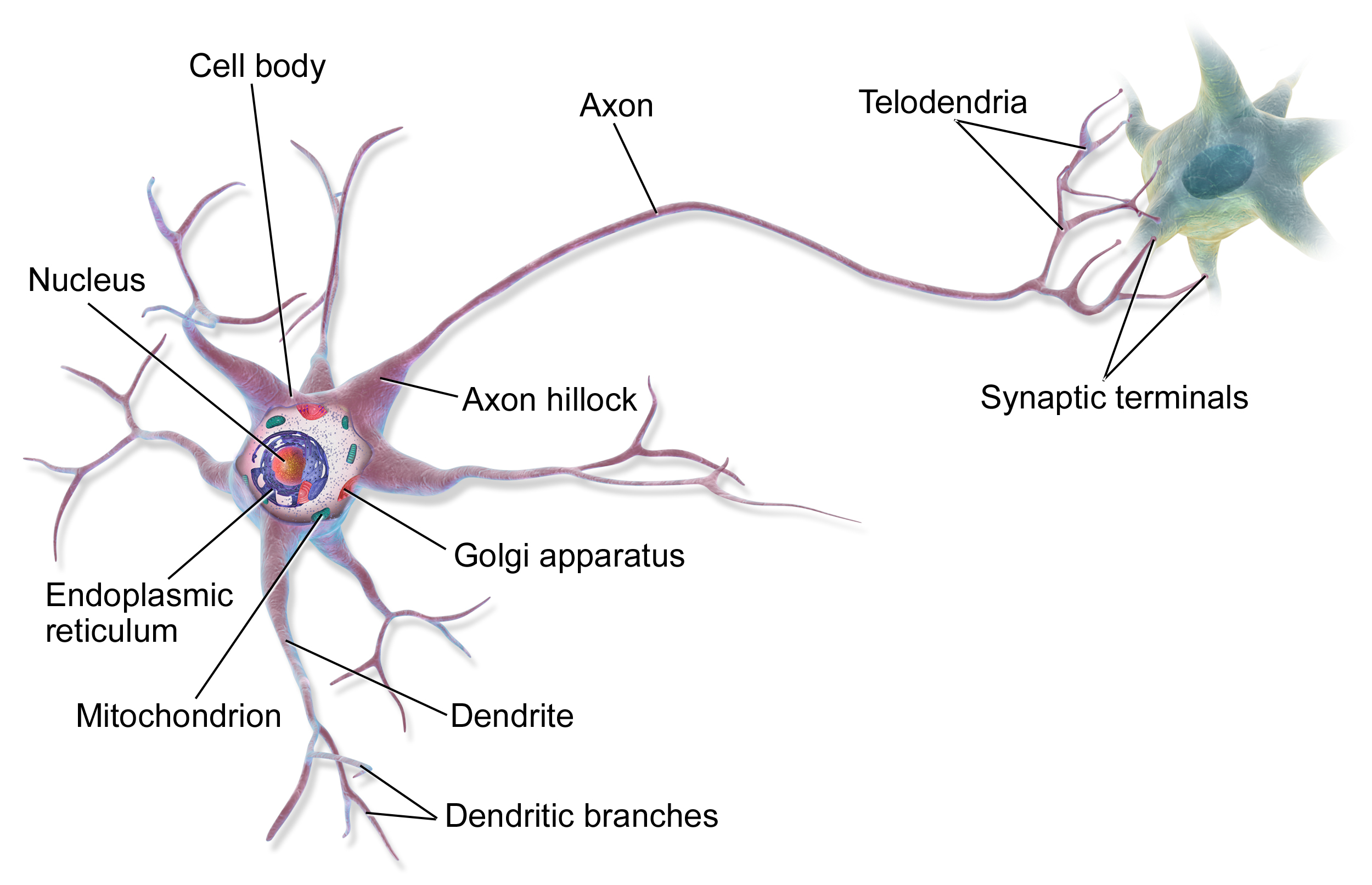
When the message reaches the end of one neuron, it encounters a tiny gap called a synapse.
SammyHOST
To keep the message going, neurons release molecules called neurotransmitters, which carry the message across the gap and onto the next neuron.
SammyHOST
and the next and the next, like a line of dominoes falling over, until the signal hits your brain.
SammyHOST
Once that last domino falls, it's goodbye bliss and hello pain.
SammyHOST
Though we're pretty sure humans don't have those, but research is ongoing.
SammyHOST
In any case, this information is all used in more or less the same way.
SammyHOST
The signals from the receptors travel along neurons, jump synapses, and get processed by the central nervous system, and then trigger a response.

Jake SossamanHOST
I think what's clear after hearing their AI discussion is that their misguided belief of a flowing animal spirit muddies their views, and it makes it challenging to prove their theories at that time.
Jake SossamanHOST
In the next episode, part two of three of Discovery of the Neuron, we'll go through how the animal spirit was eventually done away with.
Jake SossamanHOST
Okay, thanks for listening, and I hope you don't need too much thermal cooling of your heart today.
Jake SossamanHOST
Until next time.

speaker_0HOST
Yeah.
speaker_1HOST
Neurons do not have to be taught how to network.
speaker_0HOST
They just do it.
speaker_1HOST
They just do it.

Robert SapolskyHOST
First, the cortical level.
Robert SapolskyHOST
neurons up there generating stable rhythms, each neuron and neuron cluster having its own characteristic rhythm.
Robert SapolskyHOST
How do you generate a rhythm within a single neuron? How would an individual neuron be a pacemaker like that? You get this paradoxical yin-yang sort of thing where the process by which a neuron gets excited then triggers the process by which it's inhibited.
Robert SapolskyHOST
which triggers the excitation, a loop like this.
Robert SapolskyHOST
How do cortical neurons generate rhythms on the level of cortical networks? Simple.
Robert SapolskyHOST
You got...
Robert SapolskyHOST
Neuron A stimulates neuron B, stimulates neuron A, back and forth for the rest of time.
Robert SapolskyHOST
That's going to form a faster beat than neuron A stimulates neuron B, stimulates neuron C, stimulates neuron A.

Jayne SchackGUEST
It's just, it doesn't come back.
Jayne SchackGUEST
You know, is there a way, something that can be done to allow the body's own natural neuroplasticity to be engaged either Intra-neuron within that affected neuron itself or inter-neuron, like somehow a fiber pass, if you will, if we're saying, okay, this nerve cell is cooked, but can others around there pick up and do the same thing? Enough.
Jayne SchackGUEST
to make the problems unnoticeable to the person who has this condition, people do have return to function.
Jayne SchackGUEST
So that is what I would have to say in answer to that question.

Andrew HubermanGUEST
I completely agree.
Andrew HubermanGUEST
I'm chuckling because there's this really wonderful paper that was published in Neuron, which is a Cell Press journal.
Andrew HubermanGUEST
It's a really, a fine journal that basically shows that there's a really strong dopamine release and reinforcement, a reward for, uh, validating one's own beliefs.
Jay ShettyHOST
Yeah.
41 MINS LATER
Andrew HubermanGUEST
He started, you know, he's like, he had a background in martial arts and dance and all these things, and he, we were talking about will and discipline, and he said, "You know, it's so important to use willpower, but just enough to allow you to move into whatever it is you're trying to do and then Really tr- trying to bring elements of ease and play into it.
Andrew HubermanGUEST
You know, because I worked on stress for a long time in my lab, and stress control is a big thing and, you know, but we have neural energy, right? Our, our neurons, our nervous system, which controls our muscles and everything else, uh, our movements, our thoughts.
Andrew HubermanGUEST
It is electrochemical, right? Neurons release chemicals which does electrical firing in other neurons and on and on.
Andrew HubermanGUEST
That's the nervous system.

Lester NareHOST
This is your captain speaking, Lester Nare, joined as always by my co-host and our resident PhD, Krishna Chowdhury.
Lester NareHOST
After our massive two-part marathon deep dive on quantum computing in our last two episodes, we wanted to get back into our biology bag with this week's deep dive, which is going to cover a new paper published in the journal Neuron on May 20th, 2026.
Lester NareHOST
This research focuses on our quest to combat brain disease, something we've covered in a couple of our previous episodes, stemming from an unlikely inspiration, which is the genetic adaptation of high altitude Tibetan animals.
Lester NareHOST
So today we're going to break down what myelin, which is a protective layer around nerve cell fibers, actually does, why MS, multiple sclerosis, for those who may not know, destroys it, and why the brain eventually stops repairing itself.
7 MINS LATER
Krishna ChoudharyHOST
Yeah, and before we get into MS, I think we should first try and understand just some basics about the nervous system and what myelin actually is.
Krishna ChoudharyHOST
So in a healthy nervous system, nerve fibers, which are these axons, so a nerve cell has a cell body, it's got dendrites where all of the inputs come in, and then an axon where the output goes down, to postsynaptic neurons, to the neurons that this particular neuron is talking to.
Krishna ChoudharyHOST
Now, that axon is usually wrapped up in something called a myelin sheath, and it's useful to visualize the nervous system as kind of a vast network of electrical wiring, okay? Neurons use electricity to talk to one another.
Krishna ChoudharyHOST
That's how they're fast.

Montgomery JonesHOST
You don't have any proof that other people can't read your mind.
Amalia DupreeHOST
The neurons in our brains that are responsible for remembering what neurons are are super meta.
Montgomery JonesHOST
Since fractions can represent numbers greater than one, technically everything takes a fraction of a second.
Amalia DupreeHOST
It's easy to sleep in, but not easy to go to sleep early.

Michael ShermerHOST
Uh, I love that place.
Michael ShermerHOST
He's published over 100 scientific papers and journals such as Nature, Science, Cell, and Neuron.
Michael ShermerHOST
He's a Guggenheim Fellow, a member of the advisory committee for the Alfred P. Sloan Foundation, and an elected fellow of the American Association for the Advancement of Science.
Michael ShermerHOST
He's also the author of books Ignorance and Failure, and he lives in New York City, and he has a new book out.
4 more episodes mention neuron.
Create an account to see the whole feed, search across every transcript, and follow the entities you care about.