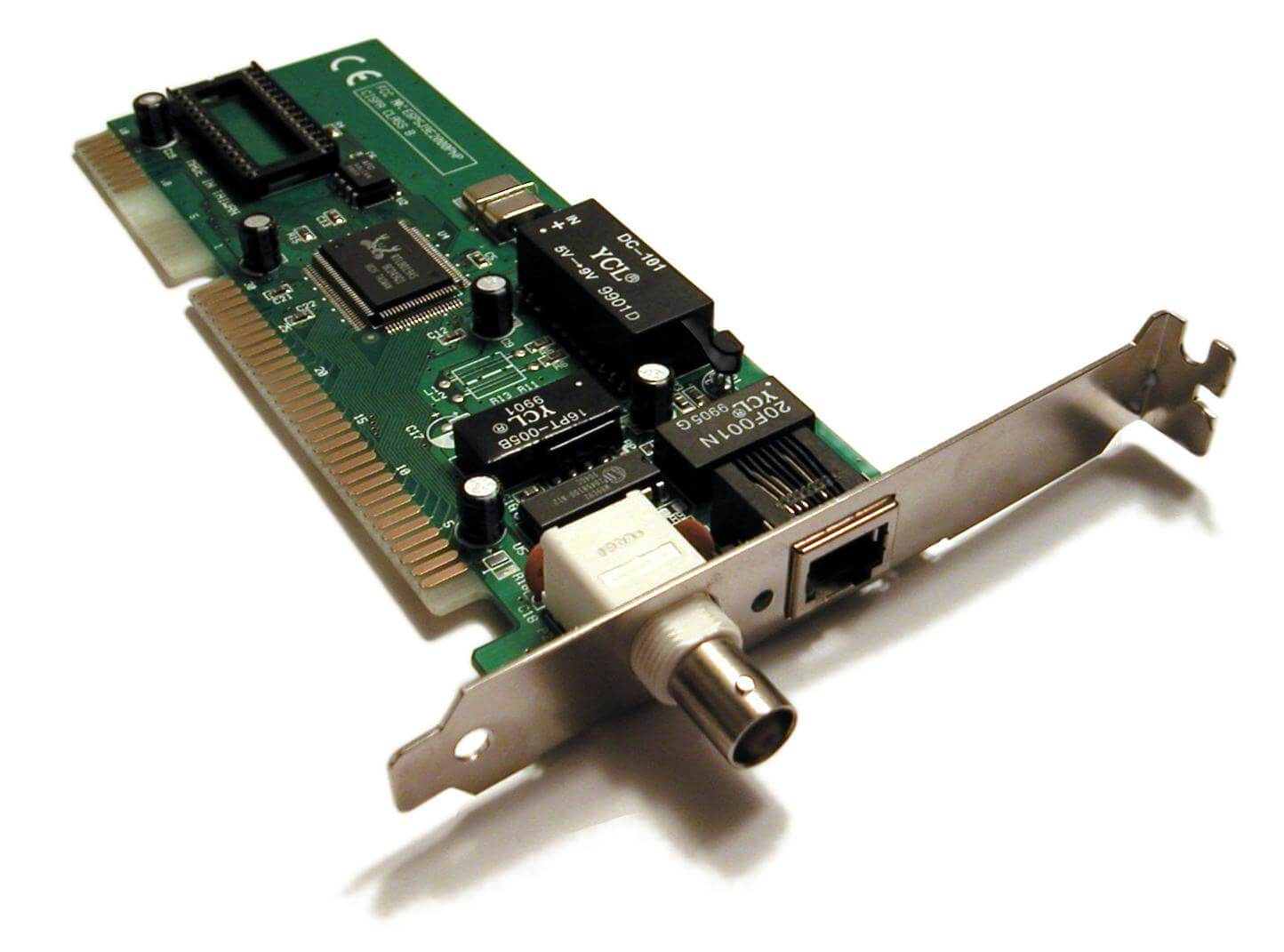
Network interface controller
Computer peripheral classWikipedia
70
MENTIONS
7
EPISODES
7
PODCASTS
Search complete. 70 mentions across 7 episodes found for "Network interface controller".
Oct 17, 2026

Network ChuckHOST
And again, the virtual machine Ubuntu is using the virtual machine PFSense as its network connection, as its router.
Network ChuckHOST
It's connected via the virtual interface VMBR7, and then my laptop is physically connected to the LAN NIC on the PFSense.
Network ChuckHOST
Actually, I lied.
Network ChuckHOST
What I did do that you didn't see, because I was thinking about testing a more physical host, is I added a little, small, unmanaged switch.

Ruben ShadeHOST
Could, it could very well be, yeah.
Tom JonesHOST
Uh, I know in Chelsea hardware you have to create a virtual interface on top of the NIC, and then-
Ruben ShadeHOST
Hmm
Tom JonesHOST
... you get native Netmap support.

Joe RessingtonHOST
And if you wanna send in your questions for Jim and Alan or your feedback, you can email show@two.fiveadmins.com. Matthew writes, "I'm using OPNsense on an old PC with an Intel Core i3 6100 and eight gigs of RAM to segment my home network into VLANs with a UniFi USG 3P as the internet gateway.
Joe RessingtonHOST
I'm thinking of adding a second NIC to the OPNsense box as a WAN interface, which I can connect directly to the internet, so it can handle all routing duties by itself.
Joe RessingtonHOST
Are there any advantages to doing everything in OPNsense and getting rid of the USG? I'm also worried that Ubiquiti might end support for the network app that I run on my Proxmox server to manage my USG."
Allan JudeHOST
With this one, I don't think there's many disadvantages.

JoeHOST
And if you want to send any questions for Jim and Alan or your feedback, you can email show at 2.5admins.com. Matthew writes, I'm using OpenSense on an old PC with an Intel Core i3-6100 and 8GB of RAM to segment my home network into VLANs, with the UniFi USG3P as the internet gateway.
JoeHOST
I'm thinking of adding a second NIC to the OpenSense box as a WAN interface, which I can connect directly to the internet, so it can handle all routing duties by itself.
JoeHOST
Are there any advantages to doing everything in OpenSense and getting rid of the USG? I'm also worried that Ubiquiti might end support for the network app that I run on my Proxmox server to manage my USG.
AlanHOST
With this one, I don't think there's many disadvantages.

Eric DavisGUEST
They wanted to do it in a rapid way as quickly as possible.
Eric DavisGUEST
They brought together some of the key NIC vendors to collaborate together to come up with a minimal viable product to meet their primarily training workload needs.
Eric DavisGUEST
So that's kind of the history.
Eric DavisGUEST
The announcement's been great.
6 MINS LATER
Rip SohanGUEST
That's all true.
Rip SohanGUEST
The other point to make is that there's been a lot of work done on allowing the job to continue operation if things happen in the fabric that are inefficient.
Rip SohanGUEST
So in particular, if a link goes down, if a node goes down, if a link flaps, for example, we put a lot of effort into MRC to make sure that At a node level, the NIC that's sending out these packets can detect these sorts of events, can start to exclude those paths, and then has a way of getting this information back when the path comes up so that it can begin to include it.
Rip SohanGUEST
The big thing that sort of we have been getting from our primary customers is that they no longer have to think about the reliability of the job at a minute-to-minute level, which was a big problem for them before, right? So it's a self-healing fabric.

Eric DavisGUEST
Uh, and they wanted to do it in a rapid [laughs] way, as quickly as possible.
Eric DavisGUEST
Uh, so they brought together some of the key NIC vendors, uh, to kind of collaborate together to come up with a m- minimal viable product to meet their primarily training workload needs.
Eric DavisGUEST
So that's kind of the history.
Eric DavisGUEST
Uh, it's been, you know, the announcement's been great.
6 MINS LATER
Rip SohanGUEST
That, that's all true.
Rip SohanGUEST
The other point to make is that the, the, there, there's been a lot of work done on, uh, allowing the job to continue operation if things happen in the fabric that are, uh, inefficient.
Rip SohanGUEST
So in particular, if a link goes down, if a node goes down, if a, uh, um, a, a, a link flaps, for example, uh, we, we've put a lot of effort into MRC to make sure that, uh, at a, at a node level, the NIC that's sending out these, these, these packets can detect these sorts of events, can s- can start to exclude those paths, and then can... has a, has a way of getting, getting this, this information back when the path comes up so that it can begin to include it.
Rip SohanGUEST
The big thing that, that sort of we have been getting from our primary customers is that they no longer have to think about the reliability of the job at a minute-to-minute level, which was a big problem for them before, right? So, I mean, it's, it's a self-healing fabric, is, is the point.

Eric DavisGUEST
Uh, and they wanted to do it in a rapid [laughs] way, as quickly as possible.
Eric DavisGUEST
Uh, so they brought together some of the key NIC vendors, uh, to kind of collaborate together to come up with a m- minimal viable product to meet their primarily training workload needs.
Eric DavisGUEST
So that's kind of the history.
Eric DavisGUEST
Uh, it's been, you know, the announcement's been great.
6 MINS LATER
Rip SohanGUEST
That, that's all true.
Rip SohanGUEST
The other point to make is that the, the, there, there's been a lot of work done on, uh, allowing the job to continue operation if things happen in the fabric that are, uh, inefficient.
Rip SohanGUEST
So in particular, if a link goes down, if a node goes down, if a, uh, um, a, a, a link flaps, for example, uh, we, we've put a lot of effort into MRC to make sure that, uh, at a, at a node level, the NIC that's sending out these, these, these packets can detect these sorts of events, can s- can start to exclude those paths, and then can... has a, has a way of getting, getting this, this information back when the path comes up so that it can begin to include it.
Ethan BanksHOST
Mm-hmm.