Negrito
Ethnic groupWikipedia
92
MENTIONS
17
EPISODES
14
PODCASTS
Search complete. 92 mentions across 17 episodes found for "Negrito".
Oct 17, 2026

Mario PinedaNARRATOR
Inasmuch, too, as the modern history which we are studying deals with many different peoples of different origin and race, and as much of our history turns upon these differences, we must look for a little at the ethnology of the Philippines.
Mario PinedaNARRATOR
The Negritos.
Mario PinedaNARRATOR
Physical Characteristics.
Mario PinedaNARRATOR
The great majority of the natives of our islands belong to what is usually called the Malayan race, or the Oceanic Mongols.
Mario PinedaNARRATOR
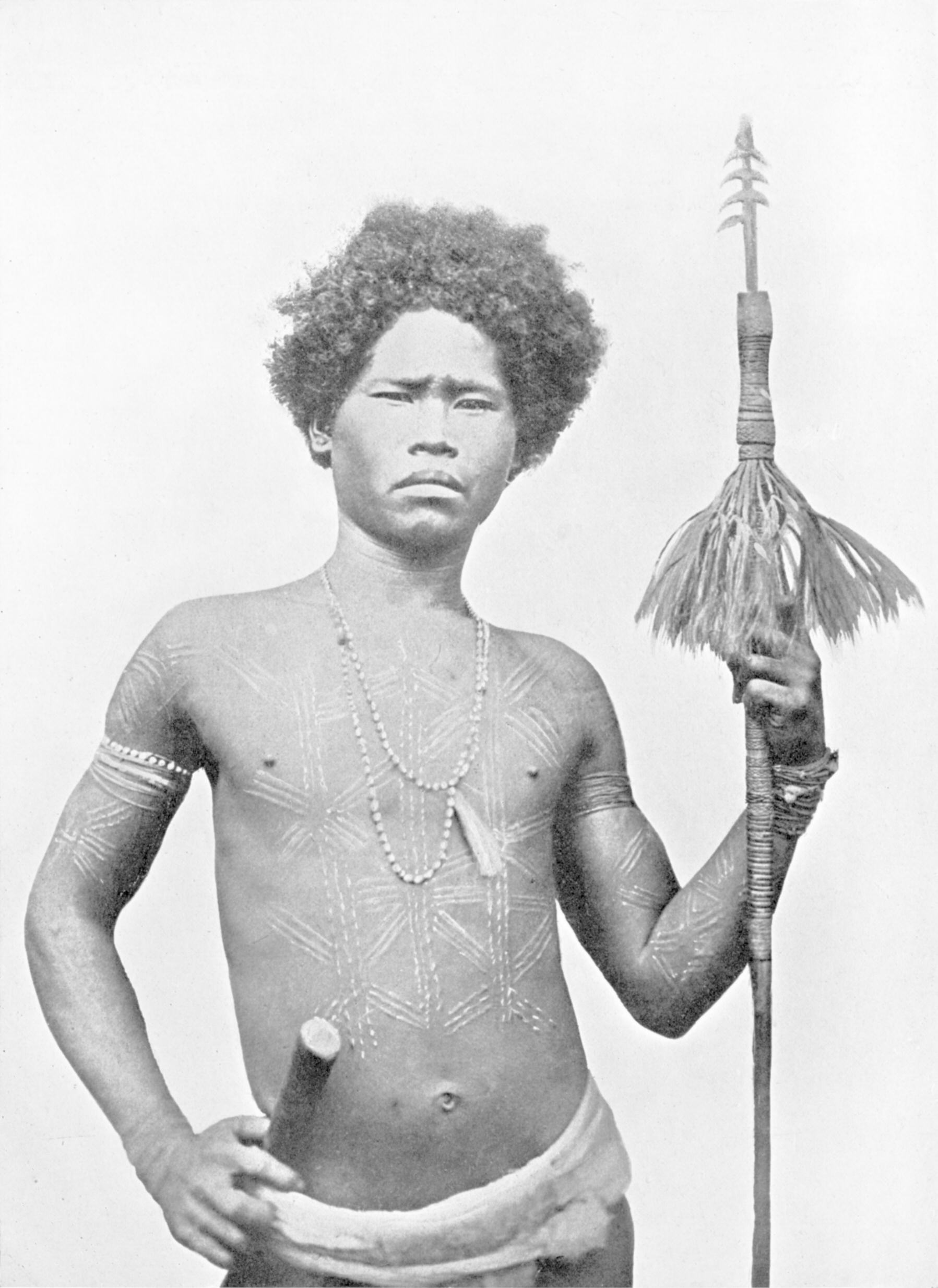
There is, however, one interesting little race scattered over the Philippines which certainly has no relationship at all with Malayans.
Mario PinedaNARRATOR
These little people are called by the Tagalog, Aeta, or Ita.
Mario PinedaNARRATOR
The Spaniards, when they arrived, called them Negritos, or little Negroes, the name by which they are best known.
Mario PinedaNARRATOR
Since they were without question the first inhabitants of these islands of whom we have any knowledge, we shall speak of them at once.

Paul MooneySOUNDBITE_SPEAKER
Yeah, some more black people.
Paul MooneySOUNDBITE_SPEAKER
The Filipinos, Negritos.
Paul MooneySOUNDBITE_SPEAKER
And you black people from the islands, I don't care if you're right up here, you think that you're better than us.
Paul MooneySOUNDBITE_SPEAKER
because they dropped you off first.

EnochNARRATOR
These pioneers were part of the first great human migration out of Africa, following ancient land bridges and coastal routes into Southeast Asia.
EnochNARRATOR
Known as the Negritos, these dark-skinned, small-statured hunter-gatherers adapted to the dense tropical forests of the islands.
EnochNARRATOR
Today, their descendants, including the Aeta, Agta, and Batak, still live in the Philippines, carrying some of the oldest genetic markers in the region.
EnochNARRATOR
But the Negritos weren't the only ones to shape the Filipino genetic landscape.
EnochNARRATOR
Around four thousand years ago, a new wave of migration changed the course of history: the Austronesians.
EnochNARRATOR
Originating from Taiwan, these remarkable seafarers crossed the Pacific and Indian Oceans, establishing communities in places like Indonesia, Polynesia, and of course, the Philippines.
EnochNARRATOR
For across the centuries, new migrations and cultural exchanges continued to leave their mark, further enriching this human mosaic.
EnochNARRATOR
The genetic history of the Philippines is like a vast ocean shaped by successive waves of migration, encounters, and transformation.

AlistairNARRATOR
In the eyes of the Samoan the place has the attraction of a park for the holiday schoolboy, of a granary for mice.
AlistairNARRATOR
We must add the yet more lively allurement of a haunted house, for over these empty and silent miles there broods the fear of the Negrito cannibal.
AlistairNARRATOR
For the Samoan besides there is something barbaric, unhandsome, and absurd in the idea of thus growing food only to send it from the land and sell it.
AlistairNARRATOR
A man at home who should turn all Yorkshire into one wheat field and annually burn his harvest on the altar of mumbo jumbo might impress ourselves not much otherwise.
3 HRS 50 MINS LATER
AlistairNARRATOR
About the same time, but a little earlier than this conversation, the same spirit was being displayed.
AlistairNARRATOR
Ufnagal, with a party of labour, had gone out to bring in the German dead, when he was surprised to be suddenly fired on from the woods.
AlistairNARRATOR
The boys he had with him were not Negritos, but Polynesians from the Gilbert Islands, and he suddenly remembered that these might be easily mistaken for a detachment of Tamaseses.
AlistairNARRATOR
Bidding his boys to conceal themselves in a thicket, this brave man walked into the open.

AlistairNARRATOR
In the eyes of the Samoan, the place has the attraction of a park for the holiday schoolboy, of a granary for mice.
AlistairNARRATOR
We must add the yet more lively allurement of a haunted house, for over these empty and silent miles there broods the fear of the Negrito cannibal.
AlistairNARRATOR
For the Samoan besides there is something barbaric, unhandsome, and absurd in the idea of thus growing food only to send it from the land and sell it.
AlistairNARRATOR
A man at home who should turn all Yorkshire into one wheat field and annually burn his harvest on the altar of mumbo-jumbo might impress ourselves not much otherwise.
3 HRS 56 MINS LATER
AlistairNARRATOR
About the same time, but a little earlier than this conversation, the same spirit was being displayed.
AlistairNARRATOR
Ufnagal with a party of labour had gone out to bring in the German dead when he was surprised to be suddenly fired on from the woods.
AlistairNARRATOR
The boys he had with him were not Negritos but Polynesians from the Gilbert Islands and he suddenly remembered that these might be easily mistaken for a detachment of Tamaseses.
AlistairNARRATOR
Bidding his boys to conceal themselves in a thicket, this brave man walked into the open.
speaker_3NARRATOR
Inasmuch, too, as the modern history which we are studying deals with many different peoples of different origin and race, and as much of our history turns upon these differences, we must look for a little at the ethnology of the Philippines.
speaker_3NARRATOR
The Negritos.
speaker_3NARRATOR
Physical Characteristics.
speaker_3NARRATOR
The great majority of the natives of our islands belong to what is usually called the Malayan race, or the Oceanic Mongols.
speaker_3NARRATOR
There is, however, one interesting little race scattered over the Philippines which certainly has no relationship at all with Malayans.
speaker_3NARRATOR
These little people are called by the Tagalog Aeta or Ita.
speaker_3NARRATOR
The Spaniards, when they arrived, called them Negritos, or little Negroes, the name by which they are best known.
speaker_3NARRATOR
Since they were without question the first inhabitants of these islands of whom we have any knowledge, we shall speak of them at once.
speaker_3NARRATOR
Inasmuch, too, as the modern history which we are studying deals with many different peoples of different origin and race, and as much of our history turns upon these differences, we must look for a little at the ethnology of the Philippines.
speaker_3NARRATOR
The Negritos Physical Characteristics The great majority of the natives of our islands belong to what is usually called the Malayan race, or the Oceanic Mongols.
speaker_3NARRATOR
There is, however, one interesting little race scattered over the Philippines which certainly has no relationship at all with Malayans.
speaker_3NARRATOR
These little people are called by the Tagalog, Aeta, or Ita.
speaker_3NARRATOR
The Spaniards, when they arrived, called them Negritos, or little Negroes, the name by which they are best known.
speaker_3NARRATOR
Since they were without question the first inhabitants of these islands of whom we have any knowledge, we shall speak of them at once.
speaker_3NARRATOR
They are among the very smallest peoples in the world, the average height of the men being about 145 centimeters, or the height of an American boy of 12 years.
speaker_3NARRATOR
They hunt the deer and wild boar, and when they kill one they stop right there until all the flesh is consumed.

speaker_0NARRATOR
we talked not that we understood each other you know but just for company i sang songs and i suspect tweel did too at least some of his trillings and twitterings had a subtle sort of rhythm then for variety tweel would display his smattering of english words he'd point to an outcropping and say rock and point to a pebble and say it again or he'd touch my arm and say tick and then repeat it he seemed terrifically amused that the same word meant the same thing twice in succession or that the same word could apply to two different objects It set me wondering if perhaps his language wasn't like the primitive speech of some Earth people.
speaker_0NARRATOR
You know, Captain, like the Negritos, for instance, who haven't any generic words.
speaker_0NARRATOR
No word for food, or water, or man, but words for good food and bad food, or rainwater and seawater, or strongman and weakman.
speaker_0NARRATOR
But no names for general classes.
7 more episodes mention Negrito.
Create an account to see the whole feed, search across every transcript, and follow the entities you care about.